
Planting
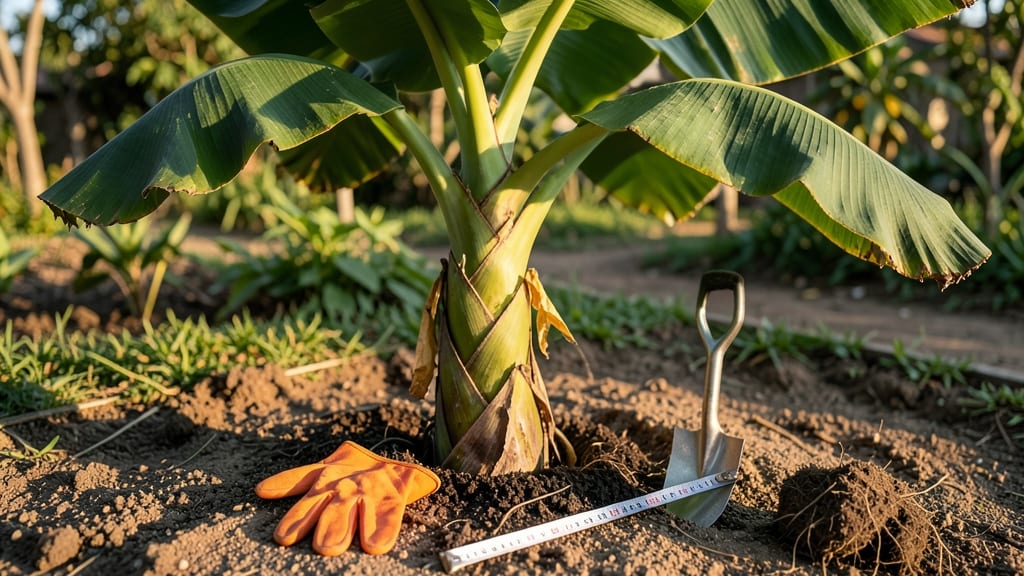
Banana tree root depth explained: how far down they spread & why it matters
Banana trees may look like they're all trunk and leaves, but their root systems are what truly anchor their growth. Most gardeners assume these tropical giants have shallow roots, but the truth is far more interesting—and critical for your planting success.
The primary roots of a mature banana tree can extend 12 to 18 inches deep, while their lateral roots spread out 3 to 5 feet wide in search of water and nutrients.
This deep-rooted nature isn't just a curiosity—it directly impacts how you should plant, water, and care for your banana tree. For example, planting too shallow can cause the roots to suffocate, while inadequate watering forces them to grow even deeper in search of moisture.
Understanding this root structure helps you avoid common mistakes that lead to stunted growth or even tree death.
Here's the fascinating part: banana trees don't have a traditional taproot system like many other trees. Instead, they develop a complex network of fibrous roots that branch out from the base of the pseudostem (the false trunk).
The pseudostem itself doesn't contain true roots but serves as a protective sheath for the emerging leaves and the root system below.
Scientifically, these roots are classified as adventitious roots, meaning they grow from non-root tissues. This unique adaptation allows banana trees to thrive in tropical climates where heavy rains and poor soil drainage are common.
The deep root system helps them access nutrients even when surface soil is waterlogged, preventing root rot while still maintaining stability.
| Root Type | Depth Range | Lateral Spread | Key Function |
|---|---|---|---|
| Primary Roots | 12-18 inches | 3-5 feet | Anchorage & deep water/nutrient access |
| Lateral Roots | 6-12 inches deep | Up to 10 feet | Surface water absorption & stability |
| Adventitious Roots | Varies (6-24 inches) | 2-4 feet | Emerges from pseudostem for additional support |
| Note: Root depth varies by variety—dwarf bananas have shallower roots than standard types. | |||
The depth of banana tree roots plays a crucial role in their ability to withstand drought. When surface soil dries out, these deep roots tap into groundwater reserves, allowing the tree to survive longer without irrigation.
This is why banana trees are often recommended for xeric landscaping in regions with seasonal water shortages.
However, this deep-rooted nature also means you need to be strategic about soil preparation. Compacted or rocky soil can restrict root growth, forcing the roots to grow in unhealthy patterns.
Amending your soil with organic matter like compost or well-rotted manure creates a loose, aerated environment that encourages roots to grow downward naturally rather than spreading outward in search of space.
Another critical factor is the pH level of your soil. Banana trees prefer slightly acidic to neutral soil with a pH between 5.5 and 7.0.
If your soil is too alkaline, the roots may struggle to absorb essential nutrients like phosphorus and iron, even if they reach the correct depth. Testing your soil before planting can save you from years of poor growth due to hidden nutrient deficiencies.
For container-grown banana trees, understanding root depth becomes even more important. Since roots are confined to a pot, they'll grow in a circular pattern rather than downward.
This is why container size matters—a 5-gallon pot is perfect for young plants, but mature banana trees need at least 20-30 gallons of soil volume to accommodate their root spread without becoming root-bound.
When planting, always aim to place the base of the pseudostem just below the soil surface. Burying it too deep can cause the pseudostem to rot, while planting too shallow exposes the roots to temperature fluctuations and drying out.
The root flare (where the roots emerge from the pseudostem) should be visible above the soil line once planted.
Proper planting depth for banana trees: step-by-step guide to avoid common mistakes
Banana trees thrive when planted at the right depth, but many gardeners make costly mistakes that stunt growth or even kill the plant. The key is understanding that banana roots need space to spread both vertically and horizontally.
Too shallow, and the roots suffocate; too deep, and they rot from poor drainage. Let's break down the exact planting rules for both ground planting and container growing.
Start by preparing the planting site with well-draining soil mixed with compost or aged manure. Banana trees hate soggy roots, so amending heavy clay or sandy soil is critical. If your soil drains poorly, consider raising the planting area with a 6-inch mound of amended soil.
For containers, use a mix of 50% potting soil and 50% perlite or orchid bark to ensure aeration.
⚠️ Banana Tree Roots: Depth & Spread
Main roots extend 12-18 inches deep, while lateral roots spread 3-5 feet wide. Planting too shallow (less than 6 inches) strangles growth, while burying the crown (base of pseudostem) causes rot. Always plant at 2-3x the root ball depth.
For ground planting, dig a hole that's twice as wide and twice as deep as the banana tree's root ball. If you're planting a bare-root banana, the top of the roots should sit 1-2 inches below soil level.
This ensures the crown remains above ground while allowing roots to establish downward. Gently loosen the roots before placing the tree in the hole to encourage outward spread.
Container planting requires extra care because roots can't escape the boundaries. Choose a pot that's at least 24 inches in diameter and 2 feet deep for dwarf varieties. Place the banana tree in the pot so the root ball sits 1-2 inches below the rim, leaving room for mulch.
Drill drainage holes in the bottom to prevent waterlogging, which is the #1 killer of potted banana trees.
After planting, water deeply to settle the soil and eliminate air pockets. Add a 3-inch layer of mulch around the base (but not touching the pseudostem) to retain moisture and regulate soil temperature. Avoid heavy mulching in containers, as it can compact soil and reduce drainage.
Monitor the first few weeks for signs of stress, like yellowing leaves or wilted fronds, which may indicate improper depth.
Remember, banana trees are tropical and need consistent moisture. In containers, they'll dry out faster, so check soil moisture every 5-7 days. For ground-planted trees, water deeply once a week during dry spells.
With the right depth and care, your banana tree will reward you with lush growth and eventually, sweet fruit! 🍌