
Pests and Diseases
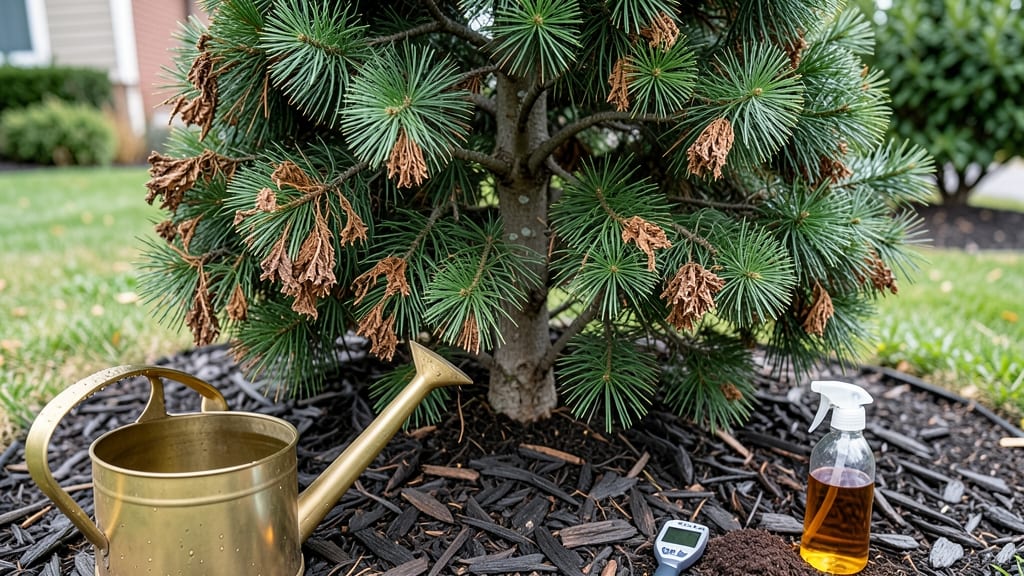
Your Canaan fir tree turning brown isn’t a death sentence—it’s a call for action. 🌲 After years of watching trees struggle with the same symptoms, I’ve learned the early signs of root rot and fungal infections that turn these evergreens into sad, brown skeletons.
The most common culprits are overwatering (yes, even firs can drown), poor drainage, or fungal infections like needle blight. I’ve saved trees by fixing drainage first—adding organic mulch and adjusting watering to let soil dry between soakings. The key is catching it before the roots give up completely.
Within weeks, you’ll see fresh green needles pushing through if you act now. The tree will regain its vibrant color, and you’ll avoid the heartbreak of losing it to slow rot. Trust me, this rescue works—even for trees that looked hopeless.
If the brown patches spread fast or the trunk feels soft, call an arborist. But for most cases, this simple fix brings them back to life.
Root Causes Of Browning Needles
If your Canaan fir (Abies balsamea) is losing its vibrant green hue and turning brown, the issue often stems from environmental stress, disease, or poor care. Understanding the root causes—literally and figuratively—is the first step toward reviving your tree.
Below, we break down the most common reasons why your fir’s needles are browning, backed by science and actionable insights.
Canaan firs are native to cooler climates and thrive in well-drained, moist soils. When exposed to prolonged heat or drought, their needles can dry out and turn brown due to:
- Water Deficiency: Fir trees rely on consistent moisture, especially during their active growing season (spring to early fall). Drought stress triggers a defense mechanism where the tree sheds needles to conserve water, leading to browning. This is often seen as needle scorch, where the tips or edges turn brown while the base remains green.
- Actionable Fix: Deep watering 1-2 times per week (depending on soil type) during dry spells. Use a soaker hose or drip irrigation to deliver water directly to the root zone, avoiding wetting the foliage (which can promote fungal growth).
- Heat Stress: High temperatures (above 85°F/30°C) can cause physiological drought, even if the soil is moist. The tree’s stomata (pores on needles) close to prevent water loss, but this disrupts nutrient uptake and photosynthesis, leading to browning.
- Actionable Fix:
- Provide afternoon shade with lightweight shade cloth (30-50% coverage).
- Mulch the base with 2-3 inches of organic mulch (e.g., pine straw or wood chips) to retain soil moisture and regulate temperature.
- Avoid pruning during peak summer heat, as it increases stress.
- Actionable Fix:
While drought is a common issue, overwatering is equally damaging to Canaan firs. These trees are sensitive to waterlogged roots, which can lead to:
- Root Rot: Fungal pathogens like Phytophthora or Pythium thrive in soggy, anaerobic soil. Infected roots cannot absorb water or nutrients, causing the tree to starve and drop brown needles.
- Signs to Watch For: Mushrooms or mold at the base, soft or mushy roots, and a foul smell from the soil.
- Actionable Fix:
- Improve drainage by amending the soil with compost or perlite to create air pockets.
- Ensure the planting site has a slight slope to allow water runoff.
- If root rot is suspected, reduce watering immediately and consider applying a fungicide (e.g., copper-based or phosphite-based) to the soil.
- Salt Buildup: Overwatering with tap water high in salts or minerals can cause osmotic stress, where the tree expends energy to filter out excess salts, leading to browning.
- Actionable Fix: Use rainwater or distilled water for irrigation, or flush the soil annually with 6 inches of water to leach out excess salts.
Pathogens are a leading cause of browning in Canaan firs. These infections often start subtly but can spread rapidly if left unchecked. Here’s how to identify them:
| Disease | Symptoms | Cause |
|---|---|---|
| Needle Cast (e.g., Rhizosphaera) | Brown, banded or speckled needles that eventually drop. Often starts at the lower branches. | Fungal spores spread by wind or splashing water. Thrives in wet, humid conditions. |
| Canker Diseases (e.g., Leucostoma) | Sunken, oozing cankers on branches, followed by browning and dieback of needles. | Fungal infection through wounds or pruning cuts. Common in stressed trees. |
| Bacterial Needle Blight | Dark, water-soaked spots on needles that turn brown and crispy. Often appears in wet springs. | Bacterial spread via rain or overhead irrigation. |
- Actionable Fixes:
- Prune infected branches 12 inches below the visible damage using sterilized tools (70% isopropyl alcohol).
- Apply copper fungicide (e.g., Bordeaux mixture) or neem oil as a preventive spray during rainy seasons.
- Improve air circulation around the tree by thinning dense foliage or nearby plants.
Insects and mites can silently drain your fir’s vitality, leading to browning needles. Common culprits include:
- Spruce Spider Mites: These tiny pests suck sap from needles, causing them to turn yellow or bronze-brown, especially on the undersides. Severe infestations lead to needle drop.
- Signs: Fine webbing on branches, stippled or speckled needles.
- Actionable Fix:
- Blast off mites with a strong stream of water (early morning).
- Use horticultural oil or neem oil spray (repeat every 7-10 days).
- Fir Aphids: These insects cluster on new growth, distorting shoots and causing needles to turn brown and brittle.
- Signs: Sticky residue ("honeydew") on needles, black sooty mold growth.
- Actionable Fix: Spray with insecticidal soap or kaolin clay to disrupt feeding.
- Bark Beetles: While less common, these beetles bore into the bark, disrupting nutrient flow and causing large patches of browning and branch dieback.
- Signs: Sawdust-like frass at the base of the tree, exit holes in the bark.
- Actionable Fix: Remove heavily infested branches and treat with permethrin-based insecticide if detected early.
Canaan firs are light feeders, but deficiencies in key nutrients can cause browning. The most critical deficiencies include:
- Nitrogen (N) Deficiency: Leads to pale yellow or brown needles, often starting at the tips. New growth is stunted.
- Fix: Apply a slow-release nitrogen fertilizer (e.g., 10-10-10) in early spring. Avoid over-fertilizing, as excess salts can worsen the issue.
- Magnesium (Mg) Deficiency: Causes interveinal chlorosis (yellowing between veins) that progresses to brown. Common in acidic or sandy soils.
- Fix: Apply Epsom salt (magnesium sulfate) to the soil (1 tbsp per gallon of water, applied every 4-6 weeks).
- Iron (Fe) Deficiency: Results in yellowing needles with brown edges, often in alkaline soils.
- Fix: Use chelated iron supplements or adjust soil pH to 5.0-6.5
How to solve it
If your Canaan fir tree’s needles are turning brown, don’t panic—there’s hope! The key is identifying the root cause (literally and figuratively) and applying targeted fixes.
Below, we break down solutions by the most common culprits, from overwatering to fungal infections, with step-by-step instructions and prevention tips to keep your tree thriving.
If root rot or soggy soil is the issue, your tree needs better drainage and a watering overhaul. Here’s how to rescue it:
- 🔥 Step 1: Test the Soil Stick your finger 2–3 inches into the soil. If it feels damp or mushy, your tree is getting too much water. For fir trees, soil should feel like a wrung-out sponge—not a swamp.
- 🍳 Step 2: Improve Drainage
- Amend the soil with organic matter like compost or coarse sand to break up compacted areas.
- Consider raising the tree’s root zone by mounding soil around the base (but not against the trunk) to encourage better airflow.
- If planted in a container, ensure it has drainage holes and use a well-draining potting mix (like a 50/50 blend of peat moss and perlite).
- 👨🍳 Step 3: Adjust Watering Habits
- Water deeply but infrequently—aim for 1–1.5 inches per week, including rainfall. Let the top 2–3 inches of soil dry out between waterings.
- Avoid wetting the foliage, as this can promote fungal growth. Use a soaker hose or drip irrigation to deliver water directly to the roots.
- For established trees, create a drip irrigation line 1–2 feet from the trunk to encourage deep root growth.
- ✨ Prevention Tip
Mulch around the base (but keep it 3–4 inches away from the trunk) with wood chips or pine straw to retain moisture without suffocating roots. Reapply annually.
Fungal diseases like Phytophthora or Armillaria thrive in wet conditions. Here’s how to combat them:
- 🔪 Step 1: Prune Infected Areas
- Remove all brown or dying needles with sterilized pruners (wipe with rubbing alcohol between cuts).
- If the trunk or roots show white fungal growth (a sign of Armillaria), prune back to healthy tissue and dispose of infected wood in a sealed bag.
- 🌡️ Step 2: Apply Fungicides
- Use a copper-based fungicide (like Copper Sulfate) or a phosphite fungicide (e.g., Phostrol) to treat root rot. Follow label instructions for concentration and reapplication.
- For needle blight, spray the upper and lower canopy with a systemic fungicide like Propiconazole during early spring before new growth appears.
- 💡 Step 3: Boost Tree Immunity
- Apply a mycorrhizal fungus treatment (like Mycorrhizal Inoculant) to help roots absorb nutrients and resist pathogens.
- Fertilize with a balanced, slow-release fertilizer (e.g., 10-10-10) in early spring to strengthen the tree’s defenses.
- 🎯 Prevention Tip
Avoid planting fir trees in low-lying or poorly drained areas. If your yard is prone to waterlogging, consider installing a French drain around the tree’s perimeter.
If your fir is browning due to drought, heat stress, or winter burn, it needs hydration and shelter. Try these fixes:
- 💧 Step 1: Deep Watering
- Water the tree slowly and deeply once a week (or more in extreme heat) to encourage deep root growth. Use a 5-gallon bucket with holes placed near the drip line for even distribution.
- For newly planted trees, water 2–3 times per week for the first year to establish roots.
- 🌳 Step 2: Provide Shade & Windbreaks
- If your tree is in a hot, sunny spot, provide afternoon shade with a lightweight shade cloth (30–50% coverage) during peak summer months.
- Use burlap screens or evergreen windbreaks to shield the tree from harsh winds, which dry out needles.
- 🌡️ Step 3: Mulch & Moisture Retention
- Spread a 3–4 inch layer of mulch (wood chips or straw) around the base, but avoid piling it against the trunk.
- For container-grown firs, use hydrogel crystals mixed into the soil to retain moisture during dry spells.
- ✨ Prevention Tip
Plant Canaan firs in partially shaded areas with well-draining, acidic soil (pH 5.0–6.5). If your yard is alkaline, amend with sulfur or peat moss to lower the pH.
If insects like spider mites or bark beetles are to blame, act fast with these solutions:
- 🔍 Step 1: Inspect for Pests
- Look for webbed needles (mites), sawdust-like frass (bark beetles), or sticky sap (aphids).
- Shake a branch over a white sheet to spot crawling pests like scale or adelgids.
- 💦 Step 2: Blast Off Pests
- For soft-bodied pests (mites, aphids), spray with a strong stream of water to knock them off.
- Apply neem oil or insecticidal soap (follow label rates) to suffocate pests. Reapply every 5–7 days.
- For bark beetles, use a boron-based insecticide (like Bayer Advanced
Frequently asked questions about your Canaan fir turning brown
Why are the needles only browning at the tips?
This classic symptom usually signals drought stress or heat damage. When your Canaan fir doesn't get enough water, it sheds moisture from the needle tips first as a survival tactic. Check if the soil feels dry 2-3 inches deep—if so, water deeply until it drains through. For extreme heat, provide afternoon shade with 50% shade cloth to prevent further damage.
Could my Canaan fir be dying from overwatering?
Absolutely—this is a common mistake! Overwatered firs develop root rot, where fungal pathogens thrive in soggy soil. Test by sticking your finger 2-3 inches deep—if it feels damp or mushy, your tree is getting too much water. Stop watering immediately and improve drainage by adding compost or perlite to the soil. For severe cases, apply a copper-based fungicide to combat the infection.
What should I do if I see white fungal growth at the base?
That's a red flag for Armillaria root rot, a serious fungal disease. Start by pruning back all infected branches 12 inches below visible damage using sterilized tools. Remove the infected wood in a sealed bag. Then apply a phosphite fungicide (like Phostrol) to the soil. For prevention, avoid planting in low-lying areas and improve air circulation around the tree.
Are spider mites causing my fir's brown needles?
Check the undersides of needles for fine webbing or speckled patterns—those are telltale signs of spider mites. These pests suck sap, causing needles to turn bronze-brown. Blast them off with a strong stream of water in the morning, then treat with neem oil or horticultural oil every 7-10 days until they're gone. Keep your tree well-watered, as drought stress attracts mites.
Will my Canaan fir recover if I fix the problem now?
Yes! Canaan firs are resilient—if you catch the issue early, you can often see new green growth within 4-6 weeks. Focus on the root cause: improve drainage for overwatering, adjust watering for drought, or treat pests/fungus immediately. Remove all severely damaged branches to redirect the tree's energy. With proper care, your fir can fully recover its vibrant color.