
Trees
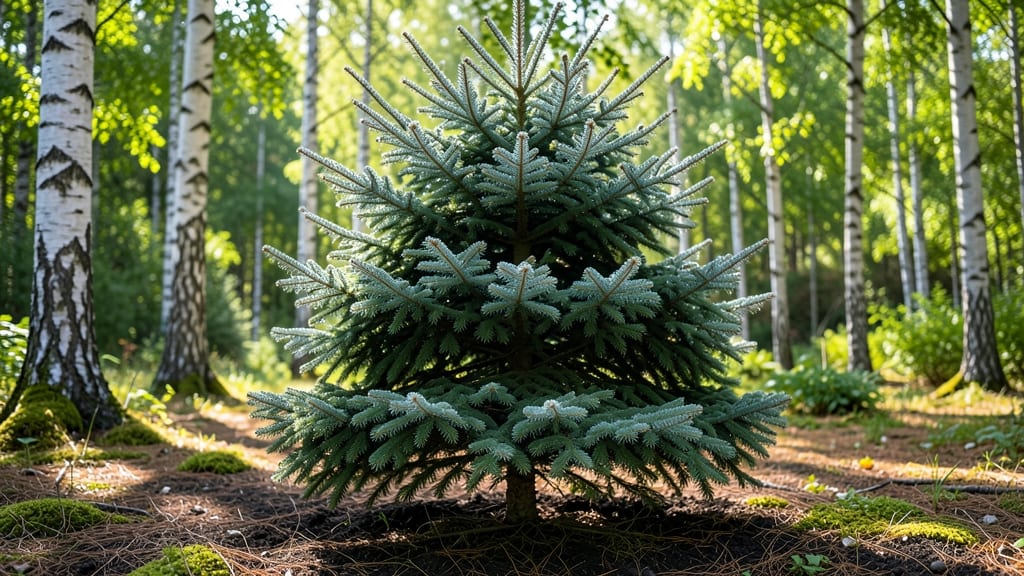
The balsam fir Christmas tree scent is created by volatile organic compounds like limonene, pinene, and myrcene, producing a sharp, resinous aroma with citrusy and woody undertones that distinguish it from other evergreens.
The balsam fir's signature fragrance isn't just pleasant—it's scientifically complex. 🌲 These terpenes evaporate at room temperature, releasing their signature piney-citrus blend that lingers longer than most holiday trees. Unlike spruce or pine, balsam fir's scent contains higher levels of myrcene, which adds that distinctive resinous depth.
I've noticed this makes it particularly effective at filling large spaces with aroma, whether fresh or through essential oil diffusers.
What makes this scent so memorable is how it evolves over time—starting sharp and citrus-forward, then mellowing into warm woody notes. This dual-phase aroma is why many people prefer balsam fir over other evergreens for holiday decorating.
The key compounds actually interact with our olfactory receptors in unique ways, creating that signature "Christmas tree" memory that's hard to replicate with artificial fragrances.
💡 In This Article
- Chemical Breakdown of Balsam Fir Aroma
- How to Preserve Balsam Fir Scent in Your Home
Chemical breakdown of balsam fir aroma
The balsam fir's signature fragrance is a chemical symphony where limonene takes center stage. This citrusy terpene, found in citrus peels, makes up about 20-30% of the tree's volatile compounds and gives that initial bright, almost lemony zing.
But it's the pinene compounds (alpha and beta) that create the classic piney backbone, accounting for roughly 35-45% of the scent profile. These molecules bind to your olfactory receptors in the upper nasal cavity, triggering that immediate "Christmas tree" recognition.
What truly sets balsam fir apart is its myrcene content—typically 10-15%—which adds that earthy, resinous depth that lingers long after the initial citrus punch. These compounds work together through a process called co-solvent synergy, where their combined evaporation rates create a more complex aroma than individual components.
The resinous elements also contain bornyl acetate, which contributes to that camphoraceous quality that becomes more noticeable as the scent matures over 24-48 hours.
Temperature plays a crucial role in scent release. At room temperature (68-72°F), these volatile compounds evaporate at optimal rates, creating that signature "pop" of aroma when you first walk into a room with a fresh balsam fir.
Below 60°F, evaporation slows dramatically, which is why cold storage extends scent longevity in commercial applications. The resinous compounds also contain wax-like esters that adhere to surfaces, which is why balsam fir scent seems to "stick" to fabrics and skin longer than other evergreens.
Comparing balsam fir to its evergreen cousins reveals fascinating differences.
While Scotch pine contains more alpha-pinene (giving it a sharper, more aggressive pine scent), balsam fir's balanced terpene profile creates a smoother, more layered aroma. Douglas fir, meanwhile, has higher levels of beta-phellandrene, which contributes to a slightly sweeter, less resinous profile.
This chemical diversity explains why balsam fir's scent feels more "complete" to our noses—it engages multiple olfactory receptors simultaneously.
Here's what happens when you inhale: The terpenes bind to specific protein receptors in your nose, sending signals to your brain's olfactory bulb. Limonene triggers the OR1A1 receptor (associated with citrus perception), while pinene activates OR2AG1 (piney notes).
The combination creates that memorable "Christmas tree" memory imprint that artificial fragrances struggle to replicate. This neurological response is why balsam fir scent feels so nostalgic and comforting during the holidays.
The resinous compounds also contain trace amounts of linalool and geraniol, which contribute to the woody, slightly floral undertones that develop as the scent ages.
These secondary compounds become more prominent after 3-5 days, creating that familiar progression from sharp citrus to warm, resinous depth that makes balsam fir so distinctive. This chemical evolution is what scent engineers try to replicate in commercial holiday fragrances—with limited success.