
Diseases
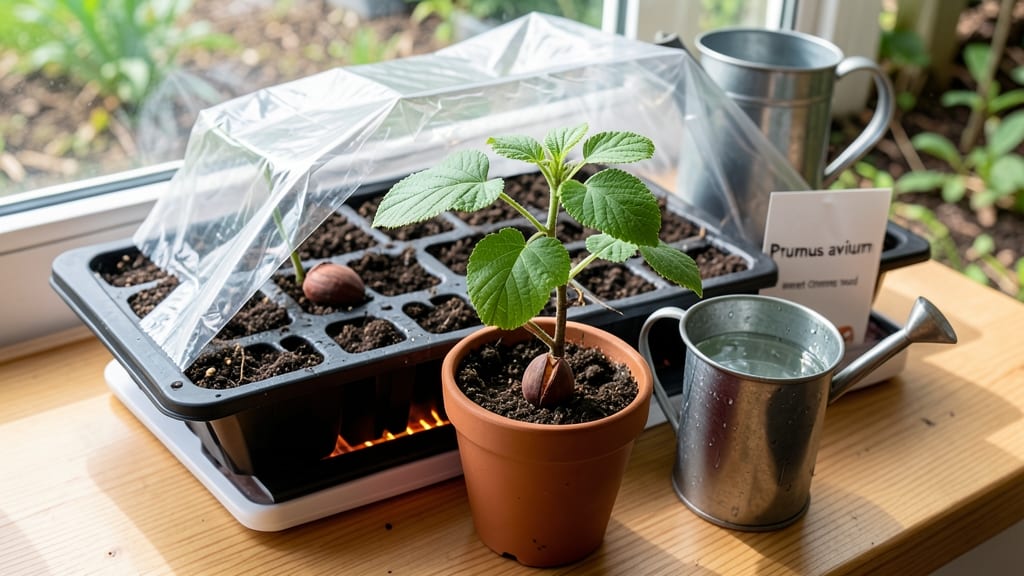
You can grow a cherry tree from a cherry seed, but the process is slow and the results are unpredictable: seeds need cold stratification to break dormancy, germination can take several months, and the resulting tree will likely produce different fruit than the parent plant due to genetic variation. Sweet cherry varieties are particularly unreliable when grown from seed.
Growing cherry trees from seeds is a fascinating experiment in patience and biology. 🌱 The seeds must first undergo cold stratification—typically 60-90 days in moist, refrigerated conditions—to simulate winter dormancy before sprouting.
Once planted, they may take 3-6 months to germinate, and even then, the trees that emerge often develop into ornamental rather than fruit-bearing varieties.
This is because cherry seeds carry only half the parent plant's genetic material, so the resulting tree will likely produce small, tart cherries (if any) that won't match store-bought varieties.
For home gardeners eager to grow cherry trees, starting with grafted nursery stock is far more reliable. These trees maintain the exact characteristics of the parent plant, including fruit size, flavor, and disease resistance.
If you're set on seed-grown trees, sour cherries (like 'Montmorency') have a slightly better chance of producing fruit than sweet cherries, though results still vary widely.
💡 In This Article
- Cherry Seed Germination Process and Requirements
- Best Cherry Tree Alternatives for Home Growers
Cherry seed germination process and requirements
The journey from cherry seed to sapling begins with a critical biological process called cold stratification. This mimics the natural winter cycle that breaks seed dormancy.
Place your seeds in a damp paper towel, seal them in a plastic bag with small air holes, and refrigerate for 60-90 days at 34-41°F. The moisture triggers enzymatic activity while the cold slows metabolism, allowing the seed to prepare for germination.
Without this step, most seeds will simply rot or remain dormant indefinitely. 🌱
Once stratified, plant the seeds ½ inch deep in a well-draining potting mix kept at 70-75°F. Germination can take 3-6 months, with some seeds waiting even longer. The key here is consistency—keep the soil evenly moist but never soggy.
Sweet cherry seeds, in particular, often fail to produce fruit-bearing trees because they're typically grown from hybrid varieties that don't reliably reproduce through seeds. Even if they sprout, the resulting tree may take 10-15 years to bear fruit, if at all.
What most gardeners don't realize is that cherry seeds carry only half the parent plant's genetic material. This means the offspring will likely produce small, tart cherries that bear little resemblance to the sweet, juicy varieties you'd find at the grocery store.
The tree's growth habit may also differ—some seed-grown cherries develop into ornamental trees with attractive foliage but minimal fruit production. 🍒
For optimal results, use seeds from sour cherry varieties like 'Montmorency', which have a slightly better chance of producing fruit. Even then, the fruit will likely be smaller and more acidic than commercial varieties.
The real challenge lies in maintaining consistent moisture and temperature throughout the germination process—too much heat or dryness can kill the delicate seedlings before they even emerge.
Consider this: while seed-grown cherry trees make beautiful shade trees, they're rarely practical for fruit production. The genetic unpredictability means you might end up with a tree that looks stunning but produces next to no edible cherries.
This is why professional orchards use grafted trees—they guarantee the exact fruit characteristics you want. 🌳
If you're determined to try seed germination, be prepared for a 2-3 year wait before your sapling is ready to transplant outdoors. During this time, it'll need careful monitoring for pests and proper sunlight exposure.
The patience required makes this more of a long-term landscaping project than a quick fruit-bearing solution. 💫