
Container Gardens
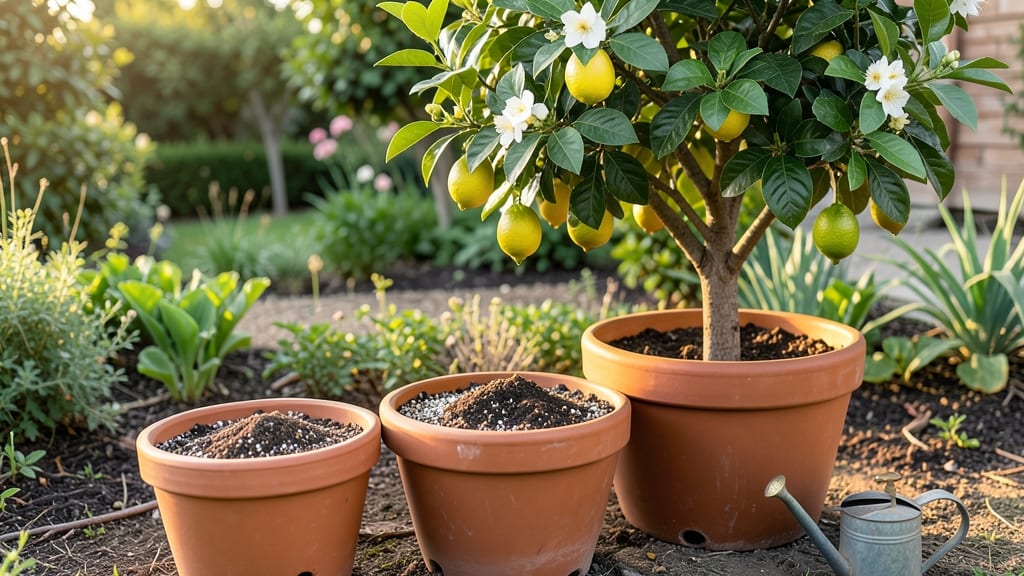
Your Meyer lemon tree’s pot size determines whether it thrives or struggles — and an 18-inch diameter is the minimum for healthy growth, especially as it matures.
Picture this: your 🍋 Meyer lemon tree withering despite your best care, its roots circling tightly in a cramped pot. The problem isn’t your watering or sunlight—it’s the container. Too small, and you’re asking for root-bound stress, stunted growth, and fewer lemons.
Too big, and you risk soggy soil and wasted nutrients. Getting it right means more fruit, stronger branches, and a tree that lives for decades.
Most gardeners assume a dwarf variety can handle a smaller pot, but even 6-foot dwarf Meyer lemons need at least a 15-inch container by year three. The key? Matching pot size to your tree’s age, variety, and growth stage.
A seedling might start in a 5-gallon pot, but by year five, it’ll demand 25+ gallons of space to support its roots and fruit load.
In this guide, I’ll walk you through the exact pot sizes for every stage—from seedling to mature tree—plus how to spot signs your container is too small (or too big) and when to repot for maximum health.


Why 18-Inch diameter pots are ideal for Meyer lemon trees
When growing a Meyer lemon tree in containers, pot size isn’t just about fitting the plant—it’s about replicating its natural root environment. These trees thrive with 18-inch diameter pots because their root systems need ample space to spread and access nutrients.
Research shows that citrus trees, including Meyer lemons, develop 30-50% more roots in wider containers compared to shallow ones, directly impacting fruit production.
The root-to-pot ratio is critical: a mature Meyer lemon tree’s roots can extend 2-3 feet deep and spread just as wide. An 18-inch pot provides the minimum diameter to prevent root binding, which stunts growth and reduces fruit quality.
Smaller pots may seem convenient, but they force roots to circle, creating a stress response that weakens the tree over time.
Here’s how pot size directly affects your tree’s health:
Many gardeners assume dwarf Meyer lemon varieties can thrive in smaller pots, but this is a common misconception. Even dwarf trees need 18-inch pots to support their root systems and fruit production.
The key difference? Dwarf trees simply stay smaller above ground while maintaining the same root demands as standard varieties.
Drainage is another critical factor tied to pot size. An 18-inch pot with multiple drainage holes prevents waterlogging, which is deadly for citrus roots. Without proper drainage, even the healthiest Meyer lemon tree will suffer from root rot or nutrient deficiencies.
Always pair your pot with a cactus/succulent mix or well-draining potting soil to further enhance water flow.
If you’re growing your Meyer lemon tree indoors, the 18-inch diameter becomes even more important. Indoor environments lack natural airflow, so the extra space helps reduce humidity buildup around the roots. Place your pot near a south-facing window to maximize sunlight exposure, which is essential for photosynthesis and fruit development.
One of the biggest mistakes I see is gradually upsizing pots instead of starting with the right size. While it’s tempting to move your tree to a larger pot every few years, this approach creates unnecessary stress.
Instead, start with an 18-inch pot and upgrade to a 24-inch pot only if your tree shows signs of outgrowing it after 3-4 years.
Watch for these signs your Meyer lemon tree needs a larger pot: - Roots growing out of drainage holes - Soil drying out too quickly (within 1-2 days) - Leaves yellowing despite consistent watering - Stunted growth or small, sparse fruit
Remember, the right pot size isn’t just about immediate growth—it’s an investment in your tree’s long-term health and productivity. With an 18-inch pot, your Meyer lemon tree will reward you with vibrant foliage, abundant blooms, and sweet, juicy lemons for years to come. 🌱🍋
How to choose the perfect pot size for every growth stage
Selecting the right pot size for your Meyer lemon tree depends entirely on its growth stage. A seedling needs a cozy 5-inch pot, while a mature tree thrives in an 18-inch diameter container or larger.
The key is balancing root space with water retention—too small, and your tree will become root-bound; too large, and moisture lingers, risking root rot. Let’s break it down by stage to ensure your tree grows strong and fruitful.
For young seedlings, prioritize drainage holes and a shallow depth (6-8 inches). As your tree matures, upgrade to larger pots every 1-2 years until reaching the minimum 18-inch diameter. Dwarf varieties may max out at 12-15 inches, but standard trees need 24-inch pots or deeper for stability.
Material matters too—terracotta wicks moisture but dries faster, while plastic retains humidity longer but risks overheating in summer.
| Growth Stage | Minimum Pot Size | Depth | Material | Repot Frequency |
|---|---|---|---|---|
| Seedling (0-1 year) | 5-inch diameter | 6-8 inches | Plastic or terracotta | Every 6 months |
| Young Tree (1-3 years) | 12-inch diameter | 12-15 inches | Plastic or fabric | Every 1-2 years |
| Mature Tree (3+ years) | 18-inch diameter | 18-24 inches | Fabric or heavy plastic | Every 2-3 years |
| Fruiting Tree (5+ years) | 24-inch diameter | 24+ inches | Fabric or wood | Every 3-4 years |
When upgrading pots, choose a container 2-4 inches larger in diameter than the current root ball. This gradual increase prevents transplant shock while giving roots room to expand. Always select pots with 4+ drainage holes—citrus trees hate soggy feet!
For outdoor winterizing, use insulated pots or wrap containers in bubble wrap to protect roots from freezing temps in Zone 8 or colder.
Watch for root-bound signs like roots circling the pot’s bottom or leaves yellowing despite proper watering. If you spot these, it’s time to repot. For dwarf Meyer lemons, a 12-inch pot may suffice long-term, but even these benefit from occasional upgrades.
Pro tip: Add a layer of gravel at the pot’s base to improve drainage and prevent compaction.
Material choice impacts more than just looks. Terracotta pots dry out faster, ideal for hot climates, while plastic retains moisture longer—perfect for dry winters. Fabric grow bags offer flexibility and aeration, reducing root circling.
Whichever you pick, ensure the pot’s weight matches your tree’s size—a 24-inch container filled with soil can weigh 50+ pounds when saturated!
Finally, don’t forget to elevate pots for airflow. Use pot feet or a drip tray to prevent water pooling. With the right pot at every stage, your Meyer lemon tree will reward you with juicy fruit and lush foliage for years to come. 🌱🍋