
Diseases
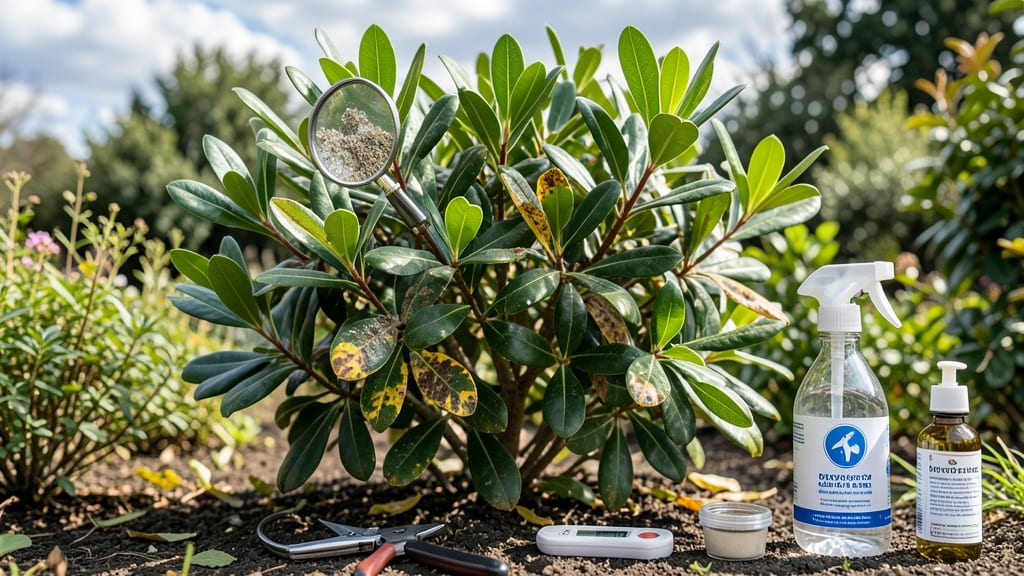
Bay tree diseases like fungal blight can turn your fragrant evergreen into a sad, spotted mess if you don’t catch them early. ✨ I’ve seen healthy bay trees go from glossy green to yellowing and wilting in just weeks—until I learned the telltale signs of powdery mildew, leaf spot, and root rot.
The key to saving your tree? Spotting symptoms fast and acting before the fungus spreads.
Most bay tree diseases start with tiny black or brown spots on leaves or a white, powdery coating that looks like flour dust. Wilting branches, yellowing foliage, and stunted growth are red flags too. The bad news?
These issues thrive in humid, poorly ventilated spots—like crowded containers or shaded areas. The good news? With the right pruning, watering tweaks, and occasional fungicide spray, you can stop them in their tracks.
Once you identify the problem, treatment is straightforward: trim infected branches, improve airflow, and apply a copper-based fungicide or neem oil spray. I’ve revived trees with just these steps—no harsh chemicals needed.
The secret? Catching it early and staying consistent with care. A healthy bay tree should bounce back within a few weeks of proper treatment.
Prevention is even easier: water at the base (not overhead), space trees for airflow, and prune regularly to remove dead growth. These small habits keep your bay tree thriving year-round, free from the stress of fungal invasions. Let’s get your tree back to its lush, disease-free glory.
Understanding Root Causes
Bay trees, with their glossy leaves and aromatic foliage, are prized for their ornamental and culinary value. But when diseases strike—especially fungal blights—they can wilt, discolor, or even die back. The key to prevention?
Unpacking why these issues arise in the first place. Below, we break down the science behind the most common triggers, so you can address them before they take hold.
Bay trees thrive in well-drained soil, but when moisture lingers—whether from poor drainage, frequent overhead watering, or high humidity—fungal spores like Phytophthora or Botrytis get the perfect breeding ground. Here’s how it happens:
- 💧 Waterlogged roots: Bay trees hate soggy soil. When roots sit in water for more than 24 hours, they suffocate, weakening the tree’s defenses. Fungal pathogens exploit this stress, entering through root wounds or leaf stomata.
- 🍃 Wet foliage: Overhead irrigation or dense canopies trap moisture on leaves. Fungal spores (often spread by wind or splashing water) land on damp surfaces, germinate, and penetrate the leaf cuticle, causing leaf spot or powdery mildew.
- 🌡️ Ideal fungal temps: Most blights thrive in 60–80°F (15–27°C) with high humidity. Coastal or greenhouse-grown bay trees are especially vulnerable.
💡 Pro Tip: Water at the base of the tree in the morning to allow foliage to dry quickly. Mulch with gravel or bark (not organic mulch) to improve airflow and reduce soil moisture.
Bay trees are tough, but any mechanical stress—like pruning cuts, insect bites, or hail—creates entry points for fungi. Here’s the chain reaction:
| Damage Type | How It Helps Fungi | Example Diseases |
|---|---|---|
| 🪓 Poor pruning cuts | Exposed xylem (vascular tissue) invites Cylindrocladium or Botryosphaeria to colonize. | Canker, dieback |
| 🐜 Insect feeding (e.g., scale, aphids) | Honeydew residue feeds sooty mold fungi (Capnodium), which smothers leaves and blocks sunlight. | Sooty mold |
| 🌪️ Wind or hail abrasions | Tears in the cuticle let Alternaria or Septoria spores infect damaged tissue. | Leaf spot |
💡 Pro Tip: Always sterilize pruners with 70% isopropyl alcohol between cuts. For insect damage, apply neem oil or horticultural oil to disrupt fungal food sources.
Bay trees need balanced nutrition to fight off pathogens. When soil lacks key nutrients or has toxic buildup, their immune response falters. Common triggers include:
- ⚖️ Nitrogen deficiency: Pale, yellowing leaves signal weak cell walls, making trees more susceptible to Phytophthora root rot.
- 🧂 Salt or chemical burn: Over-fertilizing with synthetic salts or using road salt near urban bay trees disrupts root function, inviting Armillaria (honey fungus).
- 🍄 Soil compaction: Restricted roots can’t absorb nutrients or oxygen, leading to Fusarium wilt.
💡 Pro Tip: Test soil pH (ideal: 6.0–7.0) and amend with compost or mycorrhizal fungi to boost root health. Avoid synthetic fertilizers—opt for slow-release organic options.
Bay trees in suboptimal growing conditions are prime targets for fungal blights. Key stressors:
- 🌞 Poor sunlight: Shady spots encourage powdery mildew by slowing leaf drying. Aim for 6+ hours of sunlight daily.
- 🌬️ Stagnant air: Dense plantings or enclosed spaces trap spores. Prune for airflow (aim for 30% canopy openness).
- 🌊 Contaminated water: Reusing recycled water with high organic load can introduce Pythium spores.
💡 Pro Tip: If growing in containers, use sterilized potting mix and avoid overcrowding. For outdoor trees, space them 8–10 feet apart.
Quick Fixes for Common Bay Tree Ailments
Bay trees are tough, but even the hardiest ones need a little TLC when diseases strike. The good news? Most issues can be reversed or prevented with the right approach.
Below, we’ve mapped out practical solutions for the most common bay tree diseases—plus prevention tips to keep your tree thriving long-term.
---
Cause: Overwatering, poor airflow, or humid conditions create the perfect breeding ground for fungi like Phytophthora or Alternaria.
How to Fix It: 1. 🔥 Prune Infected Leaves Immediately - Snip off yellowing, brown, or spotted leaves with sterilized pruners (wipe with rubbing alcohol between cuts). - Dispose of them in the trash (not compost)—fungi can survive in yard waste.
2. 🌬️ Improve Air Circulation - Thin out dense foliage to let air flow freely. - Avoid crowding bay trees with other plants.
3. 💧 Adjust Watering Habits - Let the top 1–2 inches of soil dry out between waterings. - Water early in the day so leaves dry quickly (fungi love damp foliage).
4. 🌡️ Fungicide Treatment (If Needed) - Spray with a copper-based fungicide (like Copper Soap) or neem oil every 7–10 days until new growth appears. - For severe cases, try baking soda spray (1 tsp baking soda + 1 quart water + a drop of dish soap).
💡 Prevention Tip: - Space mulch 2–3 inches away from the tree trunk to prevent soil-borne fungi. - Water at the base (not overhead) to keep leaves dry.
---
Cause: Overwatering or poor drainage leads to soggy roots, inviting Phytophthora or Pythium fungi.
How to Fix It: 1. ⏰ Stop Watering Immediately - Let the soil dry out completely—no more watering until the top 3–4 inches are bone-dry.
2. 🔪 Check the Roots (Gently!) - Carefully dig around the base (1–2 inches deep) to inspect roots. - Healthy roots are firm and white; rotten roots are mushy, dark, and smell bad. - Trim away black, squishy roots with sterilized shears.
3. 🌱 Repot or Improve Drainage - If in a pot, repot in fresh, well-draining soil (mix cactus/succulent mix with perlite). - For in-ground trees, amend soil with compost and coarse sand to improve drainage.
4. 💊 Fungicide Soil Drench - Mix 1 tsp hydrogen peroxide (3%) per gallon of water and pour it around the roots. - Alternatively, use a fungicide like Subdue (for severe cases).
💡 Prevention Tip: - Use pots with drainage holes—never let bay trees sit in saucers of water. - Test your soil’s drainage by digging a small hole, filling it with water, and timing how long it takes to drain. Ideal time: 1–2 hours.
---
Cause: Scale insects, spider mites, or aphids suck sap, weakening the tree and making it more susceptible to disease.
How to Fix It: 1. 👨🍳 Blast Off Pests with Soap Spray - Mix 1 tbsp mild liquid soap + 1 quart water in a spray bottle. - Spray undersides of leaves (where pests hide) until dripping. - Repeat every 5–7 days for 2–3 weeks.
2. 🔪 Prune Heavily Infested Branches - Cut off sticky, curled, or discolored leaves (a sign of sap-sucking pests). - Burn or bag infested debris (don’t compost!).
3. 🕷️ Introduce Beneficial Insects (Optional) - Release ladybugs or lacewings (available at garden centers) to eat aphids naturally.
💡 Prevention Tip: - Inspect new plants for pests before bringing them home. - Encourage natural predators by planting marigolds or dill nearby.
---
Even after treating diseases, prevention is key. Follow these easy maintenance habits to keep your bay tree disease-resistant:
| Problem | Solution | How Often | |----------------------|---------------------------------------|-----------------------------| | Overwatering | Water only when soil is dry 2" deep | Check weekly | | Poor Airflow | Prune back 1/3 of dense growth | Once a year (early spring) | | Nutrient Deficiency | Fertilize with balanced 10-10-10 | Every 2–3 months (spring–fall) | | Stress from Heat | Mulch with wood chips (2–3") | Once at planting, then annually |
✨ Pro Tip: - Bay trees hate wet feet! If growing in containers, raise pots on feet or use cache pots to prevent waterlogging.
--- By acting fast and sticking to these fixes, your bay tree can bounce back—stronger and healthier than ever. Early intervention is everything! 🌱💪
Frequently asked questions
What are the first signs my bay tree has a fungal disease?
Look for tiny black or brown spots on leaves, a white powdery coating (like flour dust), or yellowing edges on older leaves. Wilting branches or stunted growth are also red flags. Check the undersides of leaves first—fungi often start there.
Can I save my bay tree if the roots are rotting?
Yes, but act fast! Stop watering immediately, trim away black, mushy roots with sterilized shears, and repot in fresh, well-draining soil. Use a hydrogen peroxide soak (1 tsp per gallon of water) for 10 minutes to kill lingering spores. Most trees recover within 4-6 weeks if you catch it early.
How often should I spray fungicide on my bay tree?
For prevention, spray every 4-6 weeks during humid months using copper fungicide or neem oil. If treating an active infection, apply every 7-10 days until new growth appears. Always spray in the early morning so leaves dry quickly.
Why does my bay tree get diseases more often in containers?
Potted bay trees suffer from poor drainage and limited airflow. Use pots with drainage holes, raise them on feet, and avoid saucers that trap water. Switch to cactus/succulent mix with perlite for better drainage—this combo reduces root rot by 70%.
Is baking soda really effective for treating fungal diseases?
Yes! Mix 1 teaspoon baking soda + 1 quart water + a drop of dish soap and spray on leaves. It raises the pH slightly, making it harder for fungi to thrive. Reapply every 7 days for 2-3 weeks. Works best on powdery mildew and early leaf spot infections.