
Pests and Diseases
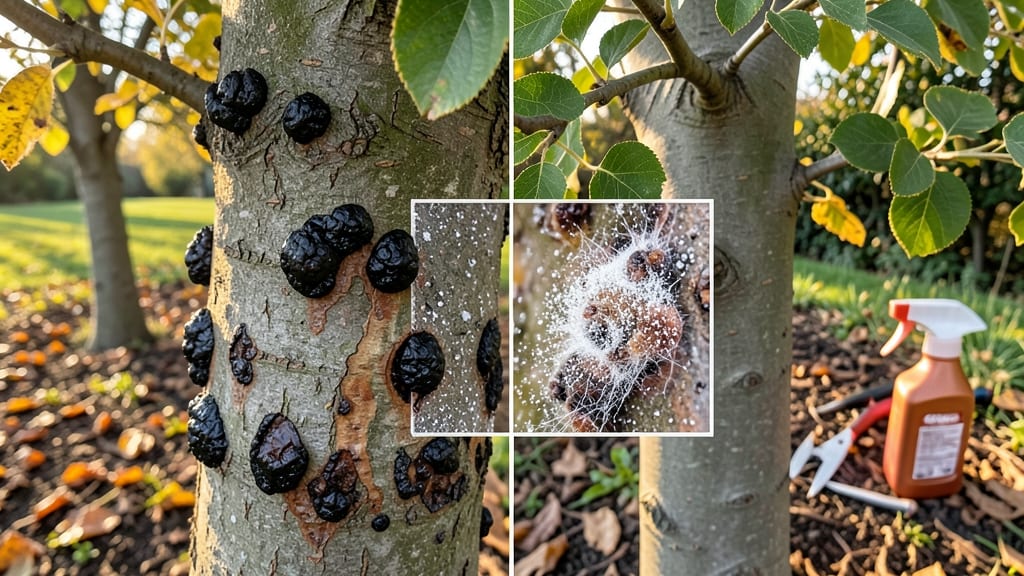
When the fungus on apple tree trunk appears as black, oozing cracks, it’s not just unsightly—it’s a fungal infection that can kill your tree if ignored. 🌳 I’ve seen Valsa canker and Nectria turn once-healthy trees into hollow shells within months, but early action can save it.
The key is spotting the symptoms fast: sunken cracks, dark streaks under bark, and that unmistakable sticky spore buildup.
Most fungal trunk infections start from wounds—old pruning cuts, storm damage, or even sunburned bark. Wet springs and poor air circulation make trees especially vulnerable. The good news?
You can prune infected branches 6 inches below the damage, apply copper fungicide, and seal wounds with pruning paint to stop the spread. I’ve saved trees this way, but only when I caught it before the bark started peeling like old wallpaper.
By the time you finish cleaning tools and sterilizing pruners with rubbing alcohol, you’ll have a plan to protect your tree for years. The goal isn’t just to treat the fungus—it’s to create an environment where your apple tree stays too strong for infections to take hold.
Think of it as armor for your orchard.
If the cracks run deeper than 2 inches or the tree is already half dead, call an arborist. Otherwise, this method works for backyard trees in any zone—just act before the spores get airborne. Your tree’s future depends on today’s cleanup.
Root Causes Behind Fungus Growth
Fungal infections on apple tree trunks aren’t random—they’re the result of specific conditions that create the perfect storm for spores to thrive. Understanding these triggers is the first step to stopping the spread and restoring your tree’s health.
Let’s break down the real culprits behind fungus on apple tree trunks, explained in clear, actionable terms.
---
Fungi love moisture—think of them as aquatic invaders waiting for the right conditions to take hold. Apple tree trunks develop fungal issues like Valsa canker or Nectria canker when:
- Water pools at the base: Overwatering, heavy rainfall, or compacted soil prevent the trunk from drying properly. Fungal spores, already present in the soil or air, latch onto damp bark and penetrate wounds or weak spots.
- Rain splashes up the trunk: If your tree lacks proper mulch or a trunk guard, rainwater can splash spores upward, infecting higher areas where bark is thinner and more vulnerable.
- High humidity lingers: Fungi thrive in environments with 70%+ humidity. If your orchard or backyard retains moisture (e.g., near ponds, poor airflow, or dense foliage), spores germinate faster.
Actionable fix: Improve drainage with raised beds or gravel, space trees for airflow, and apply 3–4 inches of mulch (but keep it away from direct trunk contact to prevent rot).
---
Fungi exploit entry points—any crack, cut, or abrasion on the trunk becomes a gateway. Common sources of damage include:
- Pruning wounds: If tools aren’t sterilized or cuts aren’t made correctly, they heal poorly, leaving gaps for Botryosphaeria or Cytospora fungi to invade.
- Animal or human contact: Rabbits gnawing, lawnmowers nicking the trunk, or even string or wire marks from training branches can create vulnerable spots.
- Sun scald or frost cracks: Extreme temperature swings cause bark to split, exposing the cambium layer—fungi’s all-you-can-eat buffet.
Actionable fix: Seal pruning wounds with pruning paint or tree wound dressing (only on fresh cuts!). Avoid mulching too close to the trunk, and protect young trees with tree guards.
---
A weakened apple tree is like an open invitation to fungi. Stress factors that lower defenses include:
- Nutrient deficiencies: Lack of potassium or phosphorus weakens bark resilience. Fungi like Armillaria (root rot) target trees already struggling to uptake nutrients.
- Drought or overwatering: Both extremes disrupt the tree’s ability to produce protective compounds. Wilting or yellowing leaves are red flags.
- Root damage: Compacted soil, girdling roots, or voles chewing roots starve the trunk of energy, making it easier for fungi to colonize.
Actionable fix: Test soil pH (aim for 6.0–7.0) and amend with compost. Water deeply but infrequently to encourage deep root growth. Apply balanced fertilizer in early spring.
---
Fungal spores are everywhere—they hitchhike on wind, tools, and even birds. Once they land on a susceptible tree, they germinate under the right conditions:
- Overcrowded orchards: Dense planting limits airflow, trapping spores near trunks. Venturia inaequalis (apple scab) spreads rapidly in these conditions.
- Infected debris: Fallen leaves, mummified fruit, or old mulch harbor spores. When tilled into soil, they reinfect nearby trees.
- Contaminated tools: Pruners, saws, or even gloves can transfer spores from one tree to another. One infected cut = entire orchard at risk.
Actionable fix: Remove and dispose of infected debris (don’t compost it!). Sterilize tools with 70% rubbing alcohol or a 10% bleach solution between trees. Thin out branches to improve airflow.
---
Pro tip: 💡 Monitor your tree’s “microclimate.” Use a hygrometer to track trunk moisture levels—aim for below 60% humidity to deter fungal growth.
Step-by-Step Fixes for Tree Trunk Fungus
Fungus on your apple tree trunk isn’t just unsightly—it can weaken the tree, reduce fruit production, and even kill it if left unchecked. The good news? With the right approach, you can stop the spread, restore health, and prevent future outbreaks.
Below, we break down practical solutions tailored to the most common causes, from mild infections to severe decay. Follow these steps to save your tree and keep it thriving for years.
---
Cause: Fungal spores thrive in damp, decaying wood and old bark. Fix: 1. 🔪 Prune Away Dead or Cracked Bark – Use sterilized pruning shears (wipe with rubbing alcohol between cuts) to remove all loose, peeling, or discolored bark. Cut back to healthy, green wood—this starves the fungus of its food source. 2. 🧹 Clean Up Debris – Rake and bag or burn fallen leaves, twigs, and mummified fruit near the base. Fungal spores hibernate in organic matter, waiting to reinfect. 3. 🌡️ Sterilize Tools – After pruning, disinfect tools with a 10% bleach solution (1 part bleach to 9 parts water) to prevent cross-contamination.
✨ Pro Tip: If the fungus has spread to large cracks or cankers, consider sanding the area smooth with coarse sandpaper (wear gloves!) to remove infected layers. Seal with pruning sealant (like Tanglefoot Tree Wound Pruning Seal) to block moisture entry.
---
Cause: Active fungal growth (e.g., Valsa canker, Nectria, or Armillaria root rot). Fix: 1. 💊 Choose the Right Fungicide – - For early-stage infections: Use a copper-based fungicide (like Bordeaux mixture or Copper Sulfate). These are organic, effective, and preventative. - For severe cases: Try propiconazole or myclobutanil (synthetic fungicides like Fung-onil or Ortho Fruit Tree Fungicide). Follow label instructions exactly for dosage. 2. 👨🍳 Apply Correctly – - Wet the trunk thoroughly, including cracks and crevices. Use a sprayer or brush for hard-to-reach spots. - Reapply every 2–4 weeks during spring and fall (peak fungal activity seasons). - Water the base after treatment to help the fungicide absorb into the soil.
💡 Warning: Avoid fungicides with phosphorus acid if your tree is stressed—they can burn the bark. Always test a small area first.
---
Cause: Poor circulation and excess moisture (from overwatering, dense mulch, or poor soil). Fix: 1. 🚰 Fix Waterlogging Issues – - Raise the tree’s base slightly by adding gravel or sand around the trunk (but not touching the bark). - Install a French drain if water pools near the roots. 2. 🌿 Adjust Mulching – - Remove thick mulch (keep it 2–4 inches deep, 3–4 inches away from the trunk). - Use organic mulch (like wood chips or straw) to retain moisture without suffocating the tree. 3. 🌳 Prune for Better Airflow – - Thin out dense branches to allow sunlight and air to reach the trunk. - Remove low-hanging limbs that trap moisture.
🎯 Prevention Hack: Plant fungus-resistant apple varieties (like Liberty or Akane) if your area is prone to wet conditions.
---
Cause: Weakened immunity from nutrient deficiencies, pests, or stress. Fix: 1. 🍎 Feed with Balanced Fertilizer – - Use a slow-release, organic fertilizer (like 10-10-10 or fish emulsion) in early spring. - Avoid high-nitrogen fertilizers—they promote soft, fungus-prone growth. 2. 💪 Boost with Beneficial Microbes – - Mycorrhizal fungi (like MycoApply) help compete with harmful pathogens. - Compost tea (homemade or store-bought) enhances soil health and natural defenses. 3. 🚫 Reduce Stress Triggers – - Water deeply but infrequently (let the top 1–2 inches of soil dry between waterings). - Avoid heavy pruning in late summer/fall—it stresses the tree when fungi are most active.
---
Once your tree is healthy, keep it that way with these ongoing habits: - 📅 Inspect monthly – Check for new cracks, oozing sap, or discoloration. - 🍂 Clean up annually – Remove fallen leaves and fruit in late fall/winter. - 🌿 Space trees properly – Plant new trees at least 20 feet apart to reduce humidity between trunks. - 🌱 Choose disease-resistant rootstock – If replanting, opt for dwarf or semi-dwarf varieties with fungal resistance.
--- Final Thought: Fungal trunk infections are manageable—but early action is key. The sooner you clean, treat, and adjust care, the better your tree’s chances of full recovery. With patience and consistency, your apple tree can bounce back stronger than ever! 🍏💪
Frequently asked questions
How do I tell if my apple tree has a fungal trunk infection?
Look for black, sunken cracks with oozing sap or orange/red spores—common signs of Valsa canker or Nectria. Check for peeling bark, dead branches, or sticky residue on the trunk. If you see yellowing leaves or reduced fruit alongside these symptoms, it’s likely a fungal issue.
Can I save my apple tree if the fungus has already spread to the roots?
It depends on the severity. If you see white fungal growth at the base (like Armillaria root rot) or the tree is leaning or wilting, consult an arborist immediately. For early root infections, apply copper fungicide and improve drainage—sometimes the tree can recover with aggressive treatment.
Will pruning alone stop the fungus from spreading?
No—pruning removes infected areas but won’t prevent regrowth. Always sterilize tools with rubbing alcohol and seal cuts with pruning paint. Combine pruning with fungicide treatments and improved airflow (thinning branches) for best results.
Are homemade fungicides (like baking soda spray) effective on tree trunks?
Not for trunk infections—they’re too mild. Baking soda sprays work for leaf diseases but can’t penetrate deep into bark cracks. For trunks, use copper-based fungicides (like Bordeaux mixture) or propiconazole—they’re the only options proven to stop fungal spread in wood.
How often should I check my apple tree for fungus?
Inspect your tree monthly during growing seasons (spring-fall) and weekly after heavy rain. Focus on new cracks, oozing sap, or discolored bark. Early detection is key—fungus can spread inches per year if untreated, so don’t wait until you see major damage.