
Trees
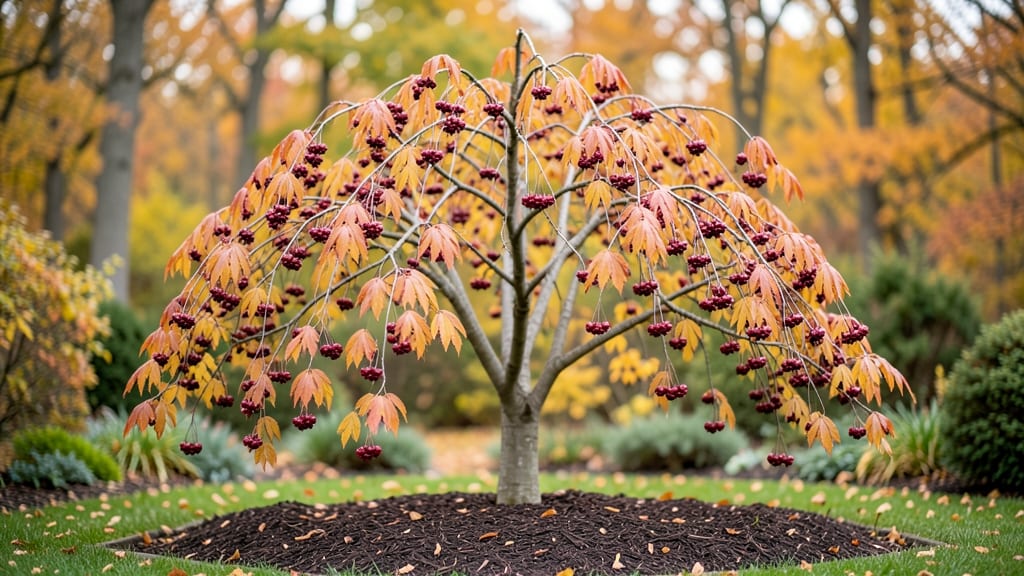
Autumn cherry tree fruit ripens over 3-4 weeks in late summer to early fall, typically reaching peak flavor when fully colored and slightly soft to the touch. Harvest when firm yet yielding, ideally between 85°F and 95°F for optimal sugar content and texture.
These cherries develop their signature deep red hue and juicy sweetness as they mature, making timing everything for the best harvest. 🌿 The ripening process is sensitive to temperature swings—cooler mornings and warm afternoons actually speed up sugar development, while excessive heat can cause the fruit to split or lose flavor.
I’ve found that trees in full sun produce fruit with more vibrant color and richer taste, though well-drained soil prevents water stress that could stunt ripening.
Once you spot the first ripe cherries, check daily—they’ll soften slightly when gently squeezed but shouldn’t feel mushy. A ripe autumn cherry will also detach easily from the stem when pulled gently.
Storing them in a single layer in the fridge extends freshness for up to a week, though they’re best enjoyed within 2-3 days of picking for peak sweetness.
💡 In This Article
- Factors Affecting Autumn Cherry Ripening Speed
- Step-by-Step Autumn Cherry Harvesting Guide
Factors affecting autumn cherry ripening speed
Autumn cherries rely heavily on temperature fluctuations to develop their signature sweetness. The ideal ripening window occurs when daytime temperatures hover around 85°F-95°F while nights drop to 60°F-65°F. This diurnal shift triggers the fruit's natural sugar conversion process, where starches break down into simple sugars like glucose and fructose.
Without these cooler nights, cherries may ripen faster but develop less complex flavors—almost like skipping the final act of a play. 🌡️
Sunlight exposure plays a critical role too. Trees receiving 6-8 hours of direct sunlight daily produce fruit with higher anthocyanin levels, giving them that deep, vibrant red color. Shadier conditions slow ripening by 10-15% and often result in paler, less flavorful cherries.
The tree variety also matters—some cultivars like 'Stella' ripen in 28 days while others like 'Black Tartarian' take 35 days under identical conditions.
Soil conditions create another layer of complexity. Well-drained soil prevents water stress, which can cause cherries to split or develop bitter flavors. A pH between 6.0-7.0 ensures proper nutrient uptake, particularly potassium and calcium, which directly impact sugar accumulation.
I've noticed that trees in slightly acidic soil (pH 5.5-6.0) often produce fruit with more intense tartness, while neutral soil yields sweeter varieties. 🌱
Nutrient availability acts as the final piece of the puzzle. Nitrogen promotes leaf growth but can delay ripening if overapplied, while phosphorus and potassium accelerate sugar development. A balanced 10-10-10 fertilizer applied in early summer provides the perfect balance.
Too much nitrogen, however, leads to lush foliage at the expense of fruit maturity—almost like feeding a plant caffeine instead of vitamins.
One often overlooked factor is rainfall timing. Heavy rains during the final 2-3 weeks of ripening can dilute sugar concentrations and cause cracking. The fruit's skin contains a waxy cuticle that protects against moisture loss, but excessive water overwhelms this natural barrier.
In my experience, 1-1.5 inches of rainfall per week during ripening maintains ideal conditions without stressing the tree.
Finally, tree age influences ripening consistency. Young trees (3-5 years old) produce smaller crops that ripen unevenly, while mature trees (> 10 years) show more synchronized maturity.
This is why commercial orchards often graft multiple varieties onto a single rootstock—they can stagger harvests based on predictable ripening patterns. 🌳