
Pruning
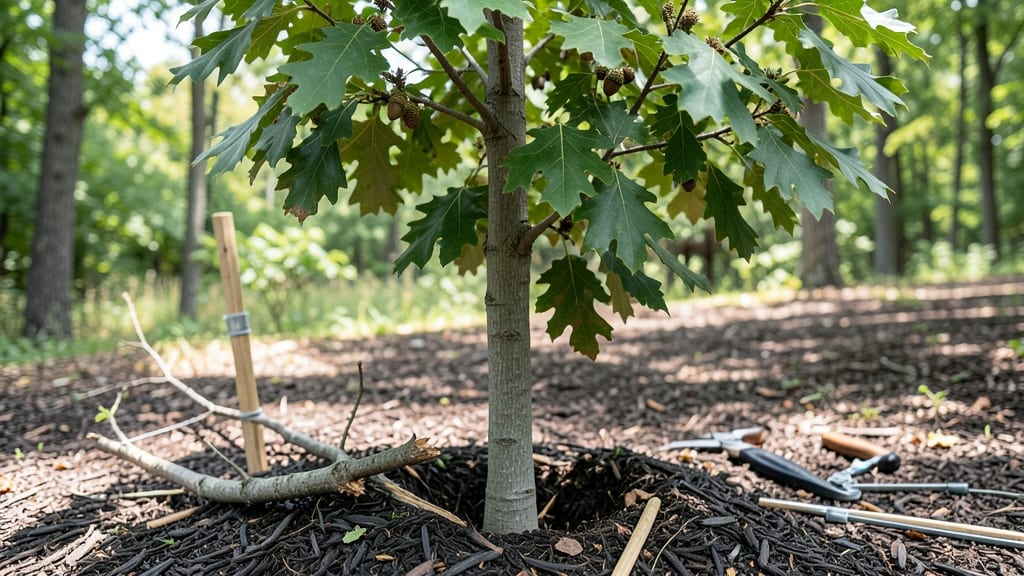
A young tree snapped in half isn’t the end—it’s a call to action. 🌳 I’ve nursed back broken trees by acting fast, and the right steps can save yours too. The first 24 hours are critical, but with proper stabilization and care, many trees recover beautifully over time.
Start by assessing the break: clean cuts mean the tree has a fighting chance, while jagged tears or exposed pith (the spongy center) signal deeper damage. Use sturdy rope or metal brackets to gently bind the two halves together, creating a natural splint.
Avoid over-tightening—you’re guiding growth, not strangling it. If the break is high or the tree is large, call an arborist immediately.
Long-term recovery depends on two things: proper pruning and patience. Remove any dead or crossing branches to reduce stress, then monitor for new growth at the break point. Some trees heal by forming a callus, while others need grafting if the damage is severe.
With consistent care, your tree can regain strength and even produce fruit or flowers again.
Prevention starts with planting: choose species suited to your climate, stake young trees in windy areas, and water deeply during dry spells. A little extra care now means fewer emergencies later. Your tree’s survival depends on acting quickly—but don’t let fear stop you from trying.
Root Causes Behind Tree Failure
A young tree snapping in half is often a heartbreaking sight, but understanding the underlying factors can help prevent future damage. Trees are resilient, but when stress exceeds their structural limits, failure becomes inevitable.
Below, we break down the most common reasons—backed by science—and what you can do to mitigate them.
Sudden, violent winds or storms are the #1 culprit behind young trees snapping. Unlike mature trees with deep root systems and thick trunks, young trees have shallow roots and flexible but weak wood.
When gusts exceed 30-40 mph, the force can exceed a tree’s moment of resistance (its ability to resist bending).
Key factors:
- Shallow root systems: Young trees (under 5 years old) often have roots only 12-18 inches deep, making them top-heavy and prone to uprooting or snapping mid-trunk.
- Leaf surface area: Broadleaf trees (like maples or oaks) have large canopies that act like sails, increasing wind resistance.
- Soil saturation: Wet soil reduces friction between roots and earth, making trees 3x more likely to fail in storms (studies from Silviculture Journal).
Actionable fix: Stake young trees temporarily in high-wind zones and mulch to improve soil stability. Choose wind-resistant species (e.g., bald cypress, willow, or hawthorn) if storms are frequent.
Even the healthiest tree can fail if planted incorrectly. Common mistakes create structural weaknesses that manifest years later—often in dramatic ways.
| Mistake | Why It Causes Failure | Fix |
|---|---|---|
| Planting too deep | Buried root collars (where roots meet trunk) suffocate the tree and weaken the base, making it prone to compression failure. | Plant so the root flare is 1-2 inches above soil level. |
| Inadequate support | No staking or improper staking (e.g., using wire that girdles the trunk) restricts trunk thickening, leaving it brittle. | Use spiral staking with flexible ties for 1-2 years max. |
| Compacted or rocky soil | Roots struggle to anchor, making the tree top-heavy and vulnerable to wind. | Amend soil with compost and avoid planting in construction zones. |
Pro tip: 🌡️ Test soil drainage before planting—waterlogged roots rot faster, accelerating structural decay.
Human or animal interference can silently weaken a tree over time. Even minor injuries create entry points for pests and diseases, compromising the vascular cambium (the tree’s growth layer).
- Girdling roots: Roots growing around the trunk (often from improper planting) strangle the tree, reducing water flow and causing tension wood (a brittle, weak layer).
- Lawnmower or weed whacker wounds: Deep cuts into the trunk create callus wounds that fail to heal, leading to rot fungi (e.g., Armillaria).
- Animal damage: Deer rubbing bark or beavers gnawing trunks remove protective layers, exposing the xylem to decay.
Actionable fix:
- Inspect trunks annually for raised bark or cavities—signs of girdling.
- Apply tree wound paint (only on fresh cuts) to prevent fungal entry.
- Install physical barriers (e.g., fencing) to protect young trees from wildlife.
Hidden pathogens and insects hollow out a tree’s interior long before visible symptoms appear. By the time you see wilting leaves or oozing sap, the structural integrity may already be compromised.
| Pest/Disease | How It Weakens the Tree | Red Flags |
| Emerald ash borer | Larvae tunnel under bark, disrupting water transport and causing heartwood decay. | D-shaped exit holes, splitting bark. |
| Fungal root rot (e.g., Phytophthora) | Destroys root tissue, reducing anchor strength by up to 70%. | Mushrooms at base, mushy roots when dug. |
| Canker diseases (e.g., Valsa) | Creates deadwood zones in the trunk, making it prone to snapping. | Sunken, oozing lesions on bark. |
Pro tip: ✨ Prune infected branches immediately (don’t leave stubs!) and treat with copper fungicide if early signs appear.
Understanding these causes is the first step to preventing a snapped tree—and knowing how to act fast if it happens. Next, we’ll cover emergency repair steps to salvage your tree after the damage is done.
Emergency Fixes and Long-Term Care
When your young tree has snapped in half, panic isn’t the first step—action is. The good news? With the right approach, you can often nurse it back to health or at least salvage what’s left.
Below, we break down cause-specific fixes and preventive measures to keep your tree standing strong for years to come.
Before assessing the damage, act fast to prevent further harm.
🔥 Step 1: Assess the Damage
- Check the break: Is it a clean snap, or are there jagged tears? A clean break is easier to repair.
- Evaluate the trunk: Can you see the vascular cambium (the green layer under the bark)?
If exposed, the tree may struggle to heal. - Look for signs of life: Tap the broken ends gently—if they’re still firm, there’s a chance the tree can recover.
🍳 Step 2: Stabilize the Break (If Possible)
If the tree is not severely damaged (e.g., no large exposed wood or deep splits), you can attempt to splice the break using a tree repair clamp or wooden splints: 1. Clean the break: Remove any debris or loose bark from the snapped ends.
- Apply a tree wound dressing (like Tanglefoot Tree Wound Pruning Sealant) to prevent disease entry.
- Use a repair clamp (available at garden centers) to hold the two halves together. Follow the manufacturer’s instructions for proper placement.
- Secure with zip ties or wire (if no clamp is available), but avoid cutting into the bark.
⚠️ Warning: If the break is too severe (e.g., the trunk is split all the way through or the tree is leaning dangerously), do not force a repair. In this case, pruning the damaged section may be the only option.
Not all snapped trees can be saved—but selective pruning can help the remaining healthy parts thrive.
👨🍳 Pruning dead or damaged branches
If the tree is partially broken but still alive, focus on:
- Removing dead wood: Use clean, sharp pruners to cut back to a healthy bud or lateral branch.
- Thinning the canopy: If the tree is top-heavy, reduce leaf density to lighten the load.
- Avoid over-pruning: Never remove more than 25% of the foliage at once—this stresses the tree further.
🔪 When to remove the tree entirely
If the tree is: ✅ Severely split (no chance of healing) ✅ Leaning precariously (risk of falling) ✅ Infested with disease (e.g., fungal growth at the break) …then removal may be the safest option.
Call a certified arborist to handle it professionally.
Even if you’ve stabilized the break, proper aftercare is key to survival.
💡 Pro Tip: Watering and Mulching
- Water deeply (1-2 inches per week) to help the tree recover.
- Apply 2-4 inches of mulch around the base (but keep it away from the trunk to prevent rot).
- Fertilize lightly (if needed) with a balanced, slow-release fertilizer to support regrowth.
🌿 Monitoring for Signs of Healing
- New growth at the break? That’s a good sign—the tree is trying to recover.
- Callous formation (a thick, woody seal over the wound)?
This means healing is underway. - No improvement after 6-12 months? The tree may not survive—consult an arborist.
An ounce of prevention is worth a pound of repair. Here’s how to protect your tree long-term:
| Risk Factor | Prevention Solution |
|---|---|
| Weak branch structure | Prune weak crotches (V-shaped branches) to improve strength. |
| Poor soil anchorage | Plant in well-draining soil and stake young trees temporarily (remove stakes after 1 year). |
| Heavy snow/ice | Prune lower branches to reduce snow load. |
| Strong winds | Choose wind-resistant species (e.g., oak, maple) for exposed areas. |
| Rapid growth | Thin out branches annually to prevent overgrowth. |
💡 Bonus Tip: Tie young trees to stakes for the first 1-2 years to help them establish a strong root system before facing harsh weather.
Final Thought: A snapped tree isn’t always a death sentence—quick action and smart care can make all the difference. Whether you’re splicing a break, pruning wisely, or reinforcing roots, your tree has a fighting chance. 🌿✨
Frequently asked questions
Can I save a young tree that snapped in half if the break is jagged?
Jagged breaks are harder to repair, but not impossible. If the vascular cambium (green layer under bark) isn't exposed, you can still attempt stabilization with a tree repair clamp or wooden splints. Smooth out rough edges with a clean saw, then seal with tree wound dressing to prevent disease. If the break is messy or the tree is leaning dangerously, consult an arborist.
How long does it take for a snapped tree to heal?
Healing timelines vary, but most trees show signs of recovery within 3-6 months if stabilized properly. Look for new growth at the break point or callus formation (a woody seal over the wound). For severe cases, complete recovery may take 1-2 years, or the tree may need professional grafting if the damage is extensive.
What kind of rope or material should I use to stabilize the break?
Use flexible, breathable materials like tree repair straps (available at garden centers) or wide nylon webbing. Avoid wire or tight zip ties—they can girdle the trunk and cause damage. For DIY solutions, wooden splints secured with soft cloth strips work well. Never use anything that cuts into the bark.
Should I prune the broken branches immediately?
Wait until you've assessed the damage. If the tree is partially broken but alive, remove only dead or diseased branches first. Avoid heavy pruning—never cut more than 25% of foliage at once. Focus on thinning the canopy to reduce weight if the tree is top-heavy. Leave healthy branches intact to support recovery.
When should I call an arborist instead of trying to fix it myself?
Call a professional if the break is severe (clean split through the trunk), the tree is leaning precariously, or you see fungal growth at the break. Also seek help if the tree is large (over 6 feet tall) or the damage is high up—these situations require specialized equipment and expertise for safe repair.