
Pruning
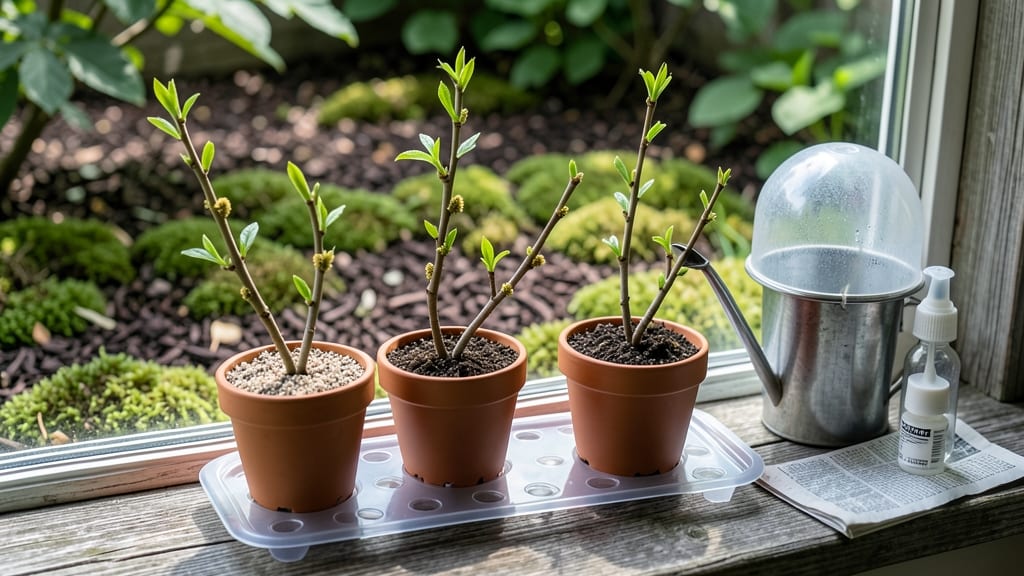
Planting willow tree starts for fast root growth requires moist soil, cool spring or early fall timing, and shallow burial of cuttings at a 45-degree angle. Willow roots thrive in water-rich environments, so keep soil consistently damp until establishment.
Willow tree starts root best when planted in moist, well-draining soil—they naturally grow near waterways because their roots need constant hydration to sprout quickly. 🌱 The 45-degree angle helps encourage root development along the buried stem, while spring or early fall timing avoids extreme heat or cold that could stress young cuttings.
I’ve found that adding a handful of compost to the planting hole gives roots an extra nutrient boost during their critical first weeks.
For best results, choose healthy 6- to 12-inch cuttings from mature willow branches, ensuring at least two leaf nodes remain above the soil line. Once planted, mulch lightly to retain moisture without suffocating the roots—willows are tough but need consistent dampness, not soggy conditions.
This method typically yields visible root growth within 2-4 weeks under ideal conditions.
💡 In This Article
- Optimal Conditions for Willow Tree Root Development
- Step-by-Step Guide to Planting Willow Starts
Optimal conditions for willow tree root development
Willow trees develop roots rapidly because their biology is hardwired for aquatic environments. Their roots contain specialized cells called lenticels that absorb oxygen even when submerged, allowing them to thrive in waterlogged soils.
This adaptation explains why willows naturally colonize riverbanks and wetlands—their roots can grow 3-5 feet per year under ideal moisture conditions, compared to 1-2 feet for most deciduous trees. 🌊 The key trigger for root growth is consistent soil moisture, which activates enzymes that break down starches into sugars, fueling new root formation.
The soil composition plays a critical role in propagation success. Sandy soils drain too quickly, causing roots to dry out before establishing, while heavy clay retains excess water, leading to rot. The sweet spot is loamy soil with 50-70% moisture retention—think of the texture of a well-wrung sponge.
Adding 1-2 inches of compost to the planting area improves water retention while providing essential nutrients like nitrogen and phosphorus, which willow roots crave during their first 6-8 weeks of growth.
Temperature ranges between 50-70°F create the perfect window for root initiation. Below 40°F, metabolic processes slow dramatically, while above 75°F, the cuttings risk dehydration before roots form. Humidity levels above 60% further enhance rooting success by reducing moisture loss through transpiration.
This is why spring and early fall planting work best—spring provides warming soil without scorching heat, while fall offers cool temperatures and natural winter moisture from rainfall.
What most gardeners overlook is the role of ethylene gas in willow root development. When willow cuttings are planted at a 45-degree angle, the wounded stem releases ethylene, a plant hormone that stimulates root formation at the lower nodes.
This is why the bottom 3-4 inches of your cutting should be buried—it's where the highest ethylene concentration occurs, creating a natural rooting signal. The angle also prevents the cutting from drying out too quickly by reducing surface area exposure.
Consider these environmental factors when planning your planting:
- Moisture: Maintain 1-2 inches of water in the soil for the first 30 days—willow roots need constant hydration to break dormancy
- Light: Provide partial shade during the first 2 weeks to reduce stress on young cuttings
- Wind protection: Use temporary windbreaks if your site is exposed—willows lose moisture rapidly through leaf transpiration
The rapid root growth you'll observe in 2-4 weeks isn't just luck—it's the result of these precise environmental conditions working together. Once established, willow roots will spread aggressively, which is why many gardeners plant them along erosion-prone banks or as living fences.
The secret to success lies in mimicking their natural wetland habitat during the critical early stages. 🌱