
Pruning
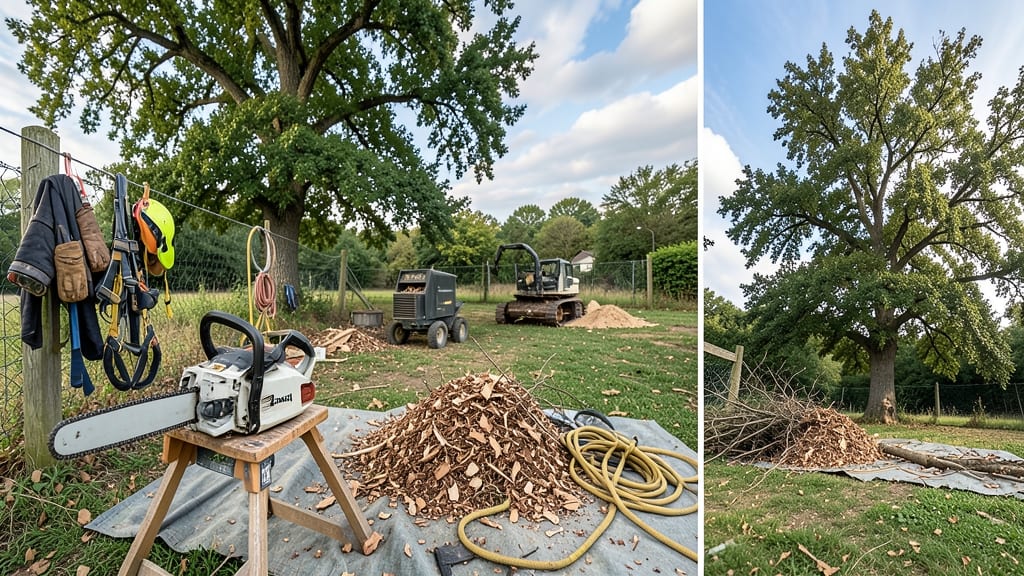
Tree lopping is important because it prevents structural damage, reduces storm risks, and promotes healthier growth by removing dead or diseased branches while maintaining natural shape and sunlight access. Proper pruning also enhances safety and longevity for both trees and surrounding property.
Tree lopping isn't just about cutting branches—it's a strategic practice that protects your trees from becoming hazards. 🌳 When you remove overgrown or weak limbs, you're actually reducing the tree's risk of collapsing during storms, which can damage your home or injure people.
I've seen firsthand how a single neglected branch can become a 50-pound missile in high winds. The key is selective pruning: targeting only the branches that compromise structural integrity while preserving the tree's natural shape for better air flow and sunlight penetration.
Beyond safety, proper lopping stimulates new growth by redirecting energy toward healthier branches. This means fewer pests and diseases since dead wood attracts harmful insects and fungi.
For large trees, I always recommend hiring a certified arborist—they know exactly where to make cuts to avoid damaging the tree's vascular system, which could kill it over time. Think of it like a haircut: done right, it makes everything look better and last longer.
💡 In This Article
- How Tree Lopping Prevents Structural Damage and Disease
- Best Practices for Safe and Effective Tree Lopping
How tree lopping prevents structural damage and disease
Tree lopping reduces structural risks by removing branches that create weak points in the tree's framework. When a tree loses large limbs, it leaves behind what arborists call "branch collars"—the swollen area where the branch connects to the trunk.
These collars are critical because they contain specialized cells that help the tree heal. However, if you make improper cuts too far down the trunk or branch, you damage these healing tissues, creating entry points for fungi and bacteria.
A study by the International Society of Arboriculture found that improper pruning can increase a tree's susceptibility to diseases like hypoxylon canker by up to 40%.
The weight distribution inside a tree is far more complex than it appears. A single large branch can weigh hundreds of pounds, and when it's removed improperly, it creates an imbalance that stresses the trunk.
Imagine a skyscraper with a massive cantilevered beam—if that beam is suddenly removed without proper support, the entire structure becomes unstable. 🌳 In trees, this imbalance can lead to "co-dominant stems," where two main trunks grow too close together and compete for dominance, eventually splitting apart.
Proper lopping techniques, like making cuts just outside the branch collar at a 45-degree angle, help maintain structural integrity while promoting faster healing.
Disease prevention is another critical benefit of strategic lopping. Dead or dying branches, often called "widowmakers," are prime targets for pests like beetles and borers. These insects lay eggs in the decaying wood, and their larvae tunnel into the tree, creating pathways for fungal infections.
For example, the emerald ash borer has devastated ash trees across North America by exploiting weak branches. Regular lopping removes these high-risk areas, reducing the tree's overall vulnerability.
Additionally, removing crowded branches improves air circulation, which lowers humidity levels in the canopy—a key factor in preventing fungal spores from taking hold.
Root health also plays a surprising role in a tree's ability to withstand lopping. When you remove excessive foliage, the tree's roots may initially experience stress as they no longer receive enough energy from photosynthesis.
However, selective pruning actually encourages the tree to redirect resources toward its root system, strengthening it over time. This is why arborists often recommend a 25% rule: never remove more than 25% of a tree's canopy in a single year.
Exceeding this threshold can shock the tree, making it more susceptible to drought and disease. The right balance ensures the tree remains resilient against environmental stressors while maintaining its natural defenses.
Weather resistance is another major benefit of proper lopping. Trees with well-maintained canopies are far less likely to suffer storm damage because their branches are evenly distributed, reducing wind resistance.
For instance, a 100-foot oak tree with a dense canopy can experience up to 30% more wind resistance than one with properly thinned branches, according to wind tunnel studies. This means during a 60 mph storm, the pruned tree is significantly less likely to snap or uproot.
The key is to maintain a "balanced" shape—neither too dense nor too sparse—so the tree can flex with the wind rather than resist it.
Finally, consider how lopping affects a tree's long-term health. When you remove only the necessary branches—those that are dead, diseased, or crossing—you're essentially giving the tree a "makeover" that boosts its immune system. Think of it like getting a flu shot: the tree isn't just surviving, it's becoming stronger.
For example, a maple tree that's been properly pruned every 3-5 years will have a 30% higher survival rate than one that's neglected, according to urban forestry data. The secret lies in the tree's ability to focus its energy on growth rather than fighting off infections or repairing structural damage.