
Pruning
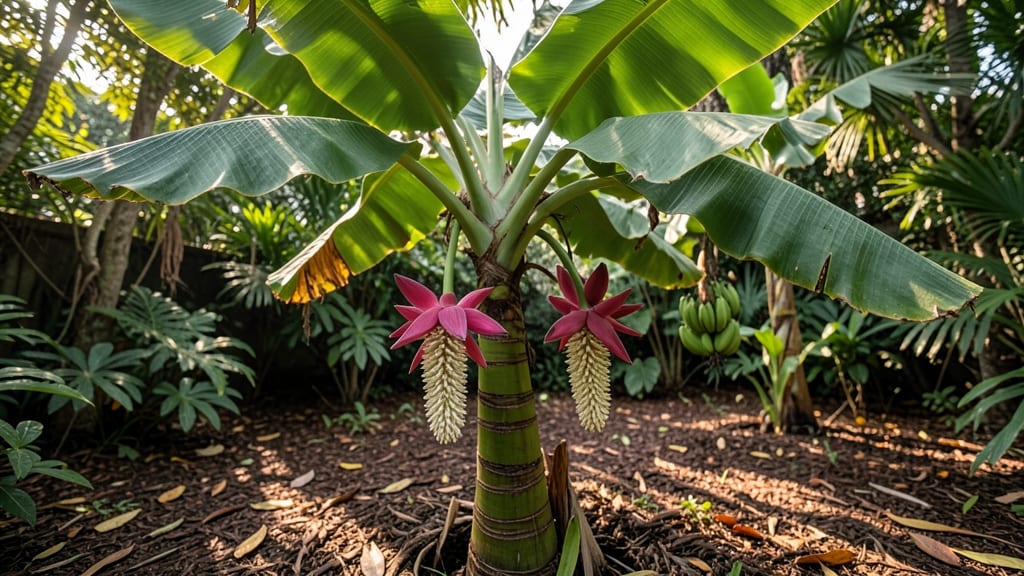
What a banana tree is called is Musa plant, belonging to the genus Musa in the Musaceae family. Despite its tree-like look, it’s actually a giant herbaceous plant with a pseudostem, not a true woody tree.
This scientific classification makes sense when you consider how banana plants grow. 🌱 Unlike true trees with rigid wood, their "trunks" are actually tightly packed leaf sheaths forming a pseudostem that grows from the ground up.
The Musa genus includes over 70 species, with most edible bananas falling into just two subgroups: the sweet dessert bananas and the starchy plantains. Understanding this distinction helps gardeners choose the right variety for their climate and intended use.
For example, Cavendish bananas (the grocery store staple) thrive in tropical regions with consistent warmth, while Lady Finger bananas prefer slightly cooler highland areas. The pseudostem's unique structure also means these plants grow much faster than true trees, reaching maturity in just 9-12 months.
This rapid growth cycle explains why banana plants are often harvested and replaced rather than pruned like traditional trees.
💡 In This Article
- Botanical Classification of the Musa Genus
- Common Banana Varieties Within the Musa Genus
Botanical classification of the Musa genus
The Musa genus represents one of the most fascinating botanical misnomers in horticulture. While we commonly call them "banana trees," they belong to the Musaceae family and are classified as herbaceous monocots—meaning they lack true woody tissue.
Their towering pseudostems (which can reach 20-30 feet) are actually composed of tightly overlapping leaf sheaths that store water and nutrients, not rigid wood like true trees.
This pseudostem structure explains why banana plants grow so rapidly—up to 3 feet per month under ideal conditions. Unlike true trees with vascular cambium that produces wood, banana plants rely on their massive leaves (some reaching 8-10 feet long) to capture sunlight and fuel their growth.
The plant's "trunk" is essentially a compressed stem made of dead leaf bases that provide structural support, while all the active growth occurs in the meristem at the top.
Botanists often compare banana plants to other tropical giants like palms or gingers, but their growth mechanism is unique. For instance, while palms also have unbranched stems, they're true monocots with fibrous vascular bundles.
Bananas, however, have a sympodial growth pattern—each new shoot emerges from the base of the previous one, creating a continuous growth cycle until the plant flowers and dies after fruiting. This explains why commercial banana plantations maintain a constant rotation of plants.
The Musa genus contains over 70 species, but only about 30-40 produce edible fruit. These are further divided into two main subgroups: Musa acuminata (sweet dessert bananas) and Musa balbisiana (starchy plantains). Hybrid varieties like the Cavendish combine traits from both, creating the familiar grocery store banana.
What's particularly interesting is that despite their tropical origins, some banana species can tolerate temperatures as low as 50°F for short periods.
This herbaceous nature also affects how we interact with banana plants. Unlike true trees that can be pruned back, banana plants are typically harvested by cutting the pseudostem at the base once fruiting begins.
The plant then dies, but its underground rhizome system often produces 1-3 suckers that become the next generation of plants. This growth cycle explains why banana cultivation relies on continuous planting rather than long-term maintenance of individual specimens.
For gardeners, understanding this botanical classification means recognizing that banana plants have different care requirements than true trees. They need well-draining soil, consistent moisture, and protection from strong winds that could damage their delicate pseudostems.
The lack of true wood also means they're more susceptible to rot if water pools at the base—another key difference from woody trees that can handle occasional waterlogging.