
Watering
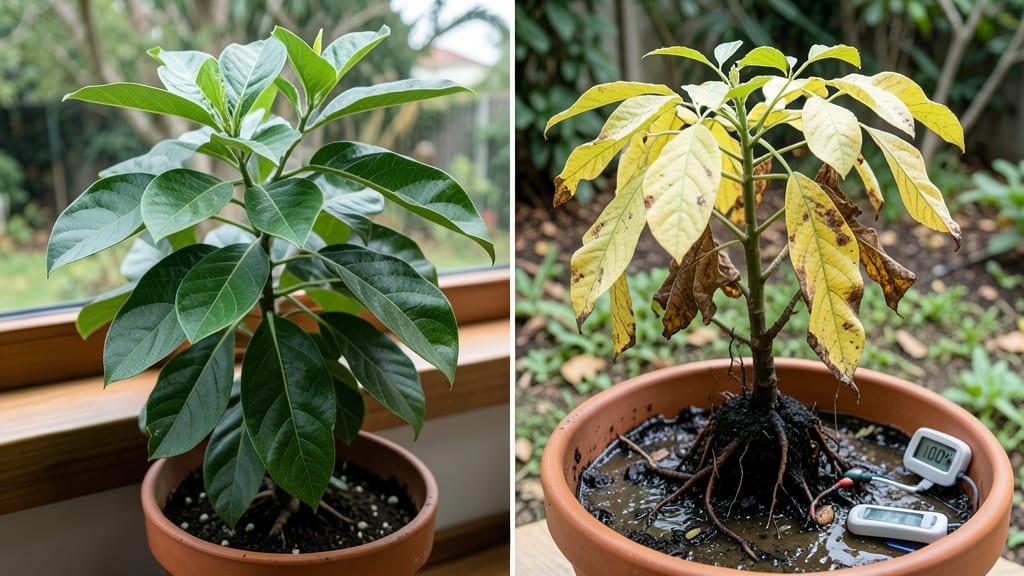
An overwatered avocado tree looks like it’s drowning in its own pot—yellowing leaves, drooping branches, and soil that smells sour. 🌱 I’ve seen it firsthand after my first winter with a potted avocado: the leaves turned a sad, mushy yellow, and the trunk felt soft when pressed.
That’s your first warning sign.
The real trouble starts underground. Roots turn brown and mushy instead of firm and white, and the soil stays clingy and waterlogged. Stick your finger in—if water drips out after just a light squeeze, you’ve overdone it. The plant can’t breathe, and the roots suffocate.
Here’s the fix: let the soil dry out completely between waterings, and repot if the roots are circling. Within weeks, you’ll see new green growth as the tree recovers. Trust me, this simple check saves plants every season.
Prevention is easier than cleanup: water only when the top inch of soil is dry, and use pots with drainage holes. Your avocado will thank you with glossy leaves and steady growth all year.
Root Causes Of Overwatering
Overwatering an avocado tree isn’t just about pouring too much water—it’s a chain reaction triggered by environmental, soil, and human factors. Understanding these root causes helps you adjust care before the damage becomes irreversible.
Let’s break down the science behind why your avocado tree might be drowning in its own pot.
🌧️ Poor Drainage Systems Fail
Avocado trees (Persea americana) are tropical natives, but their roots hate soggy conditions. When planted in containers or soil with clay-heavy or compacted textures, excess water pools around roots instead of draining away.
This creates anaerobic zones—areas deprived of oxygen—where beneficial microbes suffocate and harmful pathogens like Phytophthora thrive.
- 🔍 Signs of the problem:
- Waterlogging visible in the pot’s drainage tray.
- Mushy, black roots when inspected.
- Slow or no water absorption after irrigation.
- 💡 Fix it:
- Amend soil with perlite, pumice, or coarse sand (20-30% volume) to improve aeration.
- Use fabric pots or containers with multiple drainage holes (minimum 1 inch diameter).
- Elevate pots on feet or saucers to prevent water from sitting at the base.
🌡️ Temperature And Humidity Mismatches
Avocado trees are sensitive to temperature extremes and high humidity. When nights stay too cool (below 55°F/13°C) or days are stifling hot (above 90°F/32°C), the tree’s transpiration rate (water loss via leaves) slows dramatically.
Meanwhile, if you’re watering on a consistent schedule without checking soil moisture, the roots remain waterlogged because the plant isn’t using the excess.
- 🔍 Signs of the problem:
- Leaves stay damp for hours after watering.
- New growth appears yellow or wilted despite moist soil.
- Fungal spots (e.g., powdery mildew) on foliage.
- 💡 Fix it:
- Water only in the morning to allow foliage to dry before evening humidity spikes.
- Use a hygrometer to monitor humidity—ideal range is 40-60%.
- Move potted trees to a sheltered, breezy spot to improve airflow.
🌱 Incorrect Pot Size Or Root Bound Stress
A pot that’s too large for the tree’s root system traps moisture in the unused soil, while a root-bound tree (roots circling the container) struggles to absorb water efficiently. Both scenarios lead to over-saturation because:
- The soil doesn’t dry out between waterings.
- Roots can’t expand to seek drier zones.
- Microorganisms in the soil deplete oxygen faster in stagnant water.
🔍 Signs of the problem:
Root-Bound Trees
Oversized Pots
Roots grow in circles or push through drainage holes.
Topsoil stays wet for days after watering.
New leaves are smaller than normal.
Mold or white crust on soil surface.
💡 Fix it:
- Repot into a container only 2-3 inches larger in diameter than the root ball.
- Prune circular roots with sterilized shears before repotting.
- Use fast-draining mixes (e.g., 60% peat/pine bark, 30% perlite, 10% compost).
💧 Overzealous Watering Habits
Even with perfect drainage, human error is the #1 cause of overwatering. Common mistakes include:
- Watering on a schedule instead of checking soil moisture.
- Using tap water with high salts/minerals, which disrupts root function.
- Ignoring seasonal changes (e.g., watering as much in winter as in summer).
🔍 Signs of the problem:
- Soil smells rotten or sour.
- Leaves yellow and drop even when soil is wet.
- Stems feel soft or mushy when pressed.
💡 Fix it:
- Use the finger test: Insert your finger 2 inches into the soil—water only if it’s dry.
- Switch to rainwater or filtered water to reduce salt buildup.
- In winter, reduce watering by 50% as growth slows.
Overwatering is often a cumulative problem—small missteps add up until the tree’s roots suffocate. The good news? Avocado trees are resilient. By addressing these root causes, you can revive your tree’s health and prevent future stress. 🌿
Revive Your Avocado Tree Now
Overwatering can stress your avocado tree, but the good news is that with the right steps, you can nurse it back to health. The key is acting fast—the sooner you adjust care, the better the chances of recovery.
Below, we’ve mapped out practical fixes based on the most common overwatering symptoms, along with prevention tips to keep your tree thriving long-term.
If your avocado tree’s leaves are turning yellow between the veins (a classic sign of overwatering), follow these steps:
1.
Adjust Watering Immediately 💧 - Stop watering for 5–7 days to let the soil dry out completely. - Check soil moisture before watering again: Stick your finger 2–3 inches deep—if it’s damp, wait longer. - Water deeply but less often: Avocado trees prefer dry spells between waterings.
Aim for 1–2 times per week (adjust based on climate).
2. Improve Drainage 🚿
Repot if needed: If your tree is in a container, ensure it has drainage holes.
Add a layer of gravel or perlite at the bottom to prevent soggy soil. - Amend heavy soil: Mix in sand, coconut coir, or compost to improve aeration and drainage.
3. Fertilize for Recovery 🌿
- Use a balanced, slow-release fertilizer (e.g., 10-10-10) to help the tree bounce back.
- Avoid nitrogen-heavy fertilizers—they can worsen root rot by encouraging lush growth without proper drainage.
A limp, sagging tree is a red flag for root stress. Here’s how to revive it:
1. Prune Damaged Leaves (But Don’t Overdo It) ✂️
- Remove only the most severely affected leaves—this reduces water loss while the tree recovers.
- Avoid heavy pruning—this can stress the tree further.
2.
Check for Root Rot 🕵️♂️ - Gently lift the tree (if in a pot) to inspect roots. Healthy roots are firm and white; rotten roots are mushy, brown, or smell foul. - If root rot is confirmed, trim affected roots with sterilized scissors and repot in fresh, dry soil.
3. Boost Airflow & Light 🌞
- Move your tree to a sunnier spot (avocados need 6+ hours of sunlight daily).
- Increase airflow by spacing plants apart or using a small fan (if indoors).
If the soil feels squishy, smells sour, or has mold, take action:
1. Let the Soil Dry Out Completely ⏳
- Pause watering for 7–10 days and place the pot in a shady, well-ventilated area.
- If the tree is in the ground, avoid watering for 2 weeks and let nature do the work.
2.
Loosen & Aerate the Soil 🕳️ - For potted trees: Use a fork or chopsticks to gently loosen compacted soil without damaging roots. - For in-ground trees: Mulch around the base (but keep mulch 6 inches away from the trunk) to improve moisture retention without suffocating roots.
3. Consider a Temporary Drainage Fix 🛠️
- If your tree is in a container with poor drainage, prop it up on bricks to allow excess water to escape.
- For ground-planted trees, create a slight slope away from the trunk to divert water.
Once your tree recovers, prevent future overwatering with these habits:
✅ Water Only When Necessary – Stick to the "finger test" (check soil moisture before watering). ✅ Use Well-Draining Soil – A mix of potting soil, perlite, and sand (60:20:20 ratio) works well. ✅ Choose the Right Pot – Ensure containers have drainage holes and are not too large (overly big pots hold excess water). ✅ Monitor Climate & Season – Avocados need less water in winter and more in hot, dry summers. ✅ Mulch Correctly – Use 2–3 inches of organic mulch (like straw or wood chips) to retain moisture without compacting soil.
- Mild overwatering: 2–4 weeks of adjusted care should show improvement.
- Severe root rot: 4–8 weeks (or longer if repotting is needed).
- Persistent yellowing? It may signal nutrient deficiency (test soil pH—avocados prefer 6.0–7.0).
With patience and the right care, your avocado tree can bounce back stronger—and you’ll have a lush, productive plant in no time! 🌿💚
Frequently asked questions
How can I tell if my avocado tree is overwatered vs. underwatered?
Overwatered trees show yellow leaves with green veins, drooping branches, and soil that stays wet for days. Underwatered trees have brown, crispy leaf edges and soil that pulls away from the pot. The key difference? Overwatered leaves feel soft and mushy when touched, while underwatered leaves feel dry and papery.
What should I do if my avocado tree's roots are mushy and black?
You’ve got root rot—act fast! Trim all mushy, black roots with sterilized scissors, then repot in fresh, fast-draining soil (60% potting mix + 30% perlite + 10% compost). Water lightly only when the top 2 inches of soil are dry. Avoid watering for 7-10 days to let roots recover.
Why does my avocado tree keep getting overwatered even when I think I'm being careful?
Common traps include small pots without drainage, clay-heavy soil that holds moisture, or watering on a schedule instead of checking soil. Try the finger test: Stick your finger 2 inches deep—if damp, wait. Use containers with multiple drainage holes and raise pots on feet to prevent water pooling.
Can I save an avocado tree with severe overwatering damage?
Yes, but it takes time! Start by stopping all watering for 10-14 days to dry the soil completely. Prune only severely damaged leaves and repot in fresh, well-draining mix. With patience, new growth should appear in 4-8 weeks. Severe cases may need root pruning, but most trees recover with proper care.
How often should I water my avocado tree in winter vs. summer?
In summer, water every 5-7 days (or when top 1 inch of soil is dry). In winter, cut back to every 10-14 days—growth slows, so roots need less moisture. Always check soil moisture first! A hygrometer helps track humidity levels too.