
Companion Plants
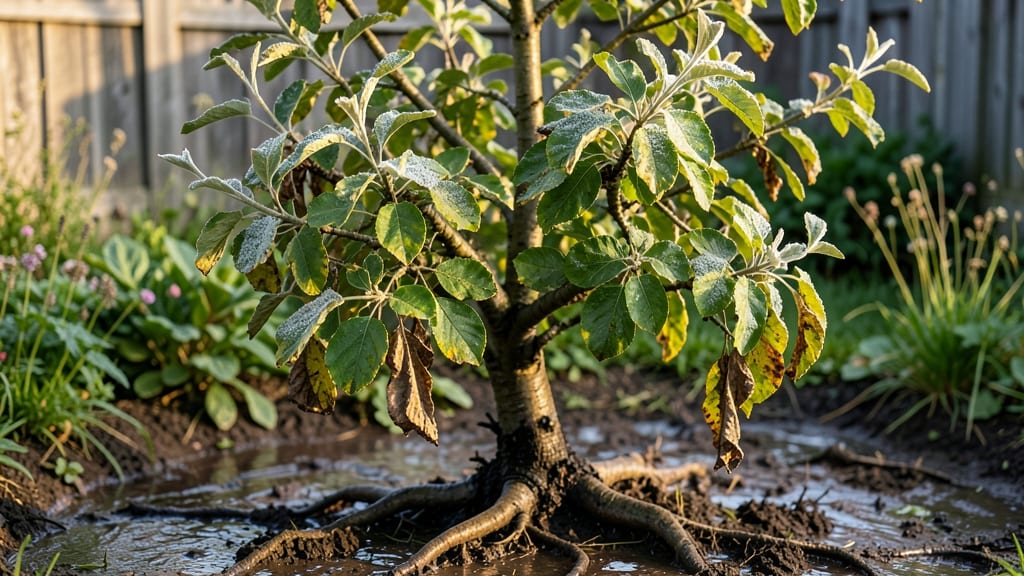
An overwatered apple tree looks like it’s drowning—not just wilting, but with soggy soil, yellowing leaves that cling like limp laundry, and branches that droop even when thirsty. 🌳 The first red flag?
Leaves turn pale yellow (not the healthy green of a well-watered tree) while the soil stays permanently damp—sometimes even muddy to the touch. Roots exposed during pruning? If they’re brown, mushy, and smell like rot, that’s your answer: too much water is suffocating them.
The damage doesn’t stop there. Overwatered trees develop fungal growth—black spots on leaves, powdery white mold, or even mushroom-like structures sprouting from the base. Compare it to a healthy tree: firm, dark brown roots; crisp, vibrant foliage; and soil that drains within 24 hours of watering.
When roots can’t breathe, the whole tree weakens, making it easier for pests and disease to move in.
Fixing it starts with stopping water immediately—let the soil dry out 3-4 inches deep before watering again. Improve drainage by amending the soil with compost or sand (if your soil is heavy clay) and consider mulching to regulate moisture.
Within weeks, you’ll see new growth as roots recover, and leaves return to their deep green, glossy sheen.
Prevention is easier than cleanup: water deeply but infrequently (1-2 inches per week, depending on rain), and always check soil moisture before reaching for the hose. A simple soil probe or your finger can save your tree from a slow, silent death by overwatering.
Root Causes Of Overwatering
Overwatering an apple tree isn’t just about pouring too much water—it’s a cascade of environmental and human factors that disrupt the tree’s delicate balance. Understanding these causes helps you adjust care routines before damage sets in. Here’s why your apple tree might be drowning in its own soil:
Apple trees thrive in well-draining soil, but when water can’t escape efficiently, roots suffocate. Here’s how poor drainage leads to overwatering:
- Compacted Soil: Heavy clay or tightly packed soil traps water like a sponge, preventing oxygen from reaching roots. Test it: Dig a 6-inch hole—if water pools after 30 minutes, drainage is the issue.
- Lack of Amendments: Soil without organic matter (like compost or sand) holds moisture too long. Apple trees need 50–70% porosity to breathe.
- Improper Grading: If the ground slopes toward the tree, water pools at the trunk instead of flowing away. Fix it: Create a slight downward slope (1–2 inches per foot) away from the base.
Pro Tip: 💡 Add gypsum or perlite to clay soil to improve aeration—it’s like giving roots a breath of fresh air.
Even with good drainage, watering mistakes can drown an apple tree. Common pitfalls include:
- Ignoring Soil Moisture: Watering on a schedule (e.g., every Tuesday) instead of checking soil moisture. Rule of thumb: Stick your finger 2 inches deep—if it’s damp, wait.
- Long, Slow Watering Sessions: Drip irrigation or hose streams that linger for hours encourage root rot by keeping the soil saturated.
- Watering at the Wrong Time: Evening watering delays evaporation, trapping moisture in the root zone overnight. Do this instead: Water early morning (6–10 AM) for optimal absorption.
Warning: 🚨 Young apple trees (under 3 years) need 1–1.5 inches of water per week, but mature trees often thrive on rainfall alone.
When roots can’t expand or air can’t circulate, they become vulnerable to waterlogging. Look for these red flags:
- Mulch Piles: Thick mulch (over 3 inches) acts as a barrier, trapping moisture against the trunk. Solution: Keep mulch 2–4 inches deep and 3 inches away from the trunk.
- Grass or Weeds Smothering Roots: Competitive plants steal oxygen and block water evaporation. Fix it: Use wood chips or gravel in the root zone instead of grass.
- Container Constraints: Potted apple trees (yes, they exist!) need drainage holes and frequent checks—root-bound trees drown faster.
Pro Tip: 🌡️ Use a moisture meter in containers—roots in pots dry out faster than in ground soil, but overwatering is still a risk if drainage fails.
Mother Nature plays a role too. Heavy rain, humidity, or even fog can turn your soil into a swamp overnight. Here’s how to adapt:
| Condition | Risk Level | Adjustments Needed |
|---|---|---|
| Frequent Rain (>1 inch/week) | ⚠️ High | Skip watering; let soil dry between rains. Use swales (shallow trenches) to redirect excess water. |
| High Humidity (70%+) | ⚠️ Medium | Water deeply but less often to encourage roots to seek dry pockets. |
| Frost or Cold Snaps | ❄️ Low (but watch for ice dams) | Reduce watering by 50%—wet soil freezes faster, harming roots. |
Key Insight: 📊 In USDA Zones 5–8, apple trees often need less water in summer than in spring or fall due to heat stress.
Revive Your Apple Tree Now
Overwatering can turn your thriving apple tree into a soggy, struggling mess—but don’t panic! With the right steps, you can nurse it back to health and prevent future disasters.
Below, we’ve mapped out practical fixes based on the most common signs of overwatering, along with prevention tips to keep your tree happy and productive.
If your apple tree’s leaves are turning yellow, brown, or mushy (a classic overwatering red flag), the soil is likely waterlogged, suffocating roots. Here’s how to fix it:
🔥 Step 1: Stop Watering Immediately
- Cut off all water for at least 3–5 days to let the soil dry out.
- If the ground is saturated and puddled, avoid watering until it feels light and crumbly (like a damp sponge).
🍳 Step 2: Improve Soil Drainage
- Aerate the soil by gently forking it (use a garden fork or tiller) to break up compacted areas.
- Mulch properly: Apply 2–3 inches of organic mulch (wood chips, straw, or pine bark) away from the trunk to retain moisture without smothering roots.
- Raise the tree’s base (if possible) by adding a small mound of gravel or sand under the root zone to encourage drainage.
👨🍳 Step 3: Prune Damaged Foliage
- Trim yellowed or blackened leaves to redirect energy to healthy growth.
- Avoid heavy pruning—focus on removing only the worst-affected branches to reduce stress.
💡 Prevention Tip:
✅ Test soil moisture before watering—stick your finger 2–3 inches deep. If it’s damp, wait! ✅ Upgrade your soil with compost or perlite to improve aeration long-term.
If your tree’s branches are limp, brittle, or covered in fungus, roots may be rotting from excess moisture. Act fast:
🥘 Step 1: Check for Root Rot
- Gently dig around the base (1–2 inches deep) to inspect roots.
- Healthy roots are white or tan; rotting roots are black, mushy, or smelly.
- If rot is severe, you may need to prune affected roots (sterilize tools with rubbing alcohol first!).
🔪 Step 2: Adjust Watering Habits
- Water deeply but infrequently—apple trees prefer 1–1.5 inches per week (including rain).
- Water at the base, not overhead, to prevent fungal growth.
- Use a moisture meter to track soil dampness (aim for 40–60% moisture).
⏰ Step 3: Support the Tree Structurally
- Stake weak branches temporarily to prevent breakage.
- Apply a balanced fertilizer (like 10-10-10) to help recovery—avoid high-nitrogen if roots are compromised.
🌡️ Prevention Tip:
✅ Plant in well-draining soil—apple trees hate soggy spots! Amend clay soil with sand or compost. ✅ Avoid watering at night—wet foliage invites fungal diseases like apple scab.
If you spot mushrooms, mold, or a foul odor near the base, root rot or fungal infections are likely. Here’s how to clean it up:
🧼 Step 1: Remove Infected Debris
- Pull out dead mulch, weeds, or fungal growth around the tree.
- Disinfect tools with bleach or hydrogen peroxide to prevent spreading spores.
🍎 Step 2: Apply Fungicide (If Needed)
- Copper-based fungicides or baking soda spray (1 tsp baking soda + 1 quart water + a drop of soap) can help.
- Reapply every 7–10 days until new growth appears.
🌿 Step 3: Encourage Beneficial Microbes
- Add compost tea or mycorrhizal fungi to the soil to boost root health.
- Plant companion plants like garlic, marigolds, or thyme around the base—they repel fungi naturally.
✨ Prevention Tip:
✅ Space trees properly—overcrowding traps moisture. Apple trees need 15–20 feet between them. ✅ Improve airflow by pruning dense branches to reduce humidity near the trunk.
Once your tree is on the mend, prevent relapse with these proactive habits:
| Problem | Solution | Prevention |
|---|---|---|
| Compacted soil | Aerate + add compost | Test soil yearly |
| Overwatering | Water deeply, less often | Use drip irrigation |
| Fungal diseases | Fungicide + prune wet foliage | Water in the morning |
| Poor drainage | Raise root zone + mulch correctly | Plant on a slight slope |
Final Thought: An overwatered apple tree can bounce back—but speed matters. Act now, adjust your care routine, and your tree will reward you with juicy fruit and lush foliage for years to come! 🍏🌟
Frequently asked questions
How can I tell if my apple tree’s yellow leaves mean overwatering—or just old age?
Older leaves turn yellow naturally, but overwatered trees show pale yellow leaves that stay soft and cling to branches. Check the soil: if it’s damp 3+ inches deep or smells musty, that’s overwatering. Healthy yellowing happens gradually on lower branches, while overwatered trees yellow all over and may develop mushy spots on leaves.
Why does my apple tree’s trunk look swollen at the base?
A swollen trunk near the soil line often signals root rot from overwatering. The excess moisture creates a waterlogged zone that traps gases, causing the bark to bulge. Run your fingers along the base—if it feels spongy or oozes sap, roots are rotting. This is an emergency: stop watering and improve drainage immediately.
Can I save my apple tree if the roots are already mushy and smelly?
Yes, but act fast! Prune away black, mushy roots (sterilize tools first) and repot or replant in well-draining soil. Add perlite or sand to improve aeration. For severe cases, consider a root dip in hydrogen peroxide (3%) to kill fungus. Recovery takes 4-6 weeks—monitor for new growth and adjust watering to deep but infrequent sessions.
How often should I water my apple tree to avoid overwatering?
Apple trees need 1–1.5 inches of water weekly (including rain), but frequency depends on soil. Test with your finger: water only when the top 2 inches are dry. In clay soil, water every 7–10 days; in sandy soil, every 3–5 days. Always water deeply at the base—never overhead—to prevent fungal growth.