
Pruning
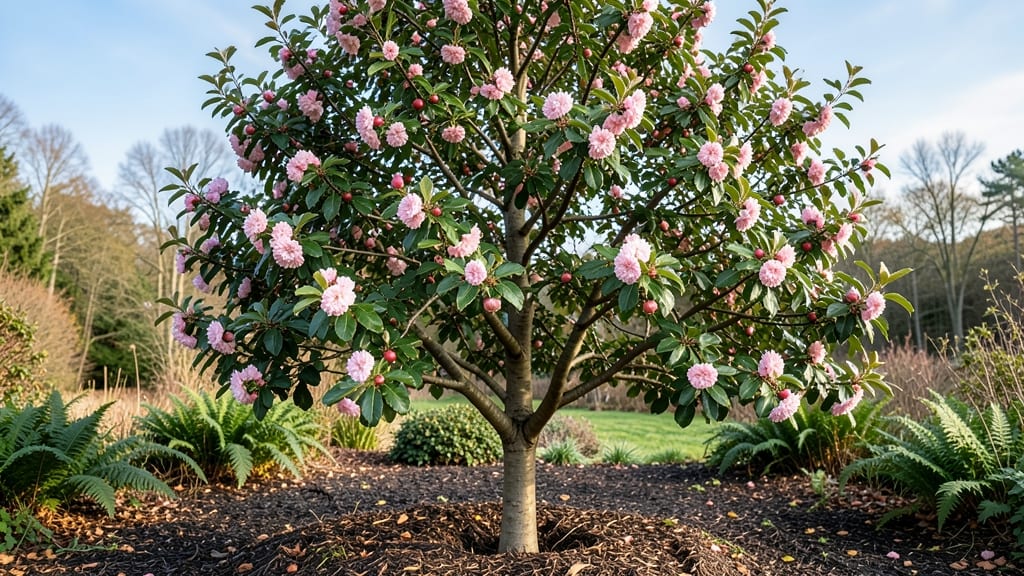
The Showtime crabapple tree delivers year-round interest—but only if you prune it right. ✂️ This tree’s pros and cons make it a standout choice for gardeners who want beauty with a few trade-offs.
I’ve seen it transform a dull corner into a seasonal showstopper, but its quirks demand smart planning. The pros? Stunning spring blossoms, glossy foliage, and a compact shape that fits tight spaces. The cons? Messy fruit drops and occasional pest battles that test your patience.
What makes it special is that Showtime thrives where others fail—its disease resistance beats most crabapples, and its 4-season color (from pink buds to red fruit) keeps gardens lively.
Yet, its small size means aggressive pruning keeps it tidy, and those fallen apples? They’re a magnet for raccoons (trust me, I learned this the hard way).
For the right spot—like a lawn island or mixed border—this tree shines. Place it where you can enjoy its blooms up close but still manage the cleanup.
With annual pruning (just 2-3 cuts per branch), you’ll keep it healthy and picture-perfect. The trade-off? A little extra work for a lot of curb appeal.
Perfect for small yards, urban gardens, or anyone who loves low-maintenance trees with big personality. Here’s how to make it work for your space—without the headaches.
📚 In This Guide
- What you need
- Instructions
- Tips and common mistakes
- Wrapping up and next steps
What you need
- ● Pruning shears – Sharp, bypass-style shears (for cuts under ½ inch thick). Quantity: 1 pair.
- ● Loppers – For thicker branches (½ to 1½ inches). Quantity: 1 pair.
- ● Pruning saw – For branches over 1½ inches. Quantity: 1.
- ● Gloves – Heavy-duty, cut-resistant (to protect from thorns and splinters). Quantity: 1 pair.
- ● Disinfectant – 70% isopropyl alcohol or bleach solution (to sterilize tools between cuts).
- ○ Tree wound dressing – Optional but helpful for large cuts (e.g., Tanglefoot Tree Wound Pruning Sealer).
- ● Ladder or step stool – Sturdy, non-slip (if tree is over 6 feet tall). Height: At least 8+ feet for safety.
- ● Heavy-duty trash bags – For collecting pruned branches. Quantity: 2-3.
- ● Safety glasses – To shield eyes from debris.
- ● Best time to prune: Late winter or early spring (before buds swell) for Showtime Crabapples.
- ● Weather check: Choose a dry, calm day (avoid rain or high winds).
- ● Tree health: Prune only if the tree is healthy (no signs of disease like fire blight or apple scab).
- ● Local regulations: Verify if your area requires permits for tree pruning (especially for large specimens).
Pruning Showtime crabapple trees for optimal year-round appeal
This small but mighty tree thrives with the right pruning approach—here's how to balance its strengths while managing its quirks.
🌿 Step 1: Understand the Showtime's Natural Growth Habits
The Showtime crabapple's real magic lies in its four-season interest: spring blooms, summer foliage, fall color, and winter fruit. Unlike some crabapples, it retains its dark red fruit into winter, but this comes with a trade-off—its branches can get heavy and prone to breakage under snow or fruit load.
I always start by mapping the tree's structure. Look for the central leader (main upward stem) and 3-4 scaffold branches (major limbs). The Showtime naturally grows dense, upright branches, which is great for small spaces but requires strategic thinning to prevent crowding. Sketch a rough outline of your tree's skeleton—this becomes your pruning blueprint.
✂️ Step 2: Time Pruning for Maximum Benefit
Timing makes all the difference with Showtime crabapples. For flower and fruit production, prune immediately after blooming (late spring) to avoid removing next year's flower buds. I schedule this for May to early June when about 20% of flowers have fallen—this ensures you don't cut off potential fruit clusters.
For structural adjustments, do a light pruning in late winter (before buds swell) to remove dead, crossing, or weak branches. This prevents disease entry points and gives you a clear view of the tree's framework. Avoid heavy pruning in fall—it stimulates new growth that won't harden off before winter, making the tree more vulnerable to cold damage.
🌱 Step 3: Apply the Right Pruning Techniques
Use clean cuts at branch collars (the swollen area where branch meets trunk) with sharp pruners. For branches over ½ inch thick, make the cut just outside the branch collar at a slight outward angle to prevent water pooling. The Showtime's dense growth means you'll often need to thin rather than head back—remove entire branches rather than just cutting back tips.
Watch for water sprouts (fast-growing vertical shoots) and suckers (shoots from the base)—these sap energy from your tree's best features. Remove them completely at the base. I also target branches growing inward or rubbing against others—these create wounds that invite disease. Remember, you're not just shaping the tree's silhouette, you're directing its energy toward fruit production and structural integrity.
🌿 Step 4: Manage the Fruit Load Strategically
The Showtime's winter fruit display is its signature trait, but too much fruit weakens branches and reduces next year's bloom quality. After the first hard frost (when fruit is fully colored but still firm), I do a selective fruit thinning—removing about 30-40% of the crop from the smallest clusters and those on weak branches.
This isn't about quantity—it's about quality. A lighter fruit load means larger, more attractive fruit that stays on the tree longer. Plus, it prevents those heartbreaking winter branch failures. I focus on leaving fruit clusters spaced 8-12 inches apart along branches to distribute weight evenly. For trees in windy areas, consider removing an additional 20% of fruit from the outer branches.
☀️ Step 5: Post-Pruning Care for Healthy Growth
After major pruning, the Showtime responds well to a balanced fertilizer (10-10-10) applied in early spring. Water deeply at the base—avoid overhead sprinkling which can spread fungal diseases. I always check for pruning wound sealants, but with crabapples, I skip them—they're more trouble than they're worth and can trap moisture.
Monitor your tree for aphid infestations (common on new growth) and fire blight (a bacterial disease that causes blackened branches). The Showtime's dense foliage can harbor pests, so I do a preventive spray with horticultural oil in early summer. Keep an eye on the tree's overall vigor—healthy Showtime crabapples have dark green leaves, compact growth, and minimal dead wood.
Tips & tricks for perfect Showtime crabapple pruning
Mastering the Showtime crabapple's unique growth pattern transforms it from a high-maintenance challenge into a year-round showstopper.
Seasonal Timing Secret: The May-to-early June pruning window (Step 2) is non-negotiable for fruit production—this is when the tree's flower buds have already set for next spring. I mark my calendar for when 20% of blooms have fallen; that's your exact cue. For structural pruning in late winter, wait until buds are still dormant but swollen—this prevents stressing the tree when it's vulnerable to cold. The key is to prune when the tree is actively growing but before it commits energy to new growth.
Branch Selection Strategy: In Step 1, when mapping your tree's skeleton, prioritize removing branches that grow at sharp angles (less than 45 degrees) from the trunk or scaffold branches. These are the weak points that'll break under winter weight. I use the "third branch rule"—if a branch is the third one growing from a single point, it's competing with its neighbors for sunlight and nutrients, making it a prime candidate for removal. Always cut back to the branch collar to maintain the tree's natural healing response.
Fruit Load Management: After the first hard frost (Step 4), I implement a "cluster spacing rule" of 8-12 inches between remaining fruit clusters. This isn't just about aesthetics—it's structural engineering. The Showtime's dark red fruit is dense, and clusters closer than 8 inches create stress points where branches are most likely to snap. For trees in exposed locations, I increase this spacing to 14-16 inches. Use pruning shears to make clean cuts at the base of the smallest fruit clusters first, working your way up to larger ones.
Post-Pruning Vigilance: After applying the 10-10-10 fertilizer (Step 5), I monitor for two critical signs of stress: sudden yellowing of leaves (often on one side of the tree) and excessive sap flow from pruning wounds. Both indicate the tree is struggling to recover. In my experience, the Showtime's dense foliage can harbor aphids within 3 weeks of pruning—this is why the horticultural oil spray in early summer is essential. I always apply it on a calm day when temperatures are above 50°F to ensure proper coverage of the new growth.
Pro Tips for Showtime Crabapple Tree Pros And Cons
- Mastering the Showtime crabapple's unique growth pattern transforms it from a high-maintenance challenge into a year-...
- Seasonal Timing Secret: The May-to-early June pruning window (Step 2) is non-negotiable for fruit production—this is ...
- Branch Selection Strategy: In Step 1, when mapping your tree's skeleton, prioritize removing branches that grow at sh...
Frequently asked questions
Got questions about the Showtime crabapple tree? You’re not alone!
Here are some of the most common concerns—plus straightforward answers to help you prune and care for this stunning tree like a pro.
When is the best time to prune a Showtime crabapple tree?
The ideal time is late winter or early spring (before buds break) to remove dead, diseased, or crossing branches. Avoid heavy pruning in fall—it can stimulate new growth that’s vulnerable to winter damage. Pro tip: If you must prune in summer, do it after flowering to preserve its gorgeous spring blooms.
Are Showtime crabapples messy? Do they drop fruit or leaves?
Yes! While their tiny, inedible fruit (crabapples) aren’t a nuisance like some varieties, they do drop in fall/winter—expect a light cleanup. The tree also sheds leaves in autumn, but not excessively. If mess is a concern, plant it 20+ feet from patios or walkways or choose a columnar cultivar for less debris.
How cold-hardy is the Showtime crabapple? Can it survive winter?
This tree thrives in USDA Zones 4–8, making it highly cold-resistant. However, young trees or newly pruned branches may need winter protection (e.g., burlap wraps) in Zone 4’s harshest winters. Avoid heavy pruning in late summer—it can stress the tree before winter.
What’s the lifespan of a Showtime crabapple? How fast does it grow?
With proper care, this tree can live 30–50+ years! Growth is moderate: expect 12–24 inches per year under ideal conditions. Pro tip: Prune regularly to maintain shape and airflow—this extends its lifespan and keeps it looking showstopping year-round.
Are there better alternatives if I hate maintenance?
If you want low-maintenance but still stunning, consider:
- ‘Royal Purple’ Smokebush (drought-tolerant, minimal pruning)
- Korean Spice Viburnum (compact, disease-resistant)
- ‘Fastigiata’ Columnar Oak (structured, slow-growing)
Wrapping up and next steps
The Showtime Crabapple Tree is a stunning choice for year-round beauty, offering vibrant blooms, glossy foliage, and striking fruit—but it requires thoughtful pruning to thrive.
Whether you’re drawn to its pros (like low-maintenance care and disease resistance) or weighing the cons (such as seasonal cleanup or potential fruit mess), this tree delivers big rewards with the right approach.
Ready to elevate your landscape? Start by assessing your space, gathering your tools, and scheduling your first pruning session—your future tree will thank you! 🌳✨