
Pruning
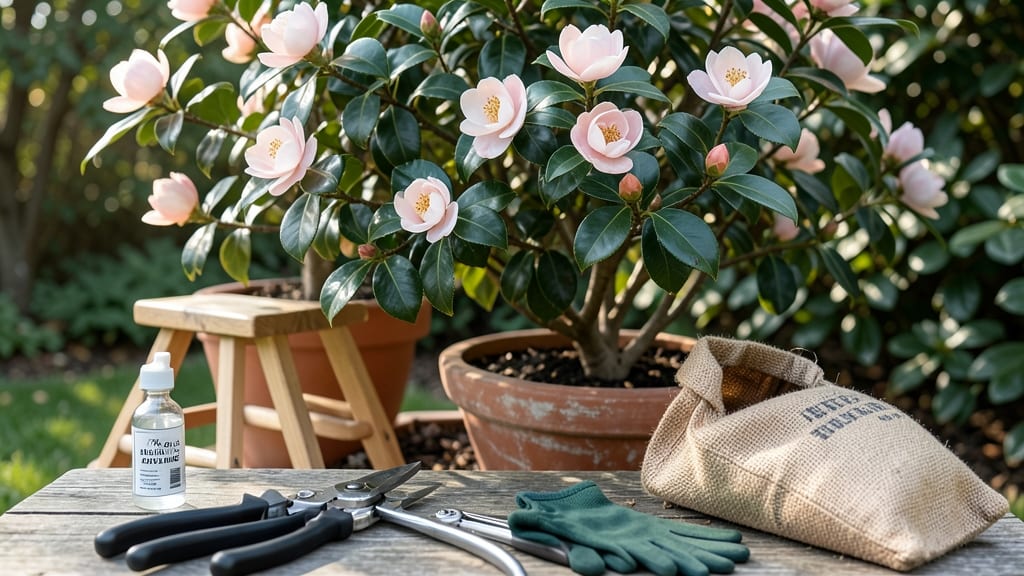
Pruning a camellia tree properly means waiting until after the flowers fade to protect next year's buds, then using sharp, clean tools to remove only dead or crossing branches while keeping the tree's natural form. Light trimming in late spring or early summer promotes the healthiest blooms.
Camellias are sensitive plants, and their blooming cycle depends on last year's growth. 🌸 The key is to prune after flowers drop—usually in late spring—so you don't accidentally snip off next year's flower buds, which form on old wood.
I always recommend using sterilized pruners to prevent disease, and never prune more than one-third of the plant's branches at once. This approach keeps your camellia thriving while encouraging lush, vibrant blooms season after season.
For best results, focus on removing only dead, diseased, or crossing branches—never just for shape. The goal is to improve airflow and sunlight penetration without stressing the plant.
I've seen many gardeners over-prune, which can lead to weak growth or even no flowers the following year. Patience and precision pay off with stunning camellia displays!
💡 In This Article
- Best Camellia Pruning Times and Flower Bud Formation
- Step-by-Step Camellia Pruning Techniques for Beginners
Best camellia pruning times and flower bud formation
Camellias produce flower buds on old wood—meaning last year's growth—so timing is everything. The buds actually begin forming in late summer or early fall, but they remain dormant until spring. Pruning too early can remove these future blooms before they even develop.
That's why the ideal window is late spring to early summer, right after the current season's flowers fade. This timing ensures you're only cutting back dead or problematic branches while preserving next year's potential.
The botanical magic happens through plant hormones, particularly auxins and cytokinins. When you prune at the right time, you're essentially signaling the plant to redirect its energy toward new growth rather than maintaining old branches.
Camellias native to East Asia evolved in subtropical climates where winter dormancy triggers bud formation.
In colder regions, pruning too late in summer can expose new growth to frost damage, while pruning too early disrupts this natural cycle. 🌿 The sweet spot is when the plant has already set its buds but hasn't yet started pushing new spring growth.
Seasonal considerations vary by climate. In USDA zones 7-9 (where most camellias thrive), late May to early June works perfectly. For cooler zones (6 or below), wait until after the last frost risk has passed.
The key visual cue is when the flowers have completely dropped and new leaves begin emerging—this indicates the plant has finished its blooming cycle and is ready for maintenance. I've seen gardeners in Florida prune as late as July, but northern growers should aim for June to avoid winter stress.
What most people don't realize is that camellias respond poorly to heavy pruning. These plants store energy in their woody stems, and aggressive cuts can deplete these reserves. The one-third rule applies: never remove more than one-third of the plant's branches in a single session.
This preserves the plant's energy balance while allowing enough foliage to continue photosynthesis. Think of it like giving your camellia a haircut—you want to shape it, not shave it.
Another critical factor is the cutting angle. Always make cuts at a 45-degree angle, about ¼ inch above a leaf node or outward-facing bud. This angle prevents water from pooling on the cut, which could lead to rot.
The node contains meristematic cells (growth cells) that will sprout new branches. When pruning, look for branches that are dead (no green leaves), diseased (mushrooms, discoloration), or crossing (rubbing against others)—these are your targets. Healthy branches should be left alone unless they're growing in an awkward direction.
Finally, the post-pruning care makes a huge difference. After trimming, apply a balanced fertilizer (10-10-10) to replenish nutrients and keep the plant energized for new growth. Water deeply but avoid soaking the cuts, as this can introduce pathogens.
Mulch around the base with 2-3 inches of organic material to retain moisture and regulate soil temperature. This combination helps the camellia recover quickly and sets the stage for next year's spectacular blooms. ✨