
Pruning
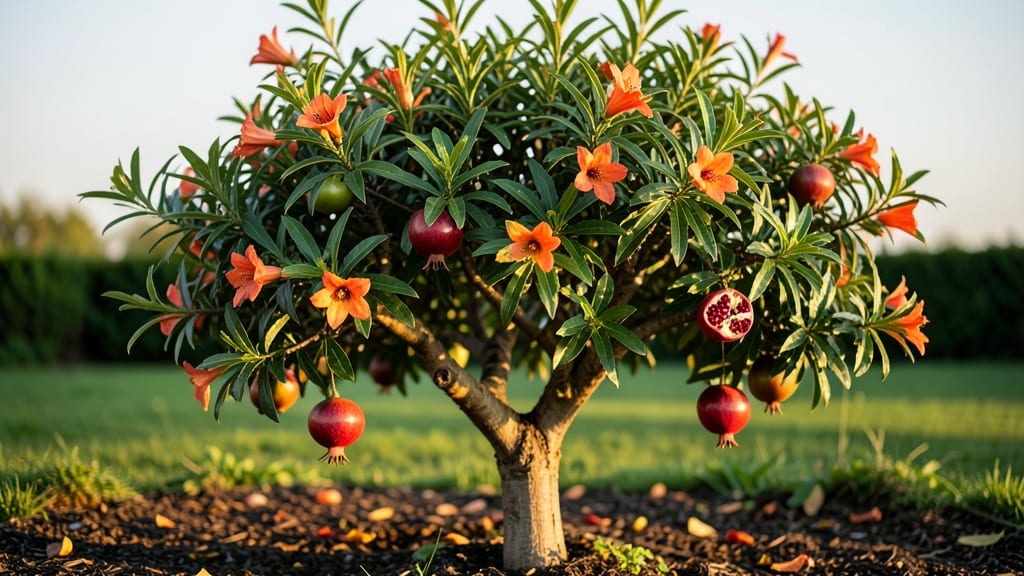
Planting a pomegranate tree in North Carolina succeeds best with cold-resistant types like 'Wonderful' or 'Eversweet', planted in nutrient-rich, well-draining soil under full sunlight. Shield roots from winter freezes below 10°F with thick mulch, and trim branches yearly to boost fruit output.
North Carolina's USDA zones 5b-8a present unique challenges for pomegranate trees, but the right varieties thrive with proper care. 🌱 The 'Wonderful' cultivar stands out for its cold tolerance and sweet-tart fruit, while 'Eversweet' offers disease resistance and reliable yields.
These trees demand 6-8 hours of sunlight daily and benefit from late-winter pruning to remove dead wood and encourage new growth. The key to winter survival lies in insulating the root zone with 4-6 inches of mulch, which prevents soil heaving during freeze-thaw cycles.
Timing matters too—plant in early spring when soil warms to 60°F, avoiding North Carolina's summer heat stress. Young trees need 1-2 inches of water weekly during dry spells, but mature specimens develop drought tolerance.
Just remember: patience pays off, as pomegranates typically take 3-5 years to bear fruit after planting.
💡 In This Article
- Cold-Hardy Pomegranate Varieties for North Carolina’s Climate
- Step-by-Step Guide to Planting and Caring for Pomegranate Trees in NC
Cold-hardy pomegranate varieties for North Carolina’s climate
North Carolina's climate—marked by hot summers and cold winters—demands pomegranate varieties that can withstand USDA zones 5b-8a, where temperatures can drop below 10°F in winter.
The 'Wonderful' cultivar, for instance, thrives in these zones because its roots develop a natural cold resistance through a process called endodormancy, where the tree's growth slows and its cells produce protective sugars like glucose and fructose.
These sugars act as antifreeze, preventing ice crystals from forming in the cell walls during freezing conditions. 🔥
'Eversweet' is another top choice, bred specifically for its ability to handle North Carolina's humidity and occasional late frosts. Unlike Mediterranean varieties, which struggle with excessive moisture, 'Eversweet' has thicker cuticles on its leaves and stems that reduce water loss while preventing fungal infections like powdery mildew.
The fruit itself stays sweeter longer due to its lower acidity—around 0.5-1.0% citric acid compared to 1.5-2.5% in 'Wonderful'. This makes it ideal for NC's shorter growing seasons, where fruit ripening can be slower.
For gardeners in the cooler USDA zone 5b areas of western NC, 'Mollar de Elche' is a hidden gem. This Spanish variety produces large, deep-red arils with a 16-18% sugar content, but its real advantage is its ability to recover from temperatures as low as -5°F when properly mulched.
The trade-off? It requires slightly more sun—8+ hours daily—to compensate for its slower growth rate in cooler climates. Meanwhile, 'Candy' stands out for its disease resistance, particularly against pomegranate bud blight, a fungal disease that thrives in NC's humid summers.
Here's how these varieties compare in NC's climate:
- 'Wonderful': Best for zones 7-8a; 20-25% sugar in fruit but needs 6-8 hours of sun
- 'Eversweet': Thrives in zones 5b-8a; 18-22% sugar, more disease-resistant
- 'Mollar de Elche': Ideal for zones 5b-7; larger arils but slower to fruit
- 'Candy': Best for zones 6-8a; drought-tolerant once established
The key to success in NC isn't just choosing the right variety—it's understanding how each adapts to the state's 100+ degree summer heat and freeze-thaw cycles.
For example, 'Wonderful' trees in Raleigh (zone 7b) may need 50% more water during July-August to prevent fruit drop, while 'Eversweet' in Asheville (zone 7a) can handle slightly drier conditions due to its deeper root system. 💫
What most NC gardeners overlook is how the tree's flowering period interacts with spring temperatures. Pomegranates bloom in late spring, and late frosts (28°F or lower) can damage flowers before they pollinate. This is why 'Eversweet'—which flowers slightly later—often outperforms others in NC's unpredictable springs.
The lesson? Plant cold-hardy varieties on the south or southwest side of your property to maximize sunlight exposure and reduce frost risk.