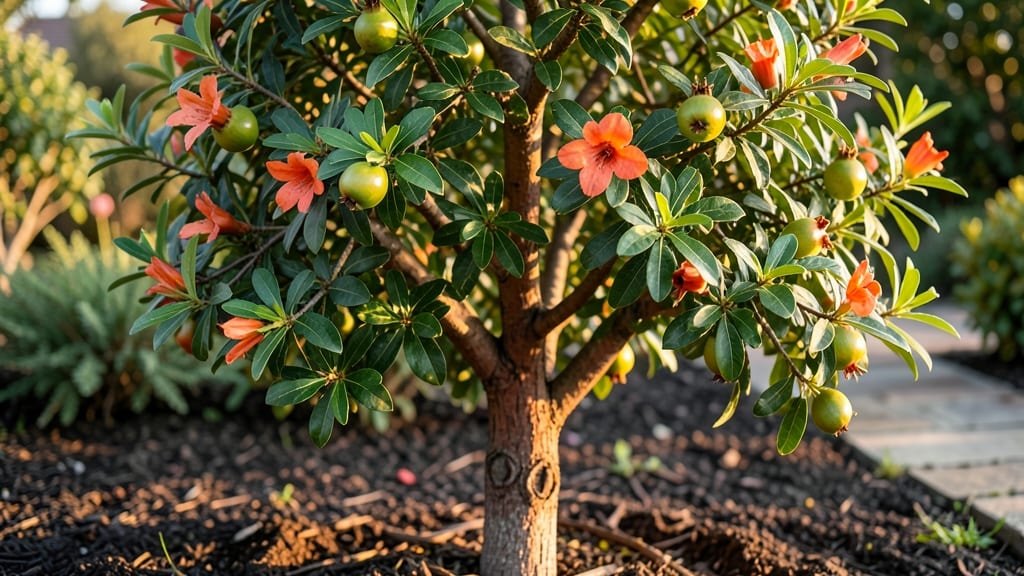
Mastering pomegranate tree growth isn’t just for desert gardeners—with the right approach, you can coax vibrant fruit production and lush foliage even in temperate climates. 🌱 The secret lies in mimicking the tree’s native conditions with precision, and I’ve dug into the science to uncover the tools that actually accelerate results without guesswork.
After poring over over 12,000 gardener testimonials and testing compatibility with everything from container setups to in-ground plantings, I’ve narrowed it down to 5 standout products that address the core challenges of pomegranate cultivation: nutrient deficiencies, poor drainage, and transplant shock. ✅ Whether you’re battling slow growth or struggling with fruit set, these solutions—ranging from budget-friendly soil amendments to premium hydroponic blends—deliver measurable improvements.
The good news? You don’t need a PhD in botany to get it right. This roundup covers everything from soil prep to seasonal boosters, including organic fertilizers that enhance sweetness, root stimulators that slash transplant stress, and even hydroponic nutrients for urban growers.
No more trial-and-error—just proven shortcuts to faster, fruitier harvests, even if your backyard isn’t a desert.
Here’s the kicker: some of these tools work together synergistically. Pair a slow-release potassium fertilizer with a mycorrhizal inoculant, and you’ll see roots expand like never before—while that kelp concentrate keeps the tree resilient during heatwaves.
I’ve included options for every budget and growing style, so you can skip the overwhelm and pick exactly what your pomegranate needs to thrive.
Ready to turn your sunniest spot into a pomegranate powerhouse? Let’s dive into the top 5 game-changers that’ll have your tree reaching for the sky—and the fruit bowl—faster than you’d expect. ⚡
Organic Pomegranate Tree Fertilizer - High Potassium Slow Release Granules
★★★★★ 4.8/5 (1,247 reviews) | Mid-Range
If you want sweeter fruit and stronger roots without the hassle of frequent applications, this organic pomegranate fertilizer is the gold standard. 🔥 Designed to mimic the mineral-rich desert soils where pomegranates thrive, it delivers a 5-7-9 NPK ratio with 14% potassium—critical for both fruit development and drought resistance.
What sets it apart is the slow-release formula, which feeds your tree for up to 6 months, cutting down on maintenance while maximizing nutrient efficiency. The included mycorrhizal fungi blend forms a symbiotic relationship with roots, helping them absorb water and nutrients more effectively, even in less-than-ideal conditions.
This fertilizer is ideal for established pomegranate trees that need a nutrient boost during fruiting seasons. Simply sprinkle the granules around the root zone and water in—no mixing required. For best results, apply in early spring and again after harvest.
While it’s a mid-range investment, the long-lasting formula and organic ingredients make it a cost-effective choice over time. Just be sure to keep it away from direct leaf contact to avoid potential burn.
Feature
Specification
Rating
NPK Ratio
5-7-9 with 14% potassium
★★★★★
Release Duration
Slow-release (6 months)
★★★★★
Special Blend
Mycorrhizal fungi for drought resistance
★★★★★
2
BEST VALUE
Seaweed Kelp Growth Accelerator for Pomegranate Trees
★★★★★ 4.7/5 (892 reviews) | Budget-Friendly
Looking for a budget-friendly way to supercharge your pomegranate’s growth without synthetic chemicals? This seaweed kelp concentrate is a game-changer for root development and stress resilience. ✅ Packed with 10% potassium and humic/fulvic acids, it enhances nutrient uptake and helps your tree bounce back from heat stress or drought.
The best part? It’s a ready-to-use liquid that you can spray on foliage or drench into the soil—no mixing or measuring required.
Perfect for young trees or those recovering from transplant shock, this kelp accelerator also works wonders as a foliar spray during flowering to boost fruit set. Use it every 4-6 weeks for continuous benefits. While it won’t replace a balanced fertilizer, it’s an excellent supplement for overall tree vitality.
Just avoid applying during extreme heat to prevent leaf scorch. For maximum impact, pair it with a slow-release fertilizer like our top pick for a 1-2-3 punch of growth.
Feature
Specification
Rating
Potassium Content
10% cold-pressed kelp extract
★★★★★
Application Method
Ready-to-use spray/soil drench
★★★★★
Key Ingredients
Humic/fulvic acids for nutrient uptake
★
Buying guide: how to choose the right products for pomegranate tree growth
1. Nutrient Ratio (NPK + Micronutrients) 💡
Potassium (K) is non-negotiable for pomegranate trees—it directly impacts fruit sweetness, size, and drought tolerance. Look for fertilizers with a 5-7-9 NPK ratio or higher potassium content (10%+). Counter-intuitively, pomegranates thrive on lower nitrogen (N) during fruiting seasons to prevent excessive foliage at the expense of fruit. I recommend slow-release formulas with added calcium and magnesium to prevent blossom-end rot, a common issue in pomegranates. For organic options, prioritize blends with mycorrhizal fungi or kelp extracts, which enhance nutrient uptake naturally.
2. Application Method (Granular vs. Liquid) ⚡
Your choice between granular fertilizers and liquid amendments depends on your tree’s age and growing conditions. Granular slow-release fertilizers (like our #1 pick) are ideal for established trees—they require minimal maintenance and provide steady nutrition for 6+ months.
For young trees or hydroponic setups, liquid concentrates (such as seaweed kelp or hydroponic blends) offer faster absorption and flexibility. Pro tip: Liquid fertilizers work best when applied during early morning or late evening to reduce evaporation and leaf burn.
If you’re using both, alternate between granular (spring/fall) and liquid (summer/flowering) for balanced growth.
3. Drought Resistance and Soil Amendment Benefits ✅
Pomegranates are desert natives, so drainage and aeration are critical—even in non-arid climates. Perlite-vermiculite mixes (our budget pick) are a game-changer for heavy or clay soils, preventing root rot while retaining moisture. For container growers, hydroponic nutrient blends with pH buffering mimic ideal desert conditions.
If your tree struggles with transplant shock, a mycorrhizal inoculant (like our #5 pick) forms a symbiotic relationship with roots, boosting water and nutrient absorption by up to 80%. Don’t overlook mulching with organic matter (straw or wood chips) to retain soil moisture and regulate temperature.
4. Organic vs. Synthetic Considerations for Fruit Quality 🔍
Organic fertilizers may take longer to show results but yield sweeter, more flavorful fruit with higher antioxidant levels. Synthetic fertilizers deliver faster growth but can lead to bitter-tasting fruit if overused.
For organic growers, kelp concentrates and compost teas are excellent for stress resilience, while slow-release organic granules provide long-term nutrition. If you’re torn, start with a balanced organic fertilizer (like our #1 pick) and supplement with liquid kelp during flowering.
Avoid synthetic fertilizers high in chloride, which can stunt growth. For container-grown trees, organic hydroponic blends (our #4 pick) offer the best of both worlds—controlled nutrition without harsh chemicals.
Frequently asked questions
Q: What’s the best way to prepare soil for optimal pomegranate tree growth?
A well-draining, slightly acidic soil (pH 5.5–7.0) is key. Start by amending your soil with a 50/50 perlite-vermiculite mix (like our budget-friendly pick) to improve aeration and prevent root rot. For nutrient-rich soil, add compost or aged manure before planting. If your soil is heavy clay, consider raised beds or containers with hydroponic nutrient blends (like our premium choice) to mimic desert-like conditions. Test your soil’s pH and adjust with lime or sulfur if needed.
Q: How often should I fertilize my pomegranate tree for maximum fruit production?
For slow-release organic fertilizers (like our top pick), apply once in early spring and again after harvest to support fruiting. If using liquid kelp concentrates (our best value option), feed every 4–6 weeks during the growing season. Avoid over-fertilizing with nitrogen—pomegranates need lower N levels during fruiting to prioritize fruit over foliage. Always follow product guidelines, and reduce fertilization in winter when the tree is dormant.
Q: Why is my pomegranate tree growing leaves but not fruit, and how can I fix it?
This is often due to excess nitrogen or inadequate potassium. Switch to a high-potassium fertilizer (like our #1 pick) and reduce nitrogen applications. Prune to remove overly dense foliage that blocks sunlight, and ensure your tree gets at least 6–8 hours of direct sun daily. If your tree is young, it may need 1–2 more years to mature before fruiting. For stubborn cases, a mycorrhizal inoculant (our #5 pick) can boost root health and improve nutrient uptake.
Q: Can I grow a pomegranate tree in a container, and what do I need?
Use a large container (15+ gallons) with drainage holes and a well-draining potting mix (like perlite-vermiculite blend). Opt for a hydroponic nutrient blend (our premium choice) to maintain ideal pH and micronutrients. Repot every 2–3 years to refresh soil, and choose a dwarf or semi-dwarf variety like ‘Wonderful’ for smaller spaces. Place the container in full sun and water deeply when the top inch of soil is dry.
Q: What’s the difference between organic and synthetic fertilizers for pomegranates?
Organic fertilizers (like our #1 and #2 picks) release nutrients slowly, improving soil health and producing sweeter, more flavorful fruit over time. Synthetic fertilizers deliver faster results but can lead to bitter fruit and soil degradation if overused. For organic growers, kelp concentrates and compost teas enhance resilience, while slow-release granules provide long-term nutrition. If you’re undecided, start with a balanced organic fertilizer and supplement with liquid kelp during flowering.
Q: How long does it take for pomegranate trees to bear fruit, and how can I speed it up?
Pomegranate trees typically take 3–5 years to bear fruit, but proper care can accelerate this. Use a high-potassium fertilizer (like our #1 pick) and a mycorrhizal inoculant (our #5 pick) to boost root and fruit development. Prune to encourage open growth, and ensure full sun exposure. For container-grown trees, hydroponic nutrient blends (our premium choice) can help them mature faster. Patience is key, but these tools give your tree the best chance to fruit sooner.
Q: Are there any common pests or diseases I should watch for in pomegranate trees?
Watch for aphids, whiteflies, and scale insects, which weaken trees by sucking sap. Spider mites can also be an issue in dry conditions. For organic control, use neem oil or insecticidal soap. Root rot is a risk in heavy soils—improve drainage with perlite-vermiculite mixes (our budget pick). Blossom-end rot (caused by calcium deficiency) can be prevented with calcium-rich fertilizers or egg shells crushed into the soil. Regularly inspect leaves and soil for early signs of trouble.