
Pruning
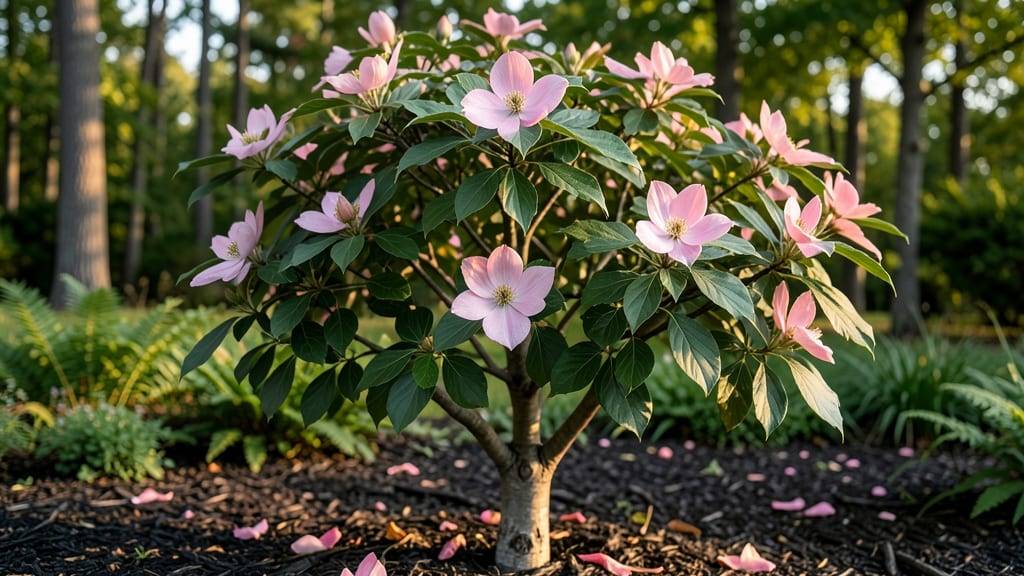
Your pink dogwood tree could reach 20-30 feet tall—but that’s only if you let it grow wild. ✨ I’ve watched mine stretch toward my second-story windows, and while the height is stunning, the pruning to keep it manageable is where the real magic happens.
Dogwoods thrive in partial shade and moist, well-draining soil, but even perfect conditions won’t stop them from growing tall if you skip pruning. The key is shaping it in late winter or early spring, before new growth begins—just as the buds swell but before they burst.
With proper pruning, you’ll keep it at a 10-15 foot height, perfect for framing a porch or adding color to a mid-sized yard. The blooms stay vibrant, the structure stays strong, and you avoid the headache of dealing with a tree that’s too big for its space.
This works for both the classic Cornus florida 'Rubra' and newer cultivars. Think of it as giving your tree a haircut—it’ll thank you with healthier growth and more dramatic spring flowers.
📚 In This Guide
- What you need
- Instructions
- Tips and common mistakes
- Wrapping up and next steps
What you need
- ● Pruning shears – Bypass pruners (sharp, clean, and 5-7 inch blades) for small branches.
- ● Loppers – Long-handled (20-24 inches) for thicker branches (up to 1.5 inches in diameter).
- ● Pruning saw – For branches 2+ inches thick (choose a bow saw or folding pruning saw).
- ● Disposable gloves – Garden-grade, cut-resistant to protect your hands from thorns and sap.
- ○ Tree wound dressing – Optional but helpful (e.g., Tanglefoot Tree Wound Pruning Sealer) for larger cuts.
- ● Clean rags or paper towels – To disinfect tools between cuts and wipe sap.
- ● Ladder or extension pole – Sturdy, 12-20 ft tall (ensure it’s rated for your height + tree height).
- ● Safety glasses – To shield eyes from debris.
- ● Work boots or closed-toe shoes – For stability on uneven ground.
- ● Trash bags or bucket – For collecting pruned branches.
- ● Hose or water spray bottle – To clean tools and rinse sap off cuts.
- ● Know your tree’s age – Pink dogwoods mature at 15-25 ft tall; prune only after 3-5 years of growth.
- ● Check the weather – Prune on a dry, calm day (avoid wind or rain).
- ● Map the tree’s structure – Sketch or mentally note primary branches and dead/diseased wood before starting.
- ○ Gather a helper (optional but helpful) – For stability when working high up.
Step-by-Step pruning guide for managing pink dogwood tree height
Here's how I keep my pink dogwoods at a manageable height while preserving their stunning blooms.
✂️ Step 1: Time Your Pruning for Best Results
Prune your pink dogwood immediately after flowering, typically in late spring (May-June). This timing ensures you don't cut off next year's flower buds, which form on last year's growth. If you prune too early, you risk removing all potential blooms for the following season.
Watch for the flowers to fade completely before reaching for your pruners. The tree's natural leaf flush will signal it's ready. Pruning at this stage also prevents heavy spring blooms from causing weak branch growth later in the season.
✂️ Step 2: Assess the Tree's Structure and Growth Habits
Start by examining the tree's overall shape and identifying any branches that are crossing, rubbing, or growing in awkward directions. Pink dogwoods naturally grow to 15-25 feet tall, but with proper pruning, you can maintain them at 8-12 feet for easier landscaping. Look for branches that are growing straight up rather than outward—they're prime candidates for removal.
Focus on removing branches that originate from the lower half of the trunk. These often create a cluttered, unbalanced look. Use a hand pruner for branches up to ½ inch thick and loppers for anything thicker. Always make cuts just outside the branch collar—the swollen area where the branch meets the trunk—to promote proper healing.
✂️ Step 3: Thin Out Rather Than Top the Tree
Never remove more than 25% of the tree's foliage in one season—this stresses the tree and can lead to poor blooming or even death. Instead of topping the tree (cutting the top flat), selectively remove branches to open up the canopy and improve air circulation. This prevents disease and encourages stronger growth.
Start at the top and work your way down, removing branches that are growing inward or downward. Aim to create a natural, vase-like shape. For every branch you remove, look for a smaller branch below it to step-cut to—this maintains the tree's density while controlling height. Always prune just above a leaf bud or lateral branch to encourage new growth in the right direction.
🪴 Step 4: Clean Up and Maintain Post-Pruning
After pruning, collect all debris and dispose of it properly to prevent disease. Sterilize your pruners with rubbing alcohol between cuts to avoid spreading pathogens. Apply a tree wound sealant only if you've made large cuts (over 1 inch in diameter). For smaller cuts, let the tree's natural healing process take over—sealants can actually trap moisture and cause rot.
Water the tree deeply after pruning to help it recover. Mulch around the base with 2-3 inches of organic mulch, keeping it 6 inches away from the trunk. This helps retain moisture and regulates soil temperature. Avoid fertilizing immediately after pruning—wait until 6-8 weeks later to give the tree time to heal and establish new growth.
⏰ Step 5: Monitor and Adjust Growth Yearly
Check your tree's height and shape in early spring before new growth begins. If it's growing too tall or lopsided, plan for another round of pruning after next year's blooms fade. Pink dogwoods respond well to gradual pruning—never remove more than 10% of the canopy in a single year. This ensures the tree remains healthy and continues to produce abundant flowers.
Watch for any suckers or water sprouts that may appear at the base or along the trunk. Remove these promptly to redirect the tree's energy into strong, upright growth. With consistent care, your pink dogwood will stay at your desired height while maintaining its beautiful form and vibrant blooms for years to come.
Tips & tricks for pruning pink dogwood trees
These practical insights will help you maintain your dogwood's beauty while keeping it at your ideal height.
Timing is Everything: The late spring timing in Step 1 is crucial because pink dogwoods set next year's flower buds on current year's growth. If you prune too early, you'll sacrifice next season's stunning blooms. I always mark my calendar for when the flowers fade completely—usually around mid-June in my zone 6 garden. This timing also prevents the tree from putting too much energy into weak growth after heavy spring flowering.
Branch Selection Strategy: In Step 2, focus on removing branches that grow straight up or are crossing others. These vertical branches often create a "Christmas tree" look that's hard to manage. I use a simple trick: hold your pruners at a 45-degree angle and cut just outside the branch collar. This small detail makes a huge difference in how quickly the tree heals. For thicker branches, I make the cut in three stages to prevent tearing.
The 25% Rule: Never exceed the 25% foliage removal limit mentioned in Step 3—this is non-negotiable for maintaining tree health. I learned this the hard way when I over-pruned one spring and ended up with sparse blooms the following year. If you're unsure, take photos before pruning and compare them to your goal shape. You can always remove more next year if needed, but you can't undo over-pruning.
Post-Pruning Care: After pruning, the 6-8 week waiting period before fertilizing in Step 4 is often misunderstood. The tree needs this time to recover and establish new growth points. I always add a layer of mulch right after pruning—this helps regulate soil temperature and retain moisture during the critical recovery period. The 2-3 inch depth is perfect; any deeper can suffocate the roots.
Pro Tips for Pink Dogwood Tree Height
- These practical insights will help you maintain your dogwood's beauty while keeping it at your ideal height.
- Timing is Everything: The late spring timing in Step 1 is crucial because pink dogwoods set next year's flower buds on current year's growth.
- Branch Selection Strategy: In Step 2, focus on removing branches that grow straight up or are crossing others.
Frequently asked questions
Got questions about managing your pink dogwood tree’s height? Here are some common queries—and expert answers—to help you keep your tree thriving and well-pruned!
How tall does a pink dogwood tree typically grow?
A mature pink dogwood (Cornus florida) usually reaches 15–25 feet tall, though some varieties may stay shorter (10–15 ft) or grow taller (up to 30 ft) with ideal conditions. Height depends on cultivar, sunlight, and soil quality—so prune early to guide its growth!
When is the best time to prune a pink dogwood to control height?
Prune right after flowering (late spring) or in early summer to avoid cutting off next year’s blooms. Avoid heavy pruning in fall/winter, as it can stress the tree. For height control, trim no more than 25% of the canopy per year—gradual cuts prevent shock.
Can I prune a pink dogwood to keep it as a small tree or shrub?
Yes! Use heading cuts to encourage bushier growth. For a shrub-like shape, prune back 1/3 of the oldest stems each year to promote new branches. Just avoid over-pruning—dogwoods are sensitive to aggressive cuts, which can reduce flowering.
What should I do if my pink dogwood isn’t growing after pruning?
If your tree seems stagnant, check for over-pruning, disease (like powdery mildew), or poor soil. Thin out dense areas to improve airflow, fertilize lightly with acidic compost, and water deeply during dry spells. If branches die back, prune them out to redirect energy.
Are there dwarf pink dogwood varieties that stay under 10 feet?
Consider these compact options:
- ‘Rubra’ (10–15 ft, but often pruned smaller)
- ‘Cherokee Brave’ (6–8 ft tall, heat-tolerant)
- ‘Stella Compacta’ (8–10 ft, great for small yards)
Wrapping up and next steps
Now that you’re armed with the knowledge to manage your pink dogwood tree height like a pro, you’re ready to give your tree the care it deserves! 🌸 Pruning isn’t just about aesthetics—it’s about keeping your tree healthy, vibrant, and thriving for years to come.
Start by scheduling your first pruning session in late winter or early spring, and don’t forget to celebrate the transformation as your tree flourishes under your expert touch.
Ready to take the next step? Grab your tools, put on your gardening gloves, and get pruning! If you’re still unsure about any part of the process, consider consulting a local arborist for personalized advice. Happy gardening! 🌿