
Pruning
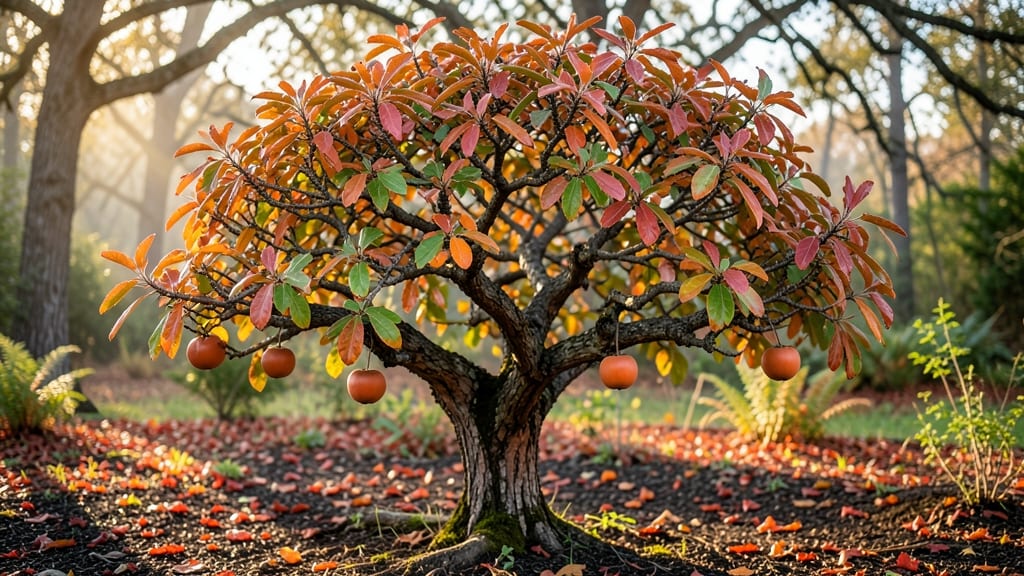
Persimmon trees in North Carolina flourish with cold-resistant varieties like 'Meader' and 'Fuyu', thriving in the state's humid subtropical climate and well-drained soils. Plant them in full sun to maximize fruit production.
North Carolina's climate—with its hot summers and mild winters—creates ideal conditions for persimmon trees, especially those bred for resilience. 🌳 The 'Meader' variety, for example, handles humidity well and produces sweet, astringent-free fruit perfect for fresh eating or baking.
Meanwhile, 'Fuyu' persimmons ripen earlier, offering a non-astringent option that's great for salads or snacking. Both varieties tolerate the state's occasional late frosts, making them reliable choices for home gardeners.
For best results, focus on soil drainage and sunlight exposure. North Carolina's well-drained soils prevent root rot, while full sun exposure (at least 6-8 hours daily) ensures robust growth and heavy fruit sets.
I recommend testing soil pH before planting—persimmons prefer slightly acidic conditions between 5.5 and 6.5—and amending with compost if needed. Mulching with organic matter also helps retain moisture during the state's dry spells.
💡 In This Article
- Best Persimmon Varieties for North Carolina’s Climate
- Planting and Care Tips for North Carolina Persimmon Trees
Best persimmon varieties for North Carolina’s climate
North Carolina’s USDA hardiness zones 7-8 create a perfect balance for persimmon cultivation, where cold-hardy varieties like 'Meader' and 'Fuyu' truly excel. The 'Meader' persimmon, a native American species, thrives in these zones with its remarkable cold tolerance down to -10°F.
Its thick bark and dense canopy also provide natural resistance to the fungal diseases that plague other fruit trees in the state's humid summers.
Meanwhile, the Japanese 'Fuyu' variety, which matures in just 120-140 days, offers an early harvest advantage while maintaining its non-astringent qualities—ideal for North Carolina's shorter growing season in higher elevations.
The key difference between these varieties lies in their fruit characteristics and ripening behaviors. 'Meader' persimmons develop a deep orange hue when fully ripe and contain high levels of natural sugars (around 20-25° Brix), making them perfect for baking or drying.
Their astringent-free nature when ripe contrasts with traditional Asian varieties like 'Hachiya,' which must be fully soft before eating. In North Carolina's climate, 'Hachiya' requires careful protection from late spring frosts, which can damage blossoms and reduce fruit set.
The 'Fuyu' variety, on the other hand, can be eaten firm and crisp, offering a unique texture that pairs beautifully with local North Carolina cheeses and charcuterie boards.
What makes these varieties particularly suited to North Carolina is their disease resistance profile. The state's humid summers create ideal conditions for fungal pathogens like anthracnose and powdery mildew, which can devastate less resilient fruit trees.
'Meader' persimmons have developed natural resistance through centuries of adaptation to the southeastern U.S., while 'Fuyu' benefits from Japanese breeding practices that prioritize disease tolerance.
Both varieties also exhibit strong root systems that establish quickly in North Carolina's well-drained soils, reducing transplant shock—a critical factor for gardeners dealing with the state's occasional drought periods.
Consider these practical factors when selecting varieties for your North Carolina garden:
- Cold hardiness: 'Meader' handles -10°F winters, while 'Fuyu' tolerates down to -5°F
- Fruit ripening: 'Fuyu' matures in 120-140 days, while 'Meader' takes 150-180 days
- Disease resistance: Both excel in humidity but 'Meader' has superior fungal resistance
- Fruit texture: 'Fuyu' is crisp when ripe; 'Meader' becomes soft and custard-like
The state's microclimates also play a crucial role in variety selection. In western North Carolina's higher elevations (zones 6-7), gardeners should prioritize 'Meader' for its cold tolerance, while coastal areas (zones 8a-8b) can successfully grow both 'Fuyu' and 'Meader'.
The Piedmont region's hot summers benefit from 'Fuyu's' early ripening, allowing fruit to mature before peak humidity arrives. For urban gardeners with limited space, dwarf varieties like 'Fuyu' are excellent choices, reaching only 10-12 feet at maturity compared to 'Meader's' 20-30 feet.
What most gardeners don't realize is how persimmon varieties interact with North Carolina's pollinators. Both 'Meader' and 'Fuyu' are self-pollinating, but they benefit from cross-pollination for better fruit set.
Planting both varieties near each other can increase yields by up to 30% due to improved pollinator activity from native bees that thrive in the state's diverse ecosystems.
This symbiotic relationship becomes particularly valuable during North Carolina's occasional early spring frosts, which can reduce pollinator activity and subsequently lower fruit production in single-variety plantings.