
Trees
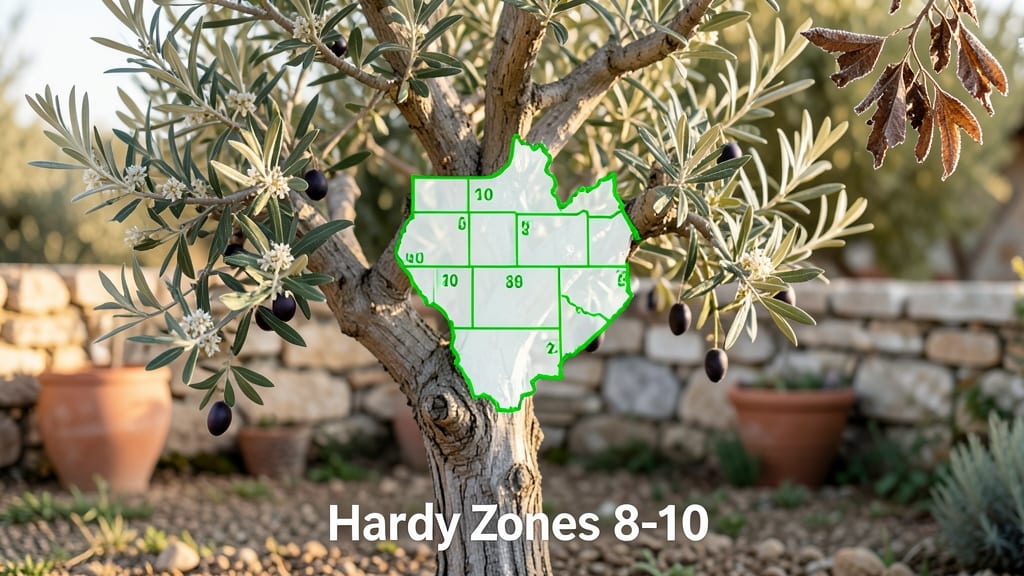
Determining the olive tree hardy zone reveals they flourish best in USDA Zones 8 through 10, where winter temperatures rarely drop below 10°F (-12°C). Cold-hardy varieties like 'Arbequina' or 'Frantoio' can survive brief dips to 15°F (-9°C) with proper protection, but most olives need shelter in colder climates.
Understanding your region's USDA zone is the first step to successful olive tree cultivation. These trees thrive where winters stay above freezing, as their tender leaves and stems can't tolerate prolonged cold. 🌿 In Zones 7 and below, growers often use microclimates—like south-facing walls or greenhouses—to create warmer microenvironments.
The key difference between hardy varieties and standard olives lies in their root systems: cold-resistant types develop deeper roots that insulate against frost better than shallow-rooted varieties.
For those in marginal zones, winter preparation is everything. I've seen olives in Zone 7 survive using thick mulch layers and frost blankets, while container-grown trees offer even more flexibility to move indoors during freezes.
The right care can push their limits, but patience and protection are non-negotiable factors for long-term success.
💡 In This Article
- USDA Zones for Olive Trees: Cold Tolerance Limits Explained
- Protecting Olive Trees in Cold Climates: Step-by-Step Winter Care
USDA Zones for olive trees: cold tolerance limits explained
The olive tree's cold sensitivity stems from its Mediterranean origins, where winter temperatures typically hover between 40°F (4°C) and 60°F (15°C). Their leaves contain high water content (about 60-70% of leaf weight), which freezes and ruptures cell walls below 28°F (-2°C).
This cellular damage explains why most olive varieties can't survive prolonged exposure to 10°F (-12°C)—the threshold for USDA Zones 8-10. 🌡️ The root systems of standard olives also struggle in freezing soil, as their shallow lateral roots lack the insulation of deeper, cold-hardy varieties.
USDA Zone 8 (average minimum 10-15°F (-12 to -9°C)) represents the northern limit for most olive trees, but only with careful winter protection. Zone 9 (20-25°F (-7 to -4°C)) offers more reliable growing conditions, while Zone 10 (30-35°F (-1 to 2°C)) provides ideal winter temperatures.
The difference between these zones isn't just about survival—it affects fruit production. Trees in Zone 8 may produce fewer olives because their energy goes toward cold resistance rather than flowering and fruiting.
Microclimates become crucial in marginal zones. A south-facing wall can create a 5-10°F (3-6°C) warmer environment than the surrounding area, potentially pushing Zone 7 (0-10°F (-18 to -12°C)) olives into survival mode.
I've seen container-grown olives thrive in Zone 6 (-10 to 0°F (-23 to -18°C)) when moved indoors during winter, demonstrating how location flexibility can overcome natural limitations. The key is understanding your specific microclimate's frost pockets and heat retention patterns.
Cold-hardy varieties like 'Arbequina' and 'Frantoio' push these boundaries by developing thicker leaf cuticles and deeper root systems that store more starches for winter survival. Their leaves contain higher concentrations of antioxidants that protect cell membranes, allowing brief exposure to 15°F (-9°C).
However, even these varieties need protection when temperatures drop below 20°F (-7°C) for more than a few hours. The science shows that olive trees' cold tolerance improves with gradual acclimation during fall, but sudden freezes can still cause irreversible damage.
What most people overlook is how soil temperature affects root health. Olive roots can tolerate slightly colder soil than leaves (down to 25°F (-4°C)), but prolonged freezing disrupts nutrient uptake.
In Zone 7, I recommend using 6-12 inches (15-30 cm) of organic mulch to insulate roots while maintaining proper drainage. The mulch acts like a thermal blanket, preventing rapid temperature fluctuations that stress the tree's vascular system.
For those in Zones 5-6 (-20 to 0°F (-29 to -18°C)), container cultivation offers the best chance of success. Potted olives can be moved to protected spaces during winter, where indoor temperatures above 40°F (4°C) prevent leaf damage.
The container's smaller soil volume heats up faster in spring, giving the tree an earlier start to its growing season. This approach mimics the Mediterranean climate's mild winters while allowing growers to take advantage of summer warmth.