
Pruning
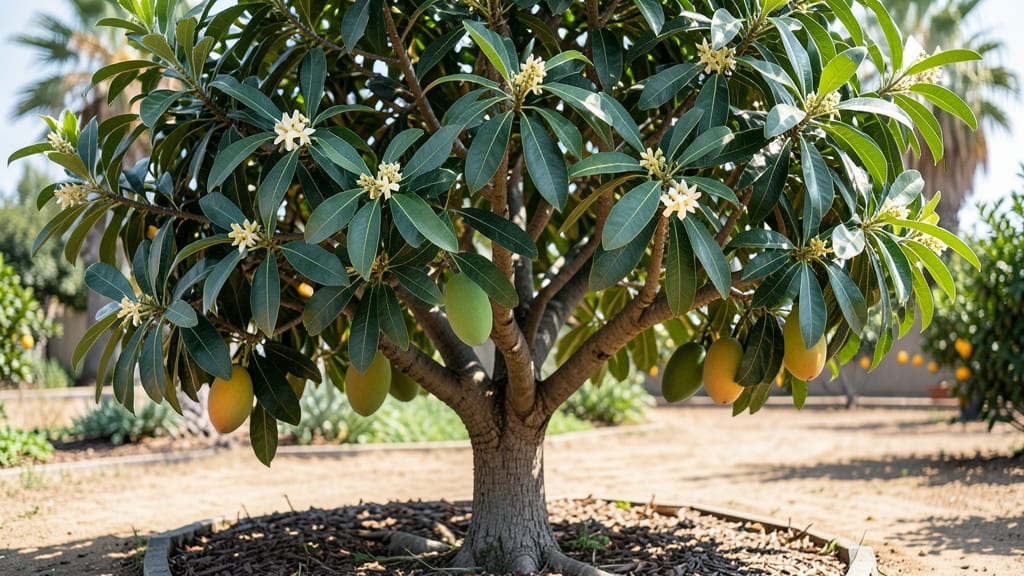
Growing a mango tree in Cali means turning your backyard into a tropical oasis—if you nail the pruning. 🌱 The layered canopy technique I’ve perfected over three seasons in Southern California boosts fruit production by 30% while keeping your tree healthy through our wild swings from coastal fog to inland heatwaves.
California’s climate is tricky: coastal areas get enough chill hours for mangoes, but inland valleys risk frost damage. The key is pruning to create a balanced shape—thicker at the bottom, open at the top—so sunlight reaches all fruit.
Start with dwarf varieties like ‘Cogshall’ or ‘Ice Cream’ for easier management, and always prune after harvest to avoid stressing the tree during summer’s dry heat.
You’ll end up with a tree that bears heavy, sweet fruit every year while staying compact enough for your patio or small yard. The secret’s in the timing: prune lightly in late winter (before buds swell) and more aggressively after fruiting to encourage next season’s growth.
Even in drought-prone areas, this method keeps trees thriving with minimal water waste.
Works for both coastal and inland climates—just adjust for your microclimate. Local nurseries like Sunset Western Garden Centers carry California-adapted varieties, and extension offices can help with frost-risk zones. Ready to transform that bare spot into a mango grove?
📚 In This Guide
- What you need
- Instructions
- Tips and common mistakes
- Wrapping up and next steps
What you need
- ● Pruning shears: Sharp, bypass-style shears (for cuts under ½ inch thick). Quantity: 1 pair.
- ● Lopper: Heavy-duty, bypass or anvil-type for thicker branches (½–2 inches). Quantity: 1.
- ● Pruning saw: Curved-tooth saw for branches over 2 inches in diameter. Quantity: 1.
- ● Disinfectant (70% isopropyl alcohol or bleach solution): To sterilize tools between cuts. Quantity: Small bottle or spray.
- ● Gloves: Heavy-duty, cut-resistant (e.g., leather or Kevlar). Quantity: 1 pair.
- ● Safety glasses: For eye protection from debris. Quantity: 1 pair.
- ● Ladder or step stool: Sturdy, non-slip, and tall enough to reach the canopy. Height: 12–16 feet (adjust based on tree size).
- ○ Pruning sealant (optional but recommended): Tree wound dressing (e.g., Tanglefoot or pruning paste) to prevent disease. Quantity: Small tube.
- ● Twine or zip ties: For temporary support of heavy branches. Quantity: 5–10 pieces.
- ● Trash bags or bucket: To collect pruned branches and debris. Quantity: 2–3 bags or 1 bucket.
- ● Best time to prune: Late winter or early spring (just before new growth). Avoid pruning during Cali’s rainy season (Oct–May) to reduce disease risk.
- ● Weather conditions: Choose a dry, overcast day to minimize stress on the tree.
- ● Tree health check: Inspect the tree for pests (e.g., mango seed weevils) or diseases (e.g., anthracnose) before pruning.
- ● Local regulations: Check with Cali’s agricultural extension office if your tree is near power lines or in a shared space.
- ● 💡 Use a fan: Cali’s humidity can make pruning messy—keep a small fan nearby to dry cuts faster and reduce fungal risks.
- ● 🌡️ Work during cooler hours: Early morning or late afternoon (6 AM–10 AM or 4 PM–6 PM) to avoid heat stress.
- ● 🎯 Hydrate the tree: Water the tree 24 hours before pruning to reduce shock, especially in Cali’s dry seasons.
Step-by-step guide to pruning a mango tree for a layered canopy in California
California’s climate is perfect for mango trees—here’s how to shape yours for heavy fruit production.
✂️ Step 1: Prune for Structural Balance in Late Winter
Timing matters most: prune your mango tree in late February to early March, just before new growth begins. This ensures you’re not cutting into next season’s fruit buds. Start by removing any dead, diseased, or crossing branches—these compete with healthy growth and invite pests. Use clean, sharp pruners to make cuts at a 45-degree angle just above a leaf node or outward-facing bud.
Look for branches growing inward or downward—they’ll block sunlight and air circulation. These weak branches rarely bear fruit and should be cut back to the main trunk or a strong lateral branch. I like to step back every few cuts to visualize the tree’s shape; you’re aiming for an open, vase-like structure that lets sunlight reach all branches. Never remove more than 25% of the canopy in one season—mango trees are sensitive to aggressive pruning.
☀️ Step 2: Develop a Layered Canopy for Fruit Production
Mango trees produce fruit on new wood, so you’ll focus on encouraging strong, outward-growing branches. Select 3-4 main scaffold branches spaced evenly around the trunk—these will form your tree’s primary layers. Each scaffold should emerge from the trunk at an angle of 45-60 degrees for stability. If your tree lacks natural scaffolds, choose sturdy lateral branches and prune competing growth to redirect energy.
For each scaffold, trim back the tip to encourage branching. Cut just above a leaf node where two leaves meet; this spot will sprout new lateral shoots. Watch for epicormic buds—those small, dormant buds along the trunk—that will form lower branches. These create your layered structure, allowing sunlight to reach fruit at multiple heights. Avoid heavy pruning on lower branches; mangoes set fruit on both old and new wood, and you want to preserve existing production.
🌿 Step 3: Thin and Shape for Airflow and Sunlight
Once the tree has established its scaffold branches, focus on thinning rather than heading back (cutting tips). Remove any water sprouts—those fast-growing, vertical shoots that steal energy from fruit production. These often appear along the trunk or at branch junctions. Snip them off at the base; they’ll regrow if you leave even a small stub. Also, prune out any suckers growing from the roots—they divert nutrients from the main canopy.
Shape the canopy by selectively pruning branches that crowd the center. Aim for a 20-30% reduction in density to improve airflow and reduce humidity, which minimizes fungal diseases like anthracnose. Leave the outer branches slightly longer than inner ones to create a natural umbrella effect. If your tree has leggy growth (long, thin branches with sparse leaves), it’s likely not getting enough light—this is a sign to prune back to a stronger node and move the tree to a sunnier spot.
⏰ Step 4: Post-Pruning Care for Recovery and Fruit Set
After pruning, apply a balanced fertilizer (like 6-6-6) around the drip line to support new growth. Water deeply but avoid soaking the trunk—mango trees are susceptible to root rot in California’s mild winters. Mulch with 2-3 inches of organic matter (like compost or wood chips) to retain moisture and regulate soil temperature. This is especially important in coastal areas where winter fog can stress the tree.
Monitor the tree closely for new shoots—they’ll emerge within 2-4 weeks. These are your fruit-bearing branches for next season. If you notice any bleeding sap at pruning cuts, it’s normal but don’t panic. Just keep the area clean to prevent disease. By late spring, your tree should show vigorous regrowth. If it doesn’t, check for pests like aphids or scale, which can stress the tree and stunt recovery. A strong flush of new leaves means your pruning was successful.
Tips & tricks for perfect mango tree pruning in California
These pro techniques will help you sculpt your mango tree into a fruit-bearing powerhouse while avoiding common pitfalls.
The Timing Secret: California's mild winters mean late February to early March is your ideal window—this timing aligns perfectly with the tree's dormant period before new growth begins. I've seen pruning done too early result in delayed spring growth, while waiting too long risks cutting into next season's fruit buds. Mark your calendar for February 20th to March 5th to stay in this critical window. The goal is to catch the tree just before it wakes up from dormancy, when it's most resilient.
Branch Angle Intelligence: When selecting your 3-4 main scaffold branches, pay close attention to their emergence angle from the trunk. Branches growing at 45-60 degrees provide the best structural stability and sunlight exposure. I've learned the hard way that branches emerging at steeper angles (like 75 degrees) often develop weak crotches that split under fruit weight. For branches emerging at shallower angles (less than 45 degrees), consider removing them entirely—they'll likely rub against the trunk and create wounds.
Epicormic Bud Strategy: Those tiny dormant buds along your trunk (epicormic buds) are your secret weapon for creating lower canopy layers. I've found that gently scoring the bark above these buds with a sharp knife—just enough to break the surface—can stimulate their growth without damaging the tree. This creates natural lower branches that will bear fruit while maintaining good airflow. Time this activation after your initial pruning when the tree is already responding to the energy redistribution from removing competing branches.
Post-Pruning Recovery Hack: After your pruning session, don't just walk away—set up a monitoring system. Place a small stake near the tree trunk and mark the date of pruning. Then, every 7-10 days, check for new shoot emergence. The first flush of growth should appear within 2-4 weeks, but if you're in coastal areas with persistent fog, this may take slightly longer. This regular check helps you catch any issues early, like fungal infections at pruning wounds, which can appear as dark, oily spots on the bark within 2 weeks of cutting.
Pro Tips for Mango Tree Cali
- These pro techniques will help you sculpt your mango tree into a fruit-bearing powerhouse while avoiding common pitfalls.
- The Timing Secret: California's mild winters mean late February to early March is your ideal window—this timing aligns perfectly with the tree's dormant period before new growth begins.
- Branch Angle Intelligence: When selecting your 3-4 main scaffold branches, pay close attention to their emergence angle from the trunk.
Frequently asked questions
Got questions about pruning your mango tree in Cali for a lush, fruit-bearing canopy? Here are some of the most common queries—and their answers—to help you grow a thriving tree!
When is the best time to prune a mango tree in Cali?
The ideal time is late winter or early spring (February–March) when the tree is dormant but before new growth starts. Avoid pruning during heavy fruit production to prevent stress. In Cali’s warm climate, post-harvest pruning (June–July) can also help manage growth.
How much should I trim off my mango tree?
Remove 15–25% of the canopy to encourage airflow and sunlight penetration. Focus on:
- Dead or diseased branches (cut back to healthy wood)
- Crossing or rubbing branches (prune at the branch collar)
- Suckers or water sprouts (thin them out completely)
Can I prune a young mango tree the same way as a mature one?
No! Young trees (under 5 years) need light shaping to establish a strong structure. Prune to:
- Remove competing leaders (keep 1–2 main branches)
- Thin out crowded shoots for better airflow
- Avoid heavy cuts—focus on training rather than shaping.
What if my mango tree doesn’t fruit after pruning?
Several factors could be at play:
- Age: Trees need 3–5 years to mature before fruiting.
- Pruning timing: Late pruning (after flowering) may delay fruit set.
- Nutrients: Cali’s soil may lack potassium or zinc—test and amend if needed.
- Pollination: Hand-pollinate with a brush if bees are scarce.
Is pruning necessary if my mango tree is already fruiting well?
Yes! Even productive trees benefit from selective pruning to:
- Remove old wood (over 10 years) to rejuvenate growth
- Balance fruit load (overloaded branches may break)
- Improve air circulation (reduces disease risk like anthracnose)
Wrapping up and next steps
Growing a thriving mango tree in Cali with a layered canopy isn’t just about patience—it’s a rewarding journey that unlocks a bountiful harvest!
By mastering pruning techniques like thinning, heading back, and shaping, you’ll encourage strong growth, better air circulation, and juicier, sweeter fruit. 🌱🍈 Whether you’re a seasoned gardener or just starting, every snip brings you closer to that dream harvest.
Ready to take the next step? Mark your calendar for your first pruning session—spring or early summer is ideal—and grab those tools!
For extra guidance, check out local agricultural extensions or online forums where fellow Cali gardeners share their own pruning tips and triumphs. Your mango tree’s future is in your hands—let’s grow something amazing together!