
Pruning
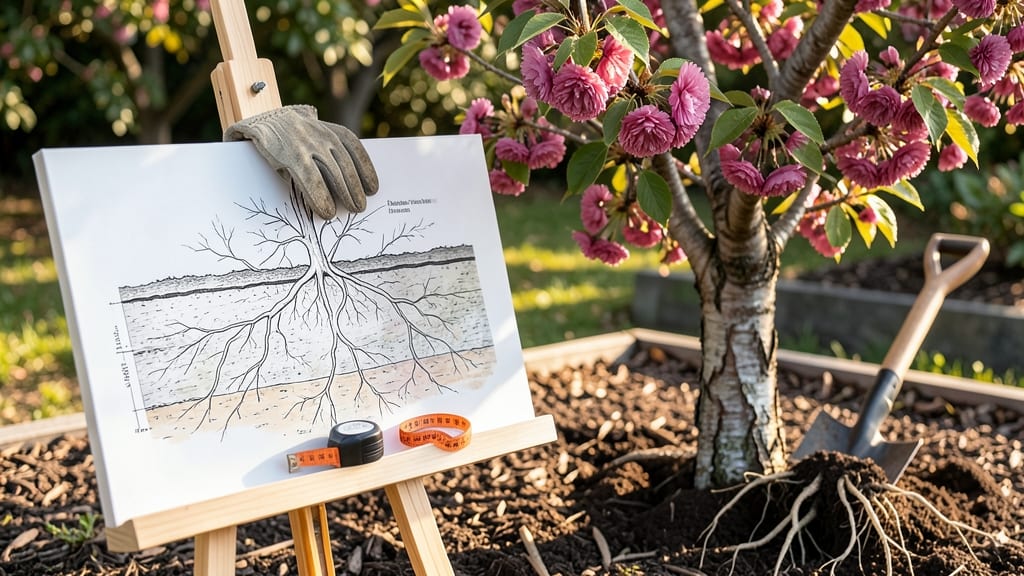
The Kwanzan cherry tree root system spreads its roots deep and wide to anchor its stunning pink blooms and feed its towering growth.
Picture this: a 20-foot tree swaying in a storm, yet standing firm—because its roots dive 18-36 inches deep and stretch 2-3 times the canopy’s width. That hidden structure is what keeps your Kwanzan thriving, not just surviving.
You might assume shallow roots are fine, but compacted soil or poor drainage can strangle them before they reach their full potential. The right planting spot—with well-draining soil and space to spread—makes all the difference in how your tree grows.
In this guide, I’ll break down how Kwanzan cherry tree roots work, from depth and spread to feeding zones, so you can plant it right the first time—and keep it healthy for decades of spring color.
How deep and wide Kwanzan cherry tree roots grow for stability
The Kwanzan cherry tree (Prunus serrulata 'Kwanzan') develops a robust root system designed to anchor its 20-30-foot height securely. Unlike shallow-rooted trees, its roots extend both deeply and widely, creating a natural storm-resistant foundation.
This structure explains why Kwanzan cherries thrive in USDA Zones 5-8—their roots adapt to various soil types while prioritizing stability over rapid growth.
Most of a Kwanzan cherry’s roots grow within the top 18-36 inches of soil, with 50-70% concentrated in the top 12 inches. This shallow-deep hybrid system ensures access to moisture while anchoring against high winds.
The lateral roots spread 2-3 times wider than the tree’s canopy, creating a broad support network. For a 20-foot mature Kwanzan, expect roots extending 40-60 feet outward.
When planting a Kwanzan cherry, prioritize soil drainage to prevent root suffocation. In clay-heavy soils, amend with compost or sand to improve aeration. The tree’s roots are sensitive to waterlogging, which can cause anaerobic conditions and root rot.
Conversely, sandy soils may require organic matter to retain moisture for the critical feeder roots.
One common misconception is that Kwanzan cherries need deep planting to establish strong roots. However, planting the root flare (where roots meet the trunk) 2-3 inches above soil level prevents girdling roots and encourages upward growth. Burying the flare too deep suffocates the tree’s natural structural adaptations.
The Kwanzan cherry’s root system also develops mycorrhizal relationships with soil fungi, enhancing nutrient uptake. This symbiotic bond explains why established trees thrive with minimal fertilization—their roots efficiently absorb nitrogen, phosphorus, and potassium from the soil.
For young trees, apply a balanced 10-10-10 fertilizer in early spring to support root expansion.
In urban landscapes, Kwanzan cherries often face soil compaction from foot traffic or construction. To mitigate this, create a 4-inch mulch ring around the base (keeping mulch 6 inches away from the trunk).
Use wood chips or straw to improve soil structure and retain moisture for the shallow feeder roots.
For storm-prone areas, consider planting Kwanzan cherries near existing structures or fences to leverage their lateral roots for additional support. However, avoid planting too close to foundations—roots can extend 40 feet and may cause plumbing or foundation issues over time. Always maintain a 10-foot clearance from buildings.
Monitor your Kwanzan cherry’s root health by observing leaf color and growth rate. Yellowing leaves may indicate root suffocation (from overwatering or compacted soil), while stunted growth suggests nutrient deficiencies.
Prune roots only when necessary—never remove more than 20% of the root ball during transplanting to avoid shock.
By understanding these root dynamics, you’ll ensure your Kwanzan cherry grows strong, stable, and blossom-filled for decades. The key is balancing depth, spread, and soil health—just like the tree’s natural design intended. 🌳💧
Feeding zones: how Kwanzan cherry tree roots absorb water and nutrients
Your Kwanzan cherry tree relies on a shallow but extensive root system to absorb nutrients and water efficiently. The 80/20 rule applies here: 80% of roots reside in the top 12 inches of soil, while the remaining 20% extend deeper for stability.
This means most feeding happens near the surface—where mulch and topsoil matter most.
Understanding these feeding zones helps you optimize watering and fertilization. For example, organic mulch like wood chips retains moisture while slowly releasing nutrients. Without proper mulching, roots struggle to access water during hot summer months, leading to stress or even leaf scorch.
Pros of Proper Mulching
- 🌱 Moisture retention – Reduces evaporation by 30%
- 🌿 Nutrient enrichment – Breaks down into compost
- ✂️ Weed suppression – Limits competition for water
Cons of Poor Mulching
- 🌧️ Overwatering risk – Too much mulch traps excess moisture
- 🔥 Root rot danger – Compacted mulch suffocates roots
- 🌡️ Temperature extremes – Can overheat or chill roots
Spring is the best time to feed your Kwanzan cherry, as roots are actively growing. Use a balanced fertilizer (10-10-10) in early spring to support new growth, but avoid heavy feeding in summer—it can encourage late-season growth vulnerable to frost damage. Winter feeding is unnecessary since the tree is dormant.
For established trees, focus on deep watering every 7-10 days during dry spells. Newly planted trees need weekly deep watering for the first year to encourage root expansion. Always water at the base of the tree, not the leaves, to prevent fungal diseases like powdery mildew.
Test your soil’s pH (6.0-7.0 ideal) and adjust with lime or sulfur if needed. Amend heavy clay soil with compost to improve drainage, as waterlogged roots lead to root rot. A simple soil test kit makes this easy and cost-effective.
By targeting the top 12 inches with mulch and nutrients, you’ll ensure your Kwanzan cherry stays healthy and blooms spectacularly year after year. Pay attention to seasonal needs—spring for feeding, summer for hydration, and winter for rest.