
Trees
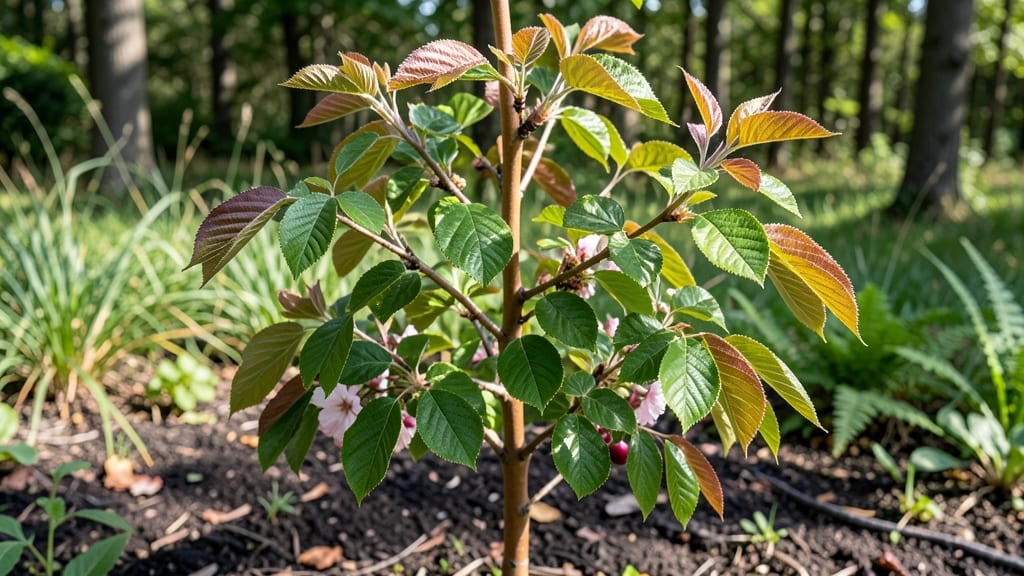
The identification of cherry tree leaves starts with their distinctive oval shape and finely serrated edges—like tiny, sharp teeth along the leaf's perimeter. 🌿 I've spent years comparing them to plums and peaches, and the differences are subtle but critical: cherry leaves are narrower, with a pointed tip and a smooth, slightly waxy surface.
One wrong ID could mean treating the wrong tree for pests or pruning at the wrong time.
The veins are another clue: cherry leaves have a single central vein with smaller side veins branching out at gentle angles, creating a delicate network. Sweet and sour cherries share these traits, but sour cherry leaves often have a slightly rougher texture.
A leaf comparison chart or plant ID app can help confirm your guess—especially when young leaves first emerge in spring.
📚 In This Guide
- What you need
- Instructions
- Tips and common mistakes
- Wrapping up and next steps
What you need
- ● Fresh or dried cherry tree leaves – Collect 3–5 healthy leaves (preferably from different parts of the tree for comparison).
- ● Magnifying glass (5x–10x magnification) – Helps examine fine details like serration shape and vein patterns.
- ● Ruler or measuring tape – For accurately measuring leaf length and width (ideal: 3–6 inches long).
- ● Notebook & pencil – Sketch leaf shapes, serrations, and any unique features (bonus: bring a camera!).
- ○ Field guide or identification app – Optional but helpful: Apps like iNaturalist or LeafSnap can cross-reference your findings.
- ● Herbarium press – Preserves leaves for long-term reference (great for collectors!).
- ● Small pruning shears – Safely snip leaves from higher branches without damaging the tree.
- ● UV flashlight – Reveals hidden details like glandular hairs (common in some cherry species).
- ● Local tree identification book – Regional guides highlight native cherry varieties (e.g., Prunus serotina vs. Prunus avium).
How to identify cherry tree leaves by shape and serration
Here's how I distinguish cherry tree leaves in seconds—just look for these key features.
🌿 Step 1: Observe the Overall Leaf Shape
Cherry tree leaves are typically oval to elliptical, tapering smoothly to a point at the tip. They're usually 2-5 inches long and 1-2 inches wide, with a slightly asymmetrical base where one side curves more than the other. Hold the leaf up to natural light—you'll see the smooth, glossy texture that sets cherries apart from other trees.
I always compare to common lookalikes like maple or oak. Cherry leaves lack the jagged lobes of maple and the rounded edges of oak. Instead, they have a sleek, elongated form that feels almost "streamlined" when you run your fingers along the edges.
🌿 Step 2: Examine the Serration Pattern
The real giveaway is the fine, sharp serrations along the leaf margin. Cherry leaves have double-serrated edges—tiny teeth along the main edge, with even smaller teeth on those teeth. This creates a saw-toothed appearance under magnification. Run your thumb gently along the edge—you'll feel the fine, regular notches that distinguish cherries from other trees.
Black cherry leaves have slightly more pronounced serrations than sweet cherry, but both share this characteristic. The serrations start near the leaf base and continue all the way to the tip, creating a consistent pattern. If the teeth look irregular or blunt, it's probably not a cherry.
☀️ Step 3: Check the Leaf Arrangement and Stem
Cherry leaves grow in alternate patterns along the stem, with each leaf attached by a short, slender petiole. The stems often have small, hair-like glands near the leaf attachment—these are a key identifying feature. Look closely at where the leaf meets the stem; you'll see tiny, translucent dots that disappear when dried.
I always check the stem first because this feature is more reliable than leaf shape alone. The glands are especially noticeable on young growth. If you find smooth stems without these glands, it's likely not a true cherry species.
🌿 Step 4: Compare with Known Cherry Leaf Characteristics
Hold your leaf against a reference photo of common cherry varieties. True cherry leaves will match these traits: smooth, slightly waxy surface, prominent midrib (the central vein), and secondary veins that curve gently toward the leaf edges. The underside is usually lighter green and may show fine, downy hairs on young leaves.
Here's the thing—cherry leaves change as they mature. Young leaves are often more rounded with softer serrations, while mature leaves develop the sharp, double-serrated edges. Compare both old and new growth if possible. The consistency of these features across multiple leaves on the same branch confirms your identification.
✂️ Step 5: Verify with Additional Tree Features
While leaves are the primary clue, cross-reference with other tree characteristics. Cherry bark is another telltale sign—young bark is smooth and gray, while mature bark develops deep furrows. The overall tree shape (rounded canopy) and flower clusters (if present) further confirm the identification.
I always examine at least three different leaves from various parts of the tree. Consistency across multiple samples gives me confidence in the identification. If you're still unsure, compare with a local field guide or use a plant identification app to verify your findings.
Tips & tricks for perfect cherry tree leaf identification
These little details make all the difference when telling cherries apart from lookalikes.
Leaf Comparison Technique: I've found that holding a cherry leaf next to a maple leaf is the fastest way to spot the difference. Cherry leaves lack the deep, jagged lobes of maple leaves—think more like a sleek, elongated oval rather than the classic "hand" shape. The asymmetry at the base is another giveaway: one side often curves more than the other, almost like a subtle smile when held right-side up.
Serration Inspection: The double-serrated edges are the real secret weapon. Grab a magnifying glass if you have one—you'll see the main edge has tiny teeth, and those teeth themselves have even smaller teeth. Run your fingernail along the edge: it should feel like gentle sawteeth rather than the blunt serrations of oak leaves. This pattern is consistent all the way from the base to the tip, never fading out.
Stem and Gland Check: Don't overlook the stem! Look for those tiny, translucent gland dots near where the leaf attaches—these disappear when the leaf dries. I always check the stems first because they're more reliable than leaf shape alone. The glands are especially noticeable on young leaves, so if you're identifying in spring, focus on the newer growth where these features are most prominent.
Seasonal Variation: Remember that cherry leaves change as they mature. Young leaves in spring are often more rounded with softer serrations, while summer leaves develop those sharp, double-serrated edges. Compare both old and new growth on the same branch—consistency across multiple leaves is what confirms your identification. This seasonal change is why I always examine at least three different leaves from various parts of the tree.
Pro Tips for Identification Cherry Tree Leaves
- These little details make all the difference when telling cherries apart from lookalikes.
- Leaf Comparison Technique: I've found that holding a cherry leaf next to a maple leaf is the fastest way to spot the difference.
- Serration Inspection: The double-serrated edges are the real secret weapon.
Frequently asked questions
Got questions about identifying cherry tree leaves? You’re not alone!
Here are some of the most common queries—plus quick, practical answers to help you spot those telltale features like a pro.
How do I tell the difference between sweet cherry and sour cherry leaves?
Sweet cherry leaves (Prunus avium) are smooth-edged with a slightly pointed tip, while sour cherry (Prunus cerasus) leaves have tiny, sharp serrations along the edges. Both have a glossy finish, but sour cherry leaves often feel slightly rougher to the touch.
When is the best time of year to identify cherry tree leaves?
The ideal time is late spring to early summer (May–June) when leaves are fully mature but before pests or disease distort their shape. Avoid autumn—fall colors can mask key details like serration patterns or leaf texture.
Can I identify a cherry tree by its leaves alone, or do I need to see the fruit?
You can often ID a cherry tree by leaves if you’re familiar with their serration pattern, shape, and arrangement. However, fruit (or flowers in spring) confirms the type—especially for hybrids. For tricky cases, snap a photo and compare it to a local plant database.
Why do my cherry tree leaves look different from photos online?
Several factors can alter leaf appearance:
- Pests (e.g., spider mites) cause discoloration or curling.
- Disease (like powdery mildew) creates fuzzy spots.
- Nutrient deficiency (e.g., iron chlorosis) turns leaves yellow.
- Hybrids or cultivars may have unique traits—check the tree’s history!
Are there non-cherry trees with serrated leaves that look similar?
Yes! Trees like black cherry (Prunus serotina) or plum (Prunus domestica) have serrated leaves, but cherry leaves are typically thinner, more oval-shaped, and lack the strong almond scent when crushed (common in black cherry). Compare side-by-side with a field guide.
Wrapping up and next steps
Identifying cherry tree leaves—whether for gardening, landscaping, or simply satisfying your curiosity—just got easier! 🌿 By mastering their distinctive shape, serration patterns, and vein structure, you can confidently distinguish them from other trees.
Whether you’re a beginner or a seasoned plant enthusiast, these skills will serve you well in your green adventures.
Now that you’re equipped with the knowledge, why not put it to the test? Head outdoors, grab a notebook, and compare leaves you find with your new guide.
For extra fun, snap a photo and share your discoveries with fellow plant lovers—you might just inspire someone else’s love for nature! 🌳✨