
How To
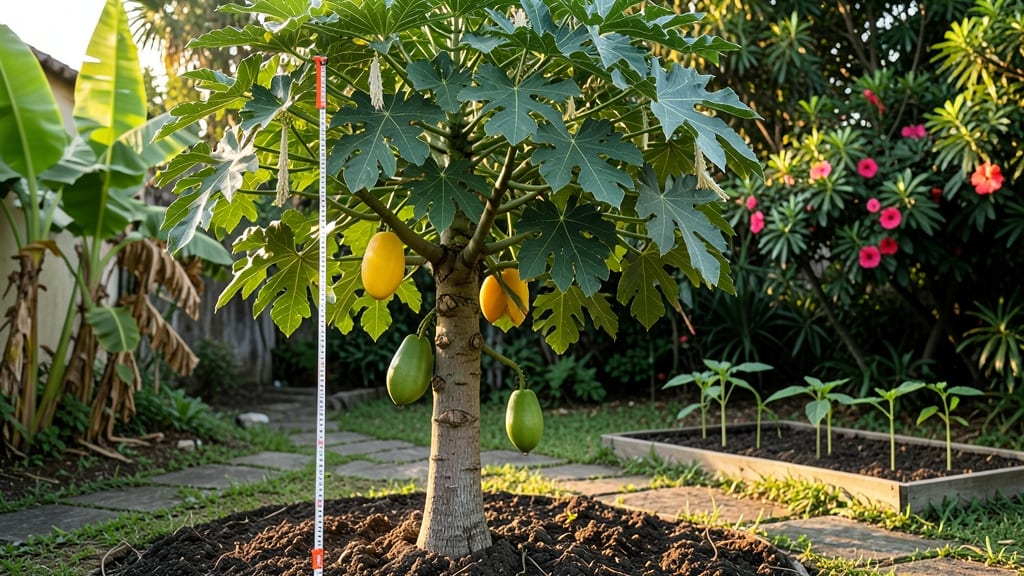
A papaya tree can grow 10 to 30 feet tall—taller than most two-story homes—but its height depends on the variety, your climate, and how much care you give it.
Wondering if your backyard can accommodate a papaya tree? These tropical giants can reach astonishing heights—some dwarfing even the tallest two-story homes—but not all varieties grow the same.
Standard types like 'Solo' or 'SunUp' shoot up to 20 feet or more in warm zones, while dwarf cultivars (though rare) can stay under 10 feet if pruned properly. The key to managing their height lies in where you plant them and how you prune them.
Below, I’ll break down the height ranges by variety, the best zones for optimal growth, and simple pruning tips to keep your papaya tree at your desired size—whether you want a towering tropical centerpiece or a compact container-friendly plant.


Papaya tree height by variety: from dwarf to giant sizes
Papaya trees are tropical powerhouses that can grow into towering giants, but their mature height varies dramatically depending on the variety and growing conditions. While some types reach 20-30 feet—taller than most homes—others stay compact enough for container gardening.
Understanding these differences helps you choose the perfect papaya for your space, whether you're dreaming of a backyard orchard or a patio-sized harvest.
Most papaya varieties are fast-growing, reaching 5-10 feet in their first year and maturing within 8-12 months. However, dwarf varieties (though rare) and proper pruning can keep trees under 10 feet, making them ideal for urban gardens.
Below, we break down the height ranges of popular cultivars, including their growth habits and best uses.
The 'Solo' variety is one of the best choices for container gardening, typically staying under 15 feet with proper pruning. Its compact size makes it perfect for patios or balconies in USDA zones 10-12, where it thrives year-round.
If you're in a cooler climate, consider growing it in a large pot that you can move indoors during winter.
For those with more space, the 'Red Maradol' is a showstopper, reaching 20-30 feet and producing large, deep-red fruits. This variety is ideal for tropical estates or commercial growers, but its height requires careful planning—think structural support and ample root space.
Even in its first year, it can shoot up 5-10 feet, so early pruning is key to manageable growth.
If you're torn between height and productivity, the 'SunUp' variety strikes a balance, growing to 15-20 feet while offering high yields and disease resistance.
It’s a top pick for home gardens in warm climates, as it adapts well to pruning and can be trained to fit smaller spaces with minimal height loss.
For urban gardeners, the 'Kapoho Solo' is a game-changer, often staying under 12 feet and producing sweet, yellow fruits in as little as 7 months. Its dwarf-like stature makes it ideal for 50-gallon containers, provided you use a well-draining mix and fertilize regularly.
Just ensure it gets full sun (6+ hours daily) to prevent stunted growth.
Height isn’t the only factor to consider—fruit color and growth rate also play a role in your choice. For example, the 'Tainung No. 2' may reach 18 feet, but its orange-red
Ideal growth zones and climate requirements for maximum height
Papaya trees thrive in tropical climates, where warm temperatures and high humidity fuel their rapid growth. In their native USDA zones 10-12, these trees can reach 20-30 feet tall within just 2-3 years.
However, cooler climates—like zones 9-11—require extra care to prevent stunted growth or frost damage, which can drastically reduce their height potential.
Sunlight is another critical factor: papaya trees need at least 6-8 hours of direct sunlight daily to maximize their height and fruit production. Without sufficient light, they’ll grow leggy and weak, rarely exceeding 10-15 feet.
Even in ideal zones, humidity levels below 60% can slow growth, while consistent moisture and warmth accelerate it.
🌱
| Climate Factor | Ideal Range | Height Impact | Growth Hack |
|---|---|---|---|
| USDA Zone | 10-12 (native); 9-11 (with protection) | 20-30 ft (optimal); 10-15 ft (cooler zones) | Use greenhouses or row covers in zones 9-11 |
| Temperature | 70-90°F (day); 60-70°F (night) | Stunted growth below 50°F; dies below 32°F | Mulch heavily in cooler zones |
| Sunlight | 6-8+ hours daily | Leggy growth (<10 ft) with <4 hours | South-facing windows or grow lights |
| Humidity | 60-80% | Slow growth (<50%); leaf burn (>85%) | Mist leaves or use humidity trays |
| Soil Temp | 70-85°F | Roots stall below 60°F | Black plastic mulch to warm soil |
In cooler climates, like zones 9-11, papaya trees can still reach 10-15 feet with the right strategies. Start seedlings indoors in late winter, then transplant after the last frost.
Use greenhouses or cold frames to extend the growing season, ensuring soil temperatures stay above 60°F. Without these protections, growth slows dramatically, and trees may never exceed 6-8 feet.
Humidity is equally critical—low levels cause leaf curl and stunted growth, while excessive moisture leads to root rot. In dry climates, group papaya trees together to create a microclimate or use drip irrigation to maintain consistent moisture.
For container growers, 5-gallon pots work for dwarf varieties, but standard types need 15+ gallons to support their height.
🌿
To maximize height, focus on soil fertility and water consistency. Papaya trees are heavy feeders, so amend soil with compost and a balanced fertilizer (10-10-10) every 4-6 weeks during the growing season. In tropical zones, they’ll bolt upward quickly, while subtropical zones may see slower but steady growth.
With the right climate adjustments, even cooler regions can grow papaya trees tall enough for a bountiful harvest—just plan for smaller stature and extra care.
☀️