
How To
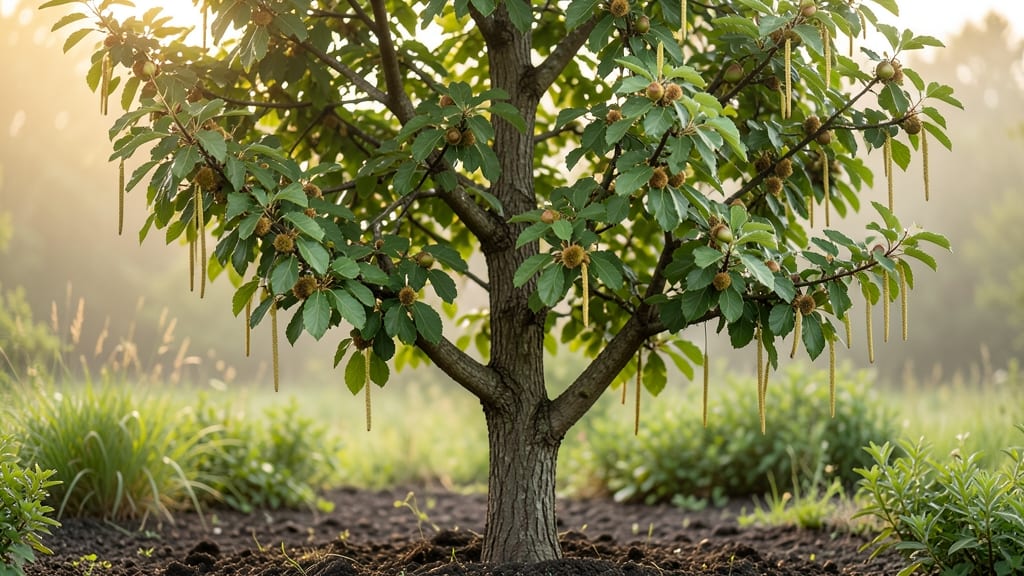
Hazelnut trees grow between 8 and 30 feet tall, depending on the variety you choose—so whether you’re planning a backyard grove or a single statement tree, size matters.
If you're dreaming of growing your own hazelnut trees but wondering whether they’ll fit in your backyard—or require an entire orchard—you’re not alone. Some varieties, like the 'Cosford' dwarf, stay under 12 feet, while standard types like 'Tonda di Giffoni' can reach 20+ feet.
The right choice means the difference between a hassle-free harvest and a space-consuming disappointment.
Beyond variety, factors like sunlight, soil, and pruning play a role in how tall your 🌰 hazelnut tree grows. In USDA Zone 6a, where spring planting is ideal, proper spacing and maintenance can keep even larger trees manageable.
For example, standard varieties need 20–30 feet of space, while dwarfs thrive in 10-foot areas.
Here’s what you’ll learn: exact height ranges by variety, spacing tips to avoid overgrowth, and pruning tricks to control size—so you can grow the perfect hazelnut tree for your space.


Hazelnut tree height by variety: from dwarf to giant sizes
Choosing the right hazelnut tree variety is all about balancing your space constraints with your harvest dreams. Some varieties top out at 8 feet, perfect for small backyards, while others reach 30+ feet, requiring orchard-level planning.
The key lies in understanding each variety's growth pattern and ideal climate—because a 15-foot tree in your zone might become a 25-foot giant if conditions are just right.
Modern breeding has created dwarf cultivars that grow just 6-12 feet tall, making them ideal for urban gardens or container growing. Meanwhile, traditional European varieties like 'Tonda di Giffoni' can soar to 20-30 feet, producing massive yields but needing significant space.
Let’s break down the options so you can pick the perfect fit for your garden.
If you're working with limited space, '
Optimal spacing and pruning tips to control hazelnut tree growth
Choosing the right hazelnut tree spacing and pruning strategy is key to managing growth and maximizing your harvest. Standard varieties can reach 20–30 feet tall, while dwarf cultivars stay under 10 feet. Proper spacing prevents overcrowding, which leads to poor air circulation and disease.
For example, plant dwarf varieties at least 8–10 feet apart to avoid competition, while standard trees need 20–30 feet of space to thrive.
Pruning isn’t just about keeping your tree small—it’s about encouraging strong growth and better nut production. Start by removing dead or diseased branches in late winter or early spring, before new growth begins.
This reduces the risk of pests and fungal infections. For height control, focus on pruning the upper branches to redirect energy toward the lower canopy, where most nuts form.
Here’s how to tailor spacing and pruning to your garden’s needs:
- Dwarf Varieties (8–12 ft tall): Space 8–10 feet apart in rows 10–12 feet apart. Prune lightly to maintain shape and encourage bushiness.
- Semi-Dwarf Varieties (12–18 ft tall): Space 12–15 feet apart in rows 15–20 feet apart. Prune to remove suckers and crossing branches to improve airflow.
- Standard Varieties (20–30 ft tall): Space 20–30 feet apart in rows 30–40 feet apart. Prune annually to thin the canopy and reduce height by up to 3 feet per year.
- Container-Grown Trees: Use large pots (20+ gallons) and prune aggressively in early spring to control height. Rotate pots for even growth.
Avoid these common mistakes that lead to overgrowth: skipping pruning, planting trees too closely, or using heavy-handed pruning in late summer. Over-pruning can stress the tree and reduce nut production.
Instead, focus on selective pruning to shape the tree and remove only 20–30% of the canopy per year. This keeps the tree healthy while controlling its size.
For seasonal pruning schedules, prune dwarf varieties in late winter to shape the tree before new growth starts. Semi-dwarf and standard varieties benefit from two pruning sessions: one in late winter to remove dead wood and another in summer to thin the canopy.
Always use sterilized pruning tools to prevent disease spread.
With the right spacing and pruning, you can grow hazelnut trees in small gardens or even containers. Dwarf varieties like 'Cosford' or 'Ennis' are perfect for urban spaces, while standard varieties thrive in rural orchards.
Start small, monitor growth, and adjust your approach as the tree matures—your future harvest will thank you! 🌰