
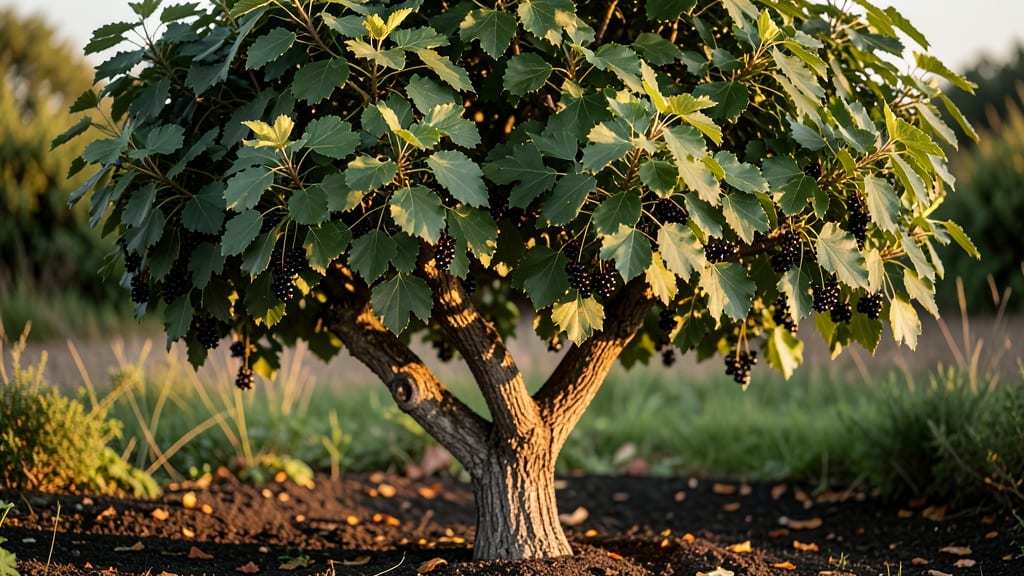
How Tall Can a Mulberry Tree Grow: Dwarf to Towering Heights by Species

How To

How Tall Can a Mulberry Tree Grow: Dwarf to Towering Heights by Species

A mulberry tree can grow how tall can a mulberry tree grow anywhere from 15 feet to towering heights of 60 feet, depending on the species and growing conditions.

If you're dreaming of a towering mulberry tree for shade, fruit, or privacy—but worry about space—you're in the right place. Mulberry trees range from compact dwarfs to massive giants, and their height depends entirely on the species and growing conditions.

For example, the Morus alba (white mulberry) often reaches 30-60 feet, while the Morus nigra (black mulberry) can max out at 50 feet or more. Dwarf varieties, like the 'Illinois Everbearing', stay under 15 feet, making them perfect for small yards.

In this guide, I’ll break down height variations by species, how to control growth with pruning, and the best choices for your space—whether you want a shade tree or a compact fruit producer.

Dwarf
15-20 ft
Container friendly
Semi-Dwarf
25-35 ft
Most popular
Standard
30-60 ft
Full orchard size

Mulberry tree height by species: from dwarf varieties to giant trees

Choosing a mulberry tree means deciding between a compact patio tree or a towering shade provider. The right species can transform your yard from a small urban plot to a wildlife-friendly forest.

Some varieties stay under 10 feet, while others reach 60 feet—and everything in between! Your space and goals determine which mulberry will thrive.

Whether you need a fruit-bearing dwarf for container growing or a monumental specimen for privacy, understanding species-specific heights helps you plan. Morus alba (white mulberry) often tops 50 feet, while Morus microcarpa (dwarf mulberry) stays under 10 feet.

Let’s explore the full range so you can pick the perfect fit for your landscape.

Note: Heights listed are for mature trees in ideal conditions. Pruning, soil quality, and climate can adjust growth by 20-30%. Always check local nursery listings for exact varieties.

Species Common Name Mature Height (ft) Growth Habit Best For
Morus microcarpa Dwarf Mulberry 6-10 ft Compact, rounded Containers, small yards, bonsai
Morus alba 'Illinois Everbearing' Semi-Dwarf Mulberry 12-15 ft Upright, bushy Small orchards, urban lots
Morus rubra Red Mulberry 25-40 ft Spreading, multi-trunk Shade trees, wildlife habitats
Morus nigra Black Mulberry 30-50 ft Tall, pyramidal Large estates, fruit production
Morus alba White Mulberry 40-60 ft Fast-growing, broad canopy Privacy screens, large landscapes
Morus australis Australian Mulberry 50-70 ft Tall, narrow Rural properties, windbreaks
Morus notabilis Paper Mulberry 30-45 ft Fast-growing, weeping branches Ornamental landscapes
Morus bombycis Silkworm Mulberry 20-30 ft Bushy, dense foliage Commercial orchards, silk production
Morus celata Hidden Mulberry 15-25 ft

Factors that influence mulberry tree height: soil, pruning, and climate

Your mulberry tree's height isn't set in stone—it's shaped by three key factors: soil quality, pruning techniques, and climate conditions. Understanding these will help you grow a mulberry tree that fits your space, whether you want a compact shade provider or a towering fruit giant.

Let's break down how each factor plays a role in determining your tree's ultimate height.

The soil composition directly impacts root development and nutrient uptake, which are critical for vertical growth. Mulberries thrive in well-draining, slightly acidic soil with a pH between 6.0 and 7.5.

Poor soil can stunt growth by up to 30%, while rich, loamy soil can accelerate height gains by 2-3 feet annually in optimal conditions. Amending clay-heavy soil with compost or sand creates the ideal foundation for rapid vertical expansion.

Key Factors Affecting Mulberry Tree Height
  1. 🌱 Soil Quality: Rich, well-draining soil can increase growth by 2-3 ft/year vs. 1 ft/year in poor soil.
  2. ✂️ Pruning: Annual pruning can reduce height by 30-50% if done aggressively, or maintain shape with minimal height loss.
  3. ☀️ Climate: Full sun zones (USDA 6+) enable 50+ ft trees, while cooler climates limit growth to 20-30 ft.
  4. 🪴 Container Growing: Limits height to 10-15 ft but allows urban gardening with dwarf varieties.
  5. 💧 Watering: Consistent moisture boosts growth by 15-20% compared to drought-stressed trees.

Pruning is your most powerful tool for controlling height—whether you want to tame a giant or encourage vertical growth. Strategic pruning in late winter or early spring can reduce height by 30-50% if you remove the central leader and lateral branches. For container-grown mulberries, annual pruning keeps them under 10-15 feet, perfect for patios or small yards. Just avoid heavy pruning in summer, as this can stress the tree and slow growth.

Your climate zone plays a surprisingly large role in determining height potential. Mulberries in USDA zones 6-9 with full sun exposure can reach 50+ feet, while those in cooler zones (like zone 5) often max out at 20-30 feet.

Coastal areas with mild winters may see faster growth rates, while inland regions with hot summers might experience slower vertical expansion due to stress. Even within the same zone, microclimates—like a sheltered backyard versus an exposed hillside—can influence height by 10-15%.

If space is limited, container growing is a game-changer. Dwarf varieties like 'Illinois Everbearing' or 'Purple Leaf' thrive in large pots (20+ gallons) and stay under 10 feet with regular pruning. The key is using fast-draining potting mix and repotting every 2-3 years to accommodate root growth.

Container mulberries grow 30-50% slower than in-ground trees but offer unmatched flexibility for urban gardens or balconies.

For maximum height, combine rich soil, minimal pruning, and ideal climate conditions. A mulberry in full sun with regular watering can add 3-5 feet annually in its first decade.

However, if you're aiming for a manageable size, focus on soil amendments, annual pruning, and container limitations. The right balance ensures your mulberry tree grows to your exact specifications—whether that's a shade canopy or a compact fruit producer. 🌿

★★★★★4.6(2 reviews)
Categories How To