
How To
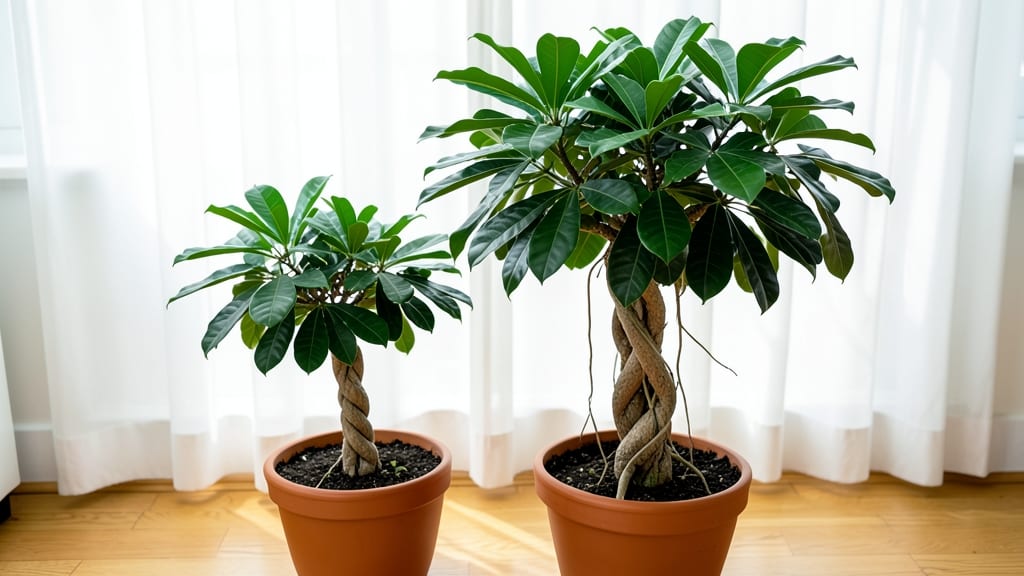
A money tree 🌿 can grow anywhere from 3 to 6 feet tall indoors, depending on care and variety—but some varieties reach even higher with the right conditions.
Picture this: your waist-high plant suddenly stretching toward the ceiling, its braided trunk reaching for the light. That’s not just a growth spurt—it’s how fast these tropical plants grow when given the right care.
The key to controlling its height lies in light exposure, pruning, and pot size. Too much sun or neglect can send your money tree skyrocketing, while strategic trimming keeps it compact and full.
In this guide, I’ll break down the factors that determine how tall your money tree grows, plus pro tips to keep it at your ideal height—whether that’s a 3-foot tabletop or a 6-foot statement plant.


Money tree height limits by variety: how tall each can grow indoors
Your money tree (Pachira aquatica) is a stunning indoor plant, but its final height depends on the variety you choose. Some types stay compact, while others can grow surprisingly tall—even indoors!
Understanding these differences helps you pick the perfect plant for your space and care goals. Let’s explore the height ranges of popular money tree varieties, from dwarf types to towering giants.
Most money trees fall into three main categories: dwarf varieties, standard types, and rare large-growth cultivars. The Pachira aquatica (most common) typically reaches 3-6 feet indoors, but some specialized varieties can exceed 10 feet with ideal conditions.
Knowing these limits helps you plan for pruning, pot size, and even ceiling clearance! Here’s what to expect from each variety.
If you’re buying a money tree seedling, its future height depends on whether it’s been braided or left natural. Braided varieties (like the classic 5-strand design) grow slower and stay within the 3–6 feet range, while unbraided seedlings can shoot up to 10+ feet if given enough space.
Always check the seller’s description—some nurseries label dwarf types as "compact" or "mini."
Light exposure plays a huge role in height. Money trees grown in bright indirect light (like an east-facing window) stay bushier and shorter, while those near south-facing windows or under grow lights may stretch taller.
This is called etiolation, where plants elongate to reach light. To keep your tree compact, rotate it quarter-turns weekly for even growth.
Pot size also affects height. Money trees in smaller pots (10–12 inches) grow slower and stay shorter, while those in large containers (16+ inches) can reach their maximum height faster.
If you want a taller tree, upgrade to a bigger pot; for a shorter tree, keep it pot-bound until it hits your desired height. Always use pots with drainage holes to prevent root rot.
Pruning is the easiest way to control height. Simply trim the top growth in early spring to encourage bushier growth. Cut just above a leaf node (where leaves grow), and your tree will branch out instead of shooting upward.
For dramatic height reduction, prune by 1/3 of the plant’s height—just be prepared for slower recovery in the first few weeks after trimming.
Outdoor money trees (in tropical climates) can grow much taller—some reach 20–30 feet! But indoors, even the tallest varieties rarely exceed 10 feet unless given optimal conditions. If you love the look of a money tree but lack ceiling space, opt for a dwarf variety or prune regularly.
With the right care, you can keep your money tree at any height you desire!
Pro tip: If you’re unsure about your tree’s potential height, check its leaf size. Larger leaves often indicate a faster-growing, taller variety, while smaller leaves suggest a dwarf type. Combine this with the seller’s notes to predict your money tree’s future size accurately.
Factors that control money tree height: light, pruning, and pot size
Your money tree's height isn't just luck—it's a direct result of three key factors: light exposure, pruning techniques, and pot size. These elements work together to determine whether your Pachira aquatica stays at a manageable 3-6 feet or stretches toward the ceiling.
Let's break down how each factor influences growth so you can tailor care to your space.
First, light exposure is the foundation of height control. Money trees thrive in bright, indirect sunlight, which encourages balanced growth. Too little light leads to leggy, tall stems reaching for sunlight, while too much direct sun can stress the plant.
Position your tree near an east or west-facing window for ideal growth patterns and prevent uncontrolled height spikes.
Next, pruning is your tool for shaping growth. Strategic pruning not only controls height but also encourages bushier, fuller growth. By cutting back leggy stems and pinching new growth, you redirect energy toward lateral branches.
This technique is especially useful if you want to keep your money tree at a compact 3-4 feet instead of letting it grow unchecked.
Finally, pot size plays a surprising role in height regulation. Money trees grow taller when root-bound, as they stretch upward to escape confined spaces. To limit height, choose a slightly larger pot (1-2 inches wider) every 2-3 years, but avoid oversized containers that encourage rapid vertical growth.
Well-draining soil in the right-sized pot keeps roots healthy while maintaining your desired height.
If you're aiming for a waist-high money tree (3-4 feet), combine these factors: place in bright indirect light, prune leggy stems monthly, and use a medium-sized pot.
For faster growth (6+ feet), provide more light, prune less frequently, and upgrade pots annually. Remember, consistency is key—adjust one factor at a time to avoid shocking your plant.
Pro tip: Monitor your money tree's growth patterns seasonally. In spring/summer, growth accelerates, so prune more aggressively. During fall/winter, reduce pruning to let the plant rest. With these adjustments, you'll have full control over whether your money tree stays small and manageable or becomes a stunning indoor centerpiece.
🌿