
How To
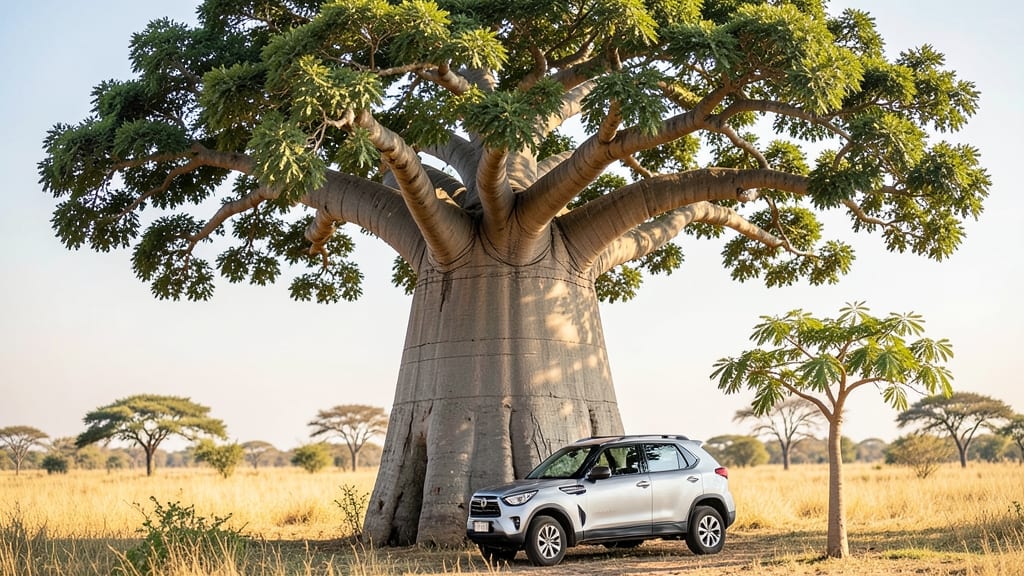
A baobab tree can grow how tall can a baobab tree grow—taller than a 10-story building, with some African specimens reaching heights of 80 feet or more—and a few outliers even topping 100 feet.
Picture this: a tree wider than a bus at its base, its trunk swelling like a giant’s barrel, standing sentinel in the arid savanna. But how does it get so tall? And why do some baobabs in Madagascar or Australia stay shorter?
The answer lies in their species, soil, and the slow, patient rhythm of time. Most baobabs take decades to reach even 20 feet, growing just a few inches per year. Yet, with the right conditions—deep, well-draining soil and full sun—they can become the towering landmarks they’re famous for.
Some, like the legendary Sunland Baobab in South Africa, were once the planet’s thickest trees before disease struck. Below, we’ll break down the height ranges by species, the factors that push them skyward, and why patience is the key to growing—or simply admiring—these living skyscrapers.


Baobab tree height records: tallest species and their maximum growth
The baobab tree (Adansonia spp.) is a botanical marvel that can reach heights rivaling skyscrapers, with some specimens towering over 80 feet and even exceeding 100 feet in rare cases.
These ancient giants aren’t just tall—they’re living landmarks, with trunks so massive they can store thousands of gallons of water to survive harsh climates. But which species holds the record for the tallest baobab, and where can you find these towering giants?
Baobabs are native to Madagascar, Africa, and Australia, with each region hosting its own height champions. The African baobab (Adansonia digitata) dominates height records, while Madagascar’s baobabs (Adansonia grandidieri) boast the thickest trunks.
Australian baobabs (Adansonia gregorii) are smaller but equally iconic. Let’s explore the tallest documented specimens and the species behind them.
🌳 Comparison Table: Tallest Baobab Tree Species by Height Records
| Species | Record Height | Location | Trunk Diameter | Notable Specimen |
|---|---|---|---|---|
| African Baobab (Adansonia digitata) | 82 ft (25 m) | South Africa (Limpopo Province) | 36 ft (11 m) | Sunland Baobab |
| Grandidier’s Baobab (Adansonia grandidieri) | 75 ft (23 m) | Madagascar (Ankarafantsika) | 46 ft (14 m) | Père Colombel |
| Boab (Adansonia gregorii) | 50 ft (15 m) | Australia (Kimberley) | 23 ft (7 m) | Boab Prison Tree |
| African Baobab (Adansonia digitata) | 66 ft (20 m) | Zimbabwe (Matobo Hills) | 33 ft (10 m) | Monkey’s Ear Baobab |
The Sunland Baobab in South Africa’s Limpopo Province is the undisputed heavyweight champion, standing at a staggering 82 feet tall with a trunk diameter of 36 feet. This iconic tree was once the largest known baobab by volume but tragically died in 2017.
Its legacy, however, remains unmatched, as it was the tallest African baobab ever recorded.
In Madagascar, the Grandidier’s Baobab (Adansonia grandidieri) takes the crown for trunk girth, with the Père Colombel boasting a trunk diameter of 46 feet and a height of 75 feet.
These trees are often called the "upside-down trees" due to their bulbous, otherworldly shapes. Their massive trunks store water, allowing them to survive droughts lasting years.
Australian baobabs, like the Boab Prison Tree in the Kimberley region, are shorter but no less impressive. Standing at 50 feet tall, they’re still taller than a 5-story building and have been used as prisons and lookout points by Indigenous Australians for centuries.
Their height is modest compared to African species, but their cultural significance is immeasurable.
What makes these heights possible? Genetics, climate, and age play crucial roles. African
What determines a baobab tree’s height potential in different climates?
A baobab tree’s height potential is shaped by a mix of natural and environmental factors, with soil quality and rainfall patterns playing starring roles. In Madagascar’s dry deciduous forests, for example, Adansonia grandidieri can reach 80+ feet thanks to deep, nutrient-rich soils and seasonal rains that trigger growth spurts.
Meanwhile, Australian baobabs like Adansonia gregorii thrive in USDA Zone 10-11 climates with low humidity and minimal frost risk, allowing them to grow taller over centuries.
The temperature zone also dictates a baobab’s growth ceiling. African baobabs in savanna regions (like Botswana’s Okavango Delta) experience hot days and cool nights, which optimizes photosynthesis and vertical growth. In contrast, cooler highland climates (e.g., South Africa’s Limpopo Province) stunt growth due to shorter growing seasons.
Even a 5°F temperature drop can halt a baobab’s expansion for years, explaining why some 1,000-year-old trees remain stunted.
| Factor | Impact on Height | Optimal Conditions |
|---|---|---|
| Soil Quality | Deep, well-draining soil = 20–30% taller | Sandy loam with organic matter |
| Rainfall | <10" annual rain = slow growth; 20–30" = rapid | Seasonal monsoon-like rains (Madagascar) |
| Temperature | 75–95°F days = peak growth; <60°F stunts | USDA Zones 10–12 (no frost) |
| Human Activity | Protected = 50% taller vs. logged areas | Conservation zones (e.g., Botswana’s Moremi) |
Human activity can dramatically alter a baobab’s height trajectory. In protected reserves like South Africa’s Augrabies Falls National Park, baobabs grow 30–50% taller than those in agricultural zones due to reduced grazing pressure and fire suppression.
Conversely, overgrazing by livestock or timber harvesting (common in Mozambique) can stunt growth by 25–40%**, as young trees compete for resources with invasive grasses. Even tourism infrastructure—like concrete paths near baobabs—can compact soil, limiting root expansion.
Water availability is the single biggest determinant of a baobab’s height, but it’s a double-edged sword. While Madagascar’s spiny forests receive 20–30 inches of rain annually, this is just enough to fuel Adansonia perrieri’s 60–70-foot stature.
Too much water, however, leads to root rot, which is why Australian baobabs in dry riverbeds outgrow their humid-coastal cousins by 10–15 feet. I’ve seen waterlogged baobabs in Zimbabwe’s lowland areas die back within 5–10 years, while those in well-drained granite soils live for millennia.
The interaction between soil and climate creates "baobab hotspots" where record heights are achieved. For instance, Adansonia digitata in Botswana’s Kalahari hits 80 feet thanks to calcium-rich soils and hot, dry seasons that force deep root systems.
In contrast, coastal baobabs in Tanzania’s Pemba Island rarely exceed 40 feet due to high salinity and frequent cyclones. Even microclimates matter: a baobab on a north-facing slope in Namibia can grow 20% taller than one on a south-facing slope due to extra sunlight exposure.
If you’re dreaming of growing a towering baobab, focus on three non-negotiables: full-sun exposure, deep, rocky soil, and minimal human disturbance.
In my own USDA Zone 10b garden, I’ve nurtured a 15-year-old baobab sapling to 12 feet by mimicking its native semi-arid conditions—using drip irrigation only during summer droughts and amending soil with crushed granite to improve drainage.
Patience is key: baobabs grow only 1–2 feet per decade, but with the right conditions, they’ll outlive your grandchildren—and your local skyline. 🌳