
Plants
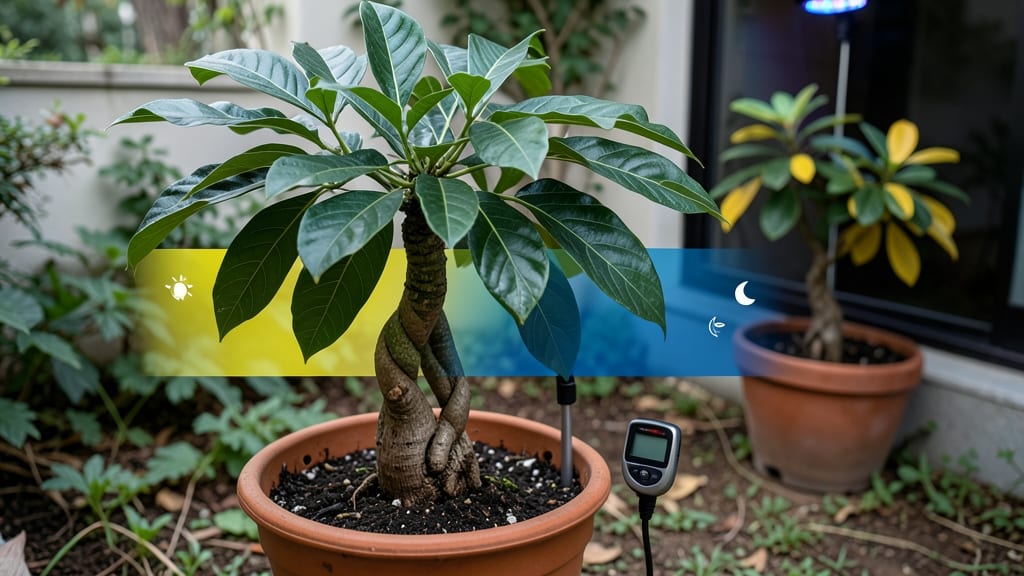
A money tree plant needs bright indirect light for 6-8 hours daily—too little and it stretches, too much and its leaves burn.
Your money tree (Pachira aquatica) thrives with the right light—but too much direct sun or dim corners can stunt its growth or turn its leaves yellow. Discover the perfect balance of bright indirect sunlight to keep your plant lush, healthy, and full of good fortune.
Most people assume any window will work, but south-facing spots can scorch leaves, while north-facing ones may leave your plant leggy. I’ll break down the best windows, how to spot light issues early, and even how to use artificial light when natural light falls short.
By the end, you’ll know exactly where to place your money tree for vibrant growth, how to adjust as seasons change, and what to watch for when things go wrong.


Ideal light requirements for a money tree: bright indirect sunlight explained
The money tree (Pachira aquatica) loves bright indirect sunlight—think of it as the perfect balance between cozy shade and too-hot sun. Too little light leads to leggy growth and pale leaves, while direct sun can cause leaf scorch and crispy edges.
Finding that sweet spot ensures your plant stays vibrant and healthy year-round.
In nature, money trees grow under tropical canopies where sunlight filters through leaves, creating dappled light. Recreating this indoors means placing your plant near a window but not in direct sun. East-facing windows are ideal—they provide gentle morning light without harsh afternoon rays.
For South-facing windows, position your money tree 10–20 feet away to avoid intense sunlight. If your home lacks natural light, don’t worry—LED grow lights can supplement with 6–8 hours of daily illumination. These lights mimic sunlight and prevent stretching or weak growth.
Here’s a quick breakdown of your money tree’s light needs:
| Light Condition | Ideal Placement | Signs of Issue |
|---|---|---|
| Bright Indirect Light | East/West window, 2–3 ft away | Healthy green leaves, compact growth |
| Low Light | North window or dim corner | Yellow leaves, leggy stems, slow growth |
| Direct Sunlight | South window, no filter | Brown spots, crispy edges, wilting |
If your money tree shows yellowing leaves, it might be getting too much direct sun. Move it farther from the window or add a sheer curtain to diffuse the light.
On the flip side, if leaves turn pale or stems stretch toward the light, it’s craving more brightness—try rotating the pot or supplementing with a grow light.
Artificial lights are a game-changer for low-light spaces. Use full-spectrum LED grow lights placed 6–12 inches above the plant for 12–14 hours daily. This mimics natural light cycles and keeps your money tree thriving, even in basements or windowless rooms.
Rotate your plant quarter-turns every 2–4 weeks to ensure even growth. Money trees grow toward the light, so without rotation, one side can become lopsided. This simple habit keeps your plant symmetrical and healthy.
Watch for leaf scorch—brown patches on leaves—if your money tree gets too much sun. Trim affected areas with clean scissors and move the plant to a shadier spot. For underwatered leaves (crispy edges), increase humidity with a pebble tray or misting.
In summary, your money tree thrives with bright indirect light, whether from an East-facing window or a grow light. Adjust its position based on seasonal sun changes, and you’ll enjoy a lush, lucky plant for years to come.
🌿
How to adjust light for different seasons: winter vs. summer care
Seasonal changes dramatically affect your money tree's light exposure, and adapting your care is key to keeping it thriving year-round. In winter months, shorter days and weaker sunlight can leave your plant feeling neglected, while summer's intense rays may scorch delicate leaves if unchecked.
Understanding how to fine-tune light conditions ensures your Pachira aquatica stays lush and vibrant through every season.
During winter, natural light becomes scarce, especially in north-facing windows where sunlight is already limited. This is when many plant owners notice stretched stems or pale leaves—a clear sign your money tree is reaching for more light.
The solution? Supplement with LED grow lights placed 12-18 inches above the plant for 6-8 hours daily. These lights mimic sunlight without overheating, making them perfect for indoor setups.
⚠️ WARNING: Seasonal Light Shifts Can Harm Your Money Tree ⚠️
Summer brings longer days and stronger sunlight, but direct midday sun can be too intense for your money tree. If you notice crispy leaf edges or white patches, your plant is getting too much direct sunlight. The fix? Use sheer curtains to diffuse harsh rays while still allowing light to filter through. For south-facing windows, position your plant at least 6-10 feet away to avoid overheating.
Don't forget to rotate your money tree every 2-4 weeks to ensure even growth. Plants naturally lean toward their light source, which can create lopsided foliage. A simple quarter-turn keeps your plant balanced and encourages uniform leaf development.
This is especially important in summer, when sunlight comes from higher angles, and in winter, when light is weaker and comes from lower angles.
For indoor growers, consider using a light meter to monitor conditions. Aim for 1,000-2,000 foot-candles of light—about the brightness of a well-lit office. In deep winter, if your home lacks natural light, a full-spectrum LED bulb (2700K-6500K) can bridge the gap until spring.
Just remember: more light isn't always better—your money tree prefers bright indirect light over harsh artificial glare.
Pro tip: Watch your money tree's leaves for clues. Dark green, glossy foliage means it's happy. Pale or yellow leaves? It needs more light. Brown patches or crisp edges?
It's getting too much sun. By tuning into these signals and adjusting light conditions seasonally, your Pachira aquatica will stay healthy, full, and full of good fortune—no matter the weather outside! 🌿