
Blooming
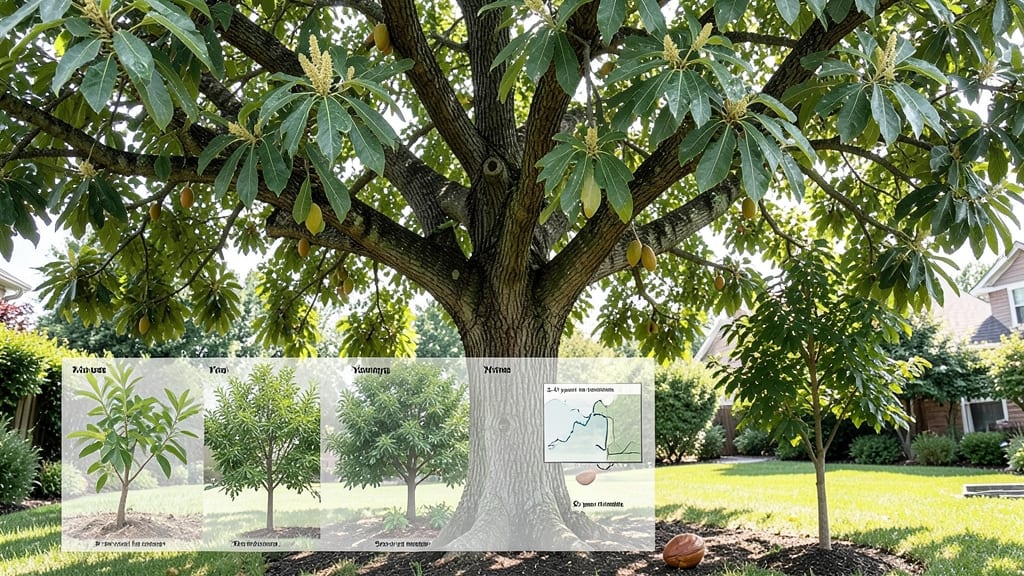
A mature pecan tree takes 15–20 years to reach full nut production, but the wait starts much earlier—with the first nuts appearing as soon as 5–10 years in ideal conditions.
If you’ve ever dreamed of harvesting your own pecans straight from your backyard tree, patience is key—because pecan trees don’t rush to maturity. But how long exactly should you wait?
The answer depends on factors like variety, climate, and care, and understanding these timelines can mean the difference between frustration and a bountiful harvest.
In USDA Zone 6a, where spring planting kicks off in April, young pecan trees 🌰 grow steadily but slowly in their first decade.
Proper soil, sunlight, and seasonal care can shave years off the timeline, but even the fastest-growing varieties need time to develop a strong root system and canopy before they’re ready to produce.
Below, we’ll break down the growth stages, share tips to accelerate maturity, and help you set realistic expectations for your first harvest—whether you’re planting a seedling this spring or nurturing a sapling already in your yard.


Pecan tree maturation timeline: from seedling to first harvest
Pecan trees are the ultimate test of patience—most gardeners won’t see their first harvest until 7 to 10 years after planting. But understanding the three key growth stages (seedling, juvenile, and mature) helps set realistic expectations and optimize care.
The timeline varies by climate, variety, and growing conditions, but knowing what to expect keeps you motivated through those early years when your tree looks like it’s barely growing.
In USDA Zones 6-9, where pecans thrive, the journey from a bare-root sapling to a nut-producing tree typically spans 10-15 years for full maturity.
Southern climates like Texas or Georgia may see earlier harvests (as early as 5-7 years), while cooler regions like Missouri or Kansas could take 12-15 years. The first nuts appear small and sparse—think of them as practice rounds before your tree hits its prime production phase.
Here’s the breakdown of what to expect at each stage, including how climate and care influence the timeline:
| Stage | Age Range | Growth Focus | First Nut Potential | Climate Impact |
|---|---|---|---|---|
| Seedling | 0–3 years | Root & trunk development | None (focus on structure) | Cooler climates slow growth; warmer zones speed early height gain |
| Juvenile | 4–7 years | Canopy expansion, flower buds | Sparse nuts (5–7 years) | Southern heat accelerates budding; northern trees delay flowering |
| Mature | 8–20+ years | Full nut production | Bountiful harvests (10–15 years) | Drought stress reduces yields; consistent care maximizes output |
🌰 Note: Dwarf varieties (e.g., 'Pawnee') may reach harvest 2–3 years earlier than standard types.
The seedling stage (0–3 years) is all about building a strong foundation. Your tree’s roots will spread 2–3 feet per year, while the trunk grows 1–2 feet annually. During this phase, avoid heavy pruning—focus on watering deeply every 7–10 days and protecting young bark from sun scorch.
In Zone 8+ climates, seedlings may grow 30–50% faster than in cooler Zones 6–7, where growth slows in winter.
By year 4–5, your tree enters the juvenile stage, where it starts producing flower buds but rarely bears viable nuts. This is when you’ll notice male and female flowers (pecans need both for pollination).
In Texas or Louisiana, buds may appear as early as year 3–4, while Missouri or Tennessee trees might wait until year 5–6. Cross-pollination with another variety (like planting a 'Desirable' and a 'Schley') ensures better yields.
Most gardeners see their first real harvest between years 7–10, but don’t expect a truckload—your tree will produce only 5–20 lbs of nuts in its first productive year. Year 10–15 marks the peak production window, where a healthy tree can yield 50–200 lbs annually, depending on variety and care.
For example, 'Cape Fear' pecans mature faster in humid climates, while 'Mohawk' trees take longer but produce larger nuts.
Climate plays a huge role in speeding up or slowing down maturation.
In arid regions like West Texas, pecan trees may take 2–3 extra years to mature due to water stress, while humid Southern climates can shave off 1–2 years from the timeline. Frost-sensitive varieties (like 'Desirable') struggle in Zones 6–7, where late frosts can damage early buds.
If you’re in a marginal zone, choose cold-hardy varieties like 'Mohawk' or 'Kanza' to avoid delays.
Proper soil preparation and seasonal care can accelerate maturation by 1–2 years. Before planting, amend your soil with compost and sand to improve drainage—pecans hate soggy roots.
In spring (March–April), apply a balanced 10-10-10 fertilizer to encourage root growth, and in summer (June–July), focus on deep watering
Factors that speed up or delay pecan tree maturity
Your pecan tree’s journey to maturity isn’t just about time—it’s about the right conditions. While most trees take 5–10 years to produce their first nuts and 15–20 years to reach full maturity, what you do (or don’t do) can accelerate or delay this process.
From soil prep to pruning, small adjustments can make a big difference in how quickly your tree bears those coveted pecans.
One of the biggest factors is soil quality. Pecan trees thrive in well-draining, slightly acidic soil (pH 6.0–7.0). If your soil is clay-heavy or alkaline, roots struggle to absorb nutrients, stunting growth.
Amending with compost or sand can create the ideal environment for faster development. I’ve seen trees in amended soil reach harvestable size 2–3 years earlier than those in poor soil.
Here’s how key factors impact your pecan tree’s maturity timeline:
- 🌱 Soil Quality: Well-draining, nutrient-rich soil speeds up root growth by 30–40%. Test your soil—pH 6.0–7.0 is ideal.
- ☀️ Sunlight Exposure: Full sun (6–8+ hours/day) boosts photosynthesis, adding 1–2 years to maturity. Shade delays nut production.
- 💧 Watering: Deep, infrequent watering (every 7–14 days) prevents stress. Overwatering or drought slows growth by up to 50%.
- ✂️ Pruning: Annual pruning removes deadwood and opens the canopy, improving airflow and nut production by 20–30%.
- 🌡️ Climate: Warm climates (USDA Zones 6–9) accelerate growth. Cold snaps can delay maturity by 3–5 years if young trees aren’t protected.
- 🌰 Variety: Fast-growing varieties like ‘Desirable’ mature 5–7 years earlier than slower types like ‘Schley.’
Don’t overlook fertilization—pecan trees are heavy feeders. A balanced 10-10-10 fertilizer applied in early spring and summer provides the nitrogen, phosphorus, and potassium needed for rapid growth.
Skipping this step can leave your tree nutrient-deficient, delaying maturity by years. I’ve seen trees double their growth rate in their second year with proper feeding.
Pruning isn’t just about shaping your tree—it’s a growth hack. By removing dead or crossing branches annually, you improve air circulation and light penetration, which directly impacts nut production.
Start pruning when your tree is 3–5 years old, focusing on structural integrity first. This can shave off 1–2 years from the time to first harvest.
Finally, patience and consistency are your best tools. While you can’t rush nature, optimizing these factors ensures your pecan tree matures as quickly as possible.
With the right care, you could be enjoying homegrown pecans years sooner than the average gardener—just imagine cracking open your first homegrown nut in 7 years instead of 10!