
Trees
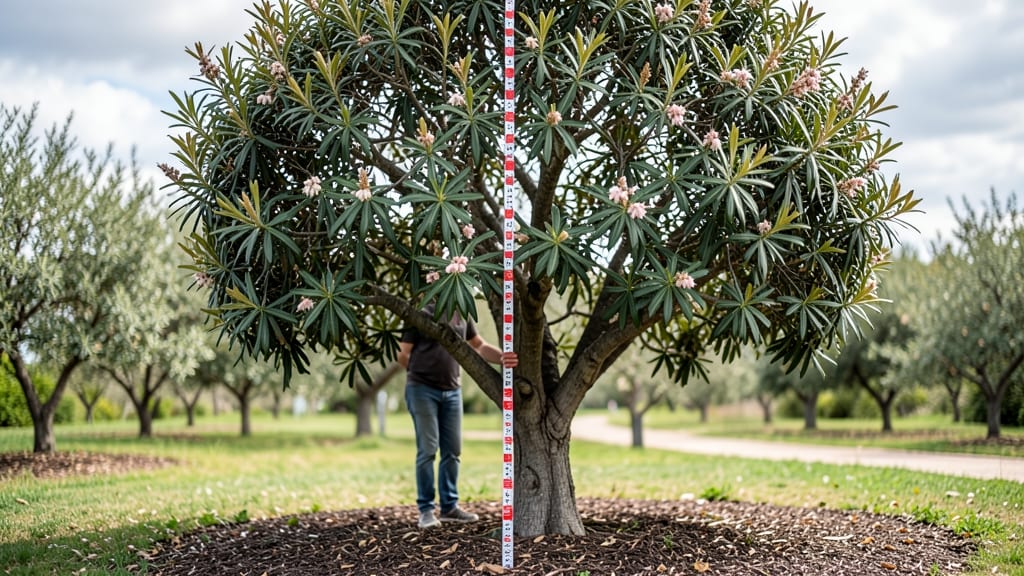
An almond tree grows to between 25 and 40 feet at maturity, towering like a small oak and demanding serious space in your landscape.
If you’ve ever dreamed of harvesting your own nuts but hesitated because of yard size, here’s the good news: some varieties stay under 15 feet—perfect for homesteads or even large containers. The key is choosing the right type for your climate and available room.
Standard varieties like Nonpareil and Carmel reach their full height in 8 to 12 years, while dwarf options like Texas mature in half the time. Without proper pruning, even compact trees can outgrow their welcome, so planning ahead is everything.
Below, I’ll break down size expectations by variety, how to control growth with pruning, and the best compact options for small spaces—so you can grow almonds without sacrificing your lawn.
Mature height and spread of almond trees by popular variety
Choosing the right almond tree variety starts with understanding their mature sizes. Most commercial varieties like Nonpareil or Carmel can reach 25-40 feet tall with spreads of 15-25 feet, making them better suited for orchards than backyard gardens.
Even in ideal conditions, these giants need plenty of space to thrive and produce abundant nuts. If you're working with limited space, dwarf or semi-dwarf varieties offer a more manageable solution while still delivering delicious harvests.
For home gardeners, the height and spread of an almond tree directly impacts where you can plant it. A tree that matures at 15 feet tall fits neatly in many suburban backyards, while a 30-foot variety requires careful planning to avoid overcrowding nearby structures or power lines.
Let’s break down the most popular varieties so you can make an informed choice based on your available space and climate conditions.
| Variety | Mature Height | Mature Spread | Growth Rate | Best For |
|---|---|---|---|---|
| Nonpareil | 30-40 ft | 20-25 ft | Moderate | Commercial orchards, large properties |
| Carmel | 25-35 ft | 18-22 ft | Moderate | Home gardens, moderate climates |
| Butte | 20-30 ft | 15-20 ft | Slow to moderate | Small homesteads, containers (dwarf grafts) |
| Fritz | 25-35 ft | 18-22 ft | Moderate | Commercial growers, warm climates |
| Texas | 10-15 ft (dwarf) | 8-12 ft | Slow | Small gardens, containers, urban areas |
| Price | 15-20 ft (semi-dwarf) | 12-16 ft | Moderate | Backyard orchards, small farms |
The Nonpareil variety, a staple in commercial almond production, tops out at 40 feet tall and spreads 25 feet wide, making it ideal for large orchards but impractical for most home gardens.
If you’re dreaming of growing almonds in your backyard, consider the Carmel or Butte varieties, which offer a slightly more manageable 25-30 feet in height while still delivering excellent yields. These varieties strike a balance between productivity and space efficiency.
For those with limited space, dwarf varieties like Texas are a game-changer. These trees stay under 15 feet tall and can even thrive in large containers, making them perfect for patios, balconies, or small urban yards.
While they may produce fewer nuts than their larger counterparts, their compact size more than makes up for it in convenience. Just be sure to choose a dwarf grafted rootstock to ensure the tree stays small throughout its life.
When planning your almond tree’s location, account for its mature spread as much as its height. A tree with a 20-foot spread needs ample room to avoid shading out other plants or encroaching on walkways.
In smaller spaces, consider espalier training to grow the tree flat against a fence or wall, reducing its footprint while maintaining productivity. This technique works especially well with semi-dwarf varieties like Price, which can be pruned to fit tight spaces without sacrificing fruit production.
Climate also plays a role in how big an almond tree grows. In warmer regions like California, where almonds thrive naturally, trees tend to grow larger and faster due to longer growing seasons.
In cooler climates, growth may be slower, and trees might stay slightly smaller unless given extra care, like winter protection and optimal sunlight exposure. Always check your local USDA hardiness zone to ensure the variety you choose can handle your climate.
If you’re unsure which variety fits your space, start with a semi-dwarf like Price—it offers a middle ground between manageable size and high yield. For the smallest option, Texas dwarf is hard to beat, especially if you’re growing in containers.
Either way, give your tree plenty of room to grow, and don’t forget to prune regularly to maintain its shape and encourage healthy fruit production.
Remember, almond trees are long-term investments. A well-placed tree can provide shade, beauty, and delicious nuts for decades, but choosing the right variety based on size is the first step to success.
With the right variety and care, you’ll be enjoying homegrown almonds in no time—no matter how big (or small) your space is!
How climate and pruning affect almond tree size
Almond trees thrive in hot, dry climates like California's Central Valley, where they can reach 30-40 feet tall with a 20-foot spread. In cooler regions like Zone 6 or 7, the same varieties often stay 10-20% smaller due to slower growth rates.
This climate-driven difference isn't just about height—it affects branch density and nut production too.
For example, a Nonpareil almond tree in Zone 8 might grow 35 feet tall, while the same tree in Zone 6 could max out at 25 feet.
The hotter, drier climate gives trees more energy for vertical growth, but it also demands regular pruning to maintain manageable size and airflow.
⚠️ WARNING: Overpruning Can Reduce Yield! Almond trees rely on strong structural branches for fruit production. Removing too much wood in one season (over 25% of the canopy) can stress the tree, leading to fewer nuts and slower recovery.
Always prune in late winter (before buds swell) and limit cuts to 15-20% per year for healthy growth. Thinning cuts (removing entire branches) work better than heading cuts (trimming back branch tips), which can encourage weak, dense growth.
Pruning also helps control tree spread. Use the open-center method—keeping a central leader with 4-6 scaffold branches—to maintain an upright shape while allowing sunlight to reach inner branches.
In smaller gardens, train the tree to a semi-dwarf structure by pruning lower branches to keep the canopy 10-15 feet tall.
Another key factor is rootstock choice. Trees grafted onto dwarfing rootstock (like Giant Stanford) stay 15-20 feet tall, while those on standard rootstock (e.g., Nonpareil) can tower 30+ feet.
If you're in a cooler climate, opt for dwarf varieties or semi-dwarf rootstock to save space without sacrificing yield.
Don’t forget about water stress. In arid climates, almond trees grow faster and taller because they have more available moisture in the soil. In humid or rainy regions, growth slows, and trees may develop fungal issues if not pruned to improve airflow.
Always mulch heavily (3-4 inches) to retain moisture and reduce evaporation.
For container-grown almond trees, prune aggressively in early spring to keep the canopy under 8 feet tall. Use dwarf varieties like 'Texas' and train branches along a trellis system to control spread. Just remember: even compact trees need full sun and well-draining soil to thrive.