
Pruning
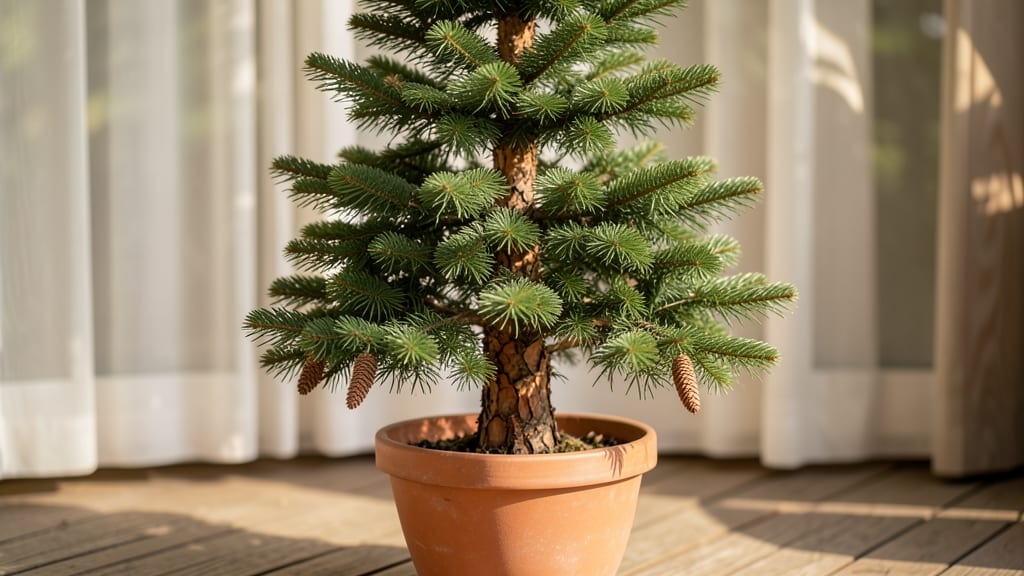
A fir tree in a pot brings evergreen beauty to patios and porches year-round. 🌲 I've kept mine thriving for five winters by mastering the pruning and care that most gardeners overlook—especially the drainage and soil tricks that prevent root rot.
The right pot size matters more than you'd think: 12-15 gallons for a mature dwarf fir, with drainage holes that never clog. I use a mix of 60% pine bark fines, 30% potting soil, and 10% perlite to keep roots oxygenated while holding moisture without drowning them.
Most people kill their firs by either overwatering or letting them dry out completely. Pruning isn't about shaping—it's about removing dead branches and thinning crowded growth to let light reach the center.
Do this in early spring before new growth starts, and you'll see fresh green needles within 6-8 weeks. The key is using sterilized shears to avoid spreading disease. With proper care, your potted fir can live 10+ years, becoming the centerpiece of your outdoor space. The secret?
Consistent moisture, winter protection, and annual repotting to refresh the soil. Let's get yours growing strong!
📚 In This Guide
- What you need
- Instructions
- Tips and common mistakes
- Wrapping up and next steps
What you need
- ● Dwarf fir tree (e.g., Abies concolor, Picea pungens, or Thuja occidentalis) – Choose a healthy, mature specimen (height: 3–6 ft, depending on desired pot size).
- ● Decorative pot or container – Ensure it has drainage holes (12–24" diameter for a 3–6 ft tree). Terracotta, ceramic, or fiberglass work best.
- ● Well-draining potting mix – A blend of 50% peat moss, 30% perlite, and 20% sand (or a pre-mixed conifer soil).
- ● Pruning shears or loppers – Sharp, clean tools (sterilize with rubbing alcohol).
- ● Garden gloves – Protect your hands from sap and sharp needles.
- ○ Mulch (optional but recommended) – Pine bark or cedar chips to retain moisture and suppress weeds.
- ● Watering can or hose with a gentle spray nozzle – Avoid overwatering!
- ● Root stimulator – Helps the tree recover after repotting (e.g., Mycorrhizal fungi or hydrogel crystals).
- ● Decorative stones or moss – For a polished, natural look around the base.
- ● Slow-release fertilizer – 14-14-14 NPK ratio (apply lightly post-pruning).
- ● Support stakes or wire – If your tree is top-heavy or needs shaping.
- ● Pruning sealant – For large cuts (e.g., tree wound pruning paste).
Step-by-step guide to pruning dwarf conifers in pots
Transform your fir tree pot into a lush, sculpted masterpiece with these precision pruning techniques.
✂️ Step 1: Assess Growth and Plan Your Cuts
Examine your dwarf fir closely—look for overgrown branches that obscure the plant's natural shape or create dense, shaded areas where needles yellow. I always start with the top third of the plant, where growth is most vigorous. Use your fingers to gently spread branches outward to visualize the ideal silhouette. Mark your cuts with a pencil if needed; this prevents accidental over-pruning.
Never remove more than one-third of the plant's total volume in a single session. Dwarf conifers grow slowly, and aggressive cuts stress the plant. Focus on removing only the longest, leggiest branches first—they compete with the center for light and nutrients. If you're unsure, take a photo first; you'll thank yourself later when you can compare before-and-after.
🌿 Step 2: Use Sharp Tools for Clean Cuts
Grab your bypass pruners—they make cleaner cuts than anvil pruners, which can crush delicate conifer tissue. Sterilize the blades with rubbing alcohol to prevent disease transmission between cuts. For branches thicker than ¼ inch, use loppers instead; their longer handles give you better leverage without bending the branch.
Cut just above a bud or branch collar—the raised area where the branch meets the stem. Avoid leaving stubs, as they invite rot. If you must remove a large section, step back and make your cut at a 45-degree angle to shed water away from the wound. I like to work in the early morning when the plant is hydrated but the air is still cool—this reduces stress.
🪴 Step 3: Shape Gradually for Long-Term Health
After each cut, step back and assess the balance. Dwarf firs respond best to light, incremental shaping—think of it like sculpting clay rather than hacking away. If the plant looks uneven, focus on the densest areas first. For a natural look, mimic the plant's natural taper by gradually reducing branch length from bottom to top.
Remove any dead, diseased, or crossing branches immediately—these are the first targets. Crossed branches rub against each other, creating wounds that invite pests. Water the plant deeply after pruning to help it recover. I like to add a balanced fertilizer (10-10-10) at half-strength to support new growth, but only if the soil feels dry to the touch.
☀️ Step 4: Monitor and Maintain Year-Round
Place your fir tree pot in a spot with partial shade for the first 2-3 weeks after pruning. This gives the plant time to recover without the added stress of full sun. After that, return it to its usual light conditions—most dwarf firs thrive in morning sun and afternoon shade, especially in hotter months.
Check your pruning work every 4-6 weeks during the growing season. New growth will emerge from the buds you preserved, filling in gaps naturally. If you notice yellowing needles, it’s often a sign of over-pruning or underwatering. Adjust your care routine accordingly—dwarf conifers in pots dry out faster than their ground-grown counterparts.
⏰ Step 5: Time Pruning for Seasonal Success
Prune dwarf firs in early spring (March-April) just as new growth begins to emerge. This gives the plant the entire growing season to recover. Avoid pruning in late summer or fall, as new growth won’t have time to harden off before winter. If you must shape in winter, do so lightly and only to remove dead growth—never during freezing temperatures.
Here’s the thing—I’ve learned the hard way that dwarf conifers in pots need annual pruning to stay compact and healthy. Skipping a year leads to unruly growth and a loss of that perfect, manicured look. Mark your calendar now: spring pruning keeps your fir tree pot looking its best year after year.
Tips & tricks for perfect fir tree pot pruning
These precision techniques will help you maintain your dwarf conifer's health while achieving that polished, professional look.
Visual Planning Pays Off: Before making any cuts, step back and study your fir tree from multiple angles. I've found that holding a mirror at different heights reveals hidden growth patterns you might miss otherwise. Sketch a rough outline of your ideal shape on paper first—this serves as a roadmap and prevents over-pruning. Remember, dwarf conifers have delicate growth habits, so what seems like a small cut can have big consequences.
Tool Selection Matters: While bypass pruners are essential, I've discovered that a small pair of concave cutters works wonders for those tricky inner branches. These specialized tools create clean cuts without crushing the delicate conifer tissue. For the thickest branches (over ¼ inch), loppers with a bypass blade provide the leverage needed without damaging the branch collar. Always sterilize your tools between cuts—rubbing alcohol works perfectly, and it prevents disease spread better than wiping with a cloth.
Seasonal Timing is Critical: The instructions mention early spring as ideal, but I've learned that late February works even better in colder climates. This gives your plant a full growing season to recover before winter dormancy. If you must prune in summer, do it in the early morning when temperatures are cooler—this reduces stress on the plant. Never prune during heatwaves or frost periods, as the plant won't be able to recover properly.
Post-Pruning Care Makes All the Difference: After shaping, I've found that misting the plant with water (not soaking) every other day for the first week helps it recover faster. The partial shade recommendation is spot-on, but I add a lightweight shade cloth (30% shade) for the first week to provide extra protection. Most importantly, resist the urge to fertilize immediately after pruning—wait until you see new growth emerging before applying that 10-10-10 fertilizer at half-strength.
Pro Tips for Fir Tree Pot
- These precision techniques will help you maintain your dwarf conifer's health while achieving that polished, professional look.
- Visual Planning Pays Off: Before making any cuts, step back and study your fir tree from multiple angles.
- Tool Selection Matters: While bypass pruners are essential, I've discovered that a small pair of concave cutters works wonders for those tricky inner branches.
Frequently asked questions
Got questions about pruning your fir tree pot for that perfect year-round look?
You’re not alone! Here are the most common queries—and their easy answers—to keep your dwarf conifer thriving.
When is the best time to prune a fir tree in a pot?
Prune your fir tree pot late winter or early spring (just before new growth starts) for the best results. Avoid heavy pruning in summer or fall, as it can stress the plant. Light shaping in spring is ideal—think of it like giving your tree a fresh haircut!
How much can I trim without harming my fir tree?
Never remove more than 1/3 of the foliage in a single session. For dwarf varieties, even 10-20% is plenty to maintain shape. Focus on dead or overgrown branches first, then trim for aesthetics. Over-pruning can stunt growth or invite pests—so go easy!
Can I prune a fir tree pot in rainy or humid weather?
Avoid pruning during wet conditions—moisture slows healing and increases disease risk (like fungal infections). Wait for dry, overcast days or early morning when humidity is low. If you must prune in humidity, sterilize tools with rubbing alcohol first!
What if my fir tree looks leggy after pruning?
Leggy growth happens when the tree stretches for light. To fix it, prune just above a healthy set of leaves (never a bare stem) and move the pot to bright, indirect light. Fertilize lightly with a balanced formula to encourage bushier regrowth. Patience is key—new growth takes 4-6 weeks!
Are there alternatives to traditional pruning for shaping?
Yes! Try topiary training (using wire frames for dramatic shapes) or pinching (snipping new growth tips with fingernails) for finer control. For quick fixes, hairdryer shaping (briefly drying branches into place) works temporarily. Just avoid heavy methods like shearing, which can damage delicate needles.
Wrapping up and next steps
Transforming your fir tree pot into a lush, year-round centerpiece is easier than you think!
With the right tools, a little patience, and the tips shared here, you can keep your dwarf conifer thriving and looking its best. Remember, pruning is all about balance—shape with care, and your fir tree will reward you with vibrant greenery for seasons to come.
Ready to take the next step? Start small:
- Grab your shears and give your fir tree a gentle trim this weekend.
- Experiment with shapes—maybe a classic spiral or a whimsical topiary?
- Share your progress with fellow plant lovers online for extra motivation!