
Light Requirements
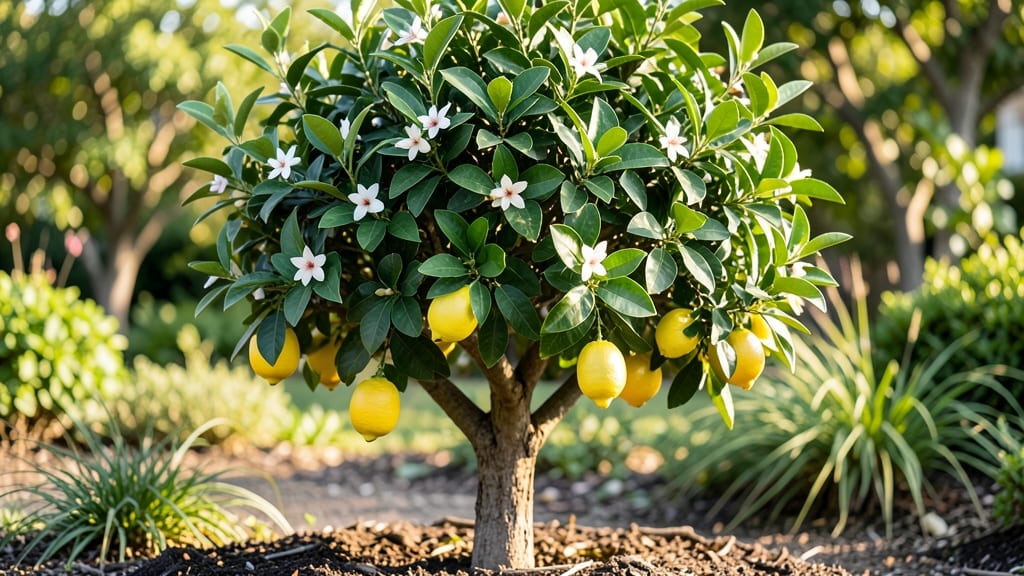
A lemon tree needs a lot of sun to thrive and produce fruit 🍋 — at least 6 to 8 hours of direct sunlight daily, or it’ll struggle to grow and bear lemons.
Struggling to keep your lemon tree alive despite your best efforts? The answer might lie in sunlight—too little can stunt growth, while too much can scorch leaves. Discover the exact sun requirements your citrus tree needs to produce juicy, fragrant fruit year after year.
Most lemon trees, especially in USDA Zone 6a, crave full sun, but some dwarf varieties can tolerate partial shade. If your tree’s leaves are pale or sparse, it’s begging for more light. On the flip side, crispy brown edges mean it’s getting sunburned.
In this guide, I’ll break down how to position your lemon tree for success, whether it’s in a sunny yard, a south-facing window, or even under grow lights.
You’ll learn how to spot the signs of sun stress, adjust care for different climates, and keep your tree happy—so you can enjoy homegrown lemons for years.


How many hours of sun does a lemon tree need daily?
Lemon trees thrive under bright sunlight, but the exact hours depend on their type and growing conditions. As a citrus lover, I’ve learned that standard lemon trees need 6-8 hours of direct sun daily, while dwarf varieties can tolerate 4-6 hours—though fruit production suffers below 6 hours.
Without enough light, your tree may grow leggy or fail to bear fruit entirely, no matter how well you water it.
Understanding your lemon tree’s sunlight needs isn’t just about hours—it’s about intensity and consistency. Southern exposure delivers the strongest light, but eastern or western windows can work too, provided there’s no afternoon shade blocking those critical golden hours when the sun is highest.
Even in partial shade, lemons will survive, but they’ll produce fewer fruits and weaker flavors.
Here’s the breakdown you need to optimize your lemon tree’s sunlight exposure, including seasonal adjustments and how to measure light accurately:
| Lemon Tree Type | Daily Sunlight Needs | Fruit Production | Seasonal Adjustments |
|---|---|---|---|
| Standard Lemon Tree (e.g., Meyer, Eureka) | 6–8 hours of direct sun | Optimal for heavy fruiting | Reduce to 4–5 hours in extreme summer heat |
| Dwarf Lemon Tree (e.g., 'Improved Meyer') | 4–6 hours of direct sun | Moderate fruiting; fewer lemons | Tolerates 3–4 hours in partial shade |
| Potted Lemon Tree (All Varieties) | 6+ hours (rotate container weekly) | Requires grow lights in winter | Move indoors for winter if <6 hours/day |
| Indoor Lemon Tree (Grow Lights) | 10–12 hours of artificial light | Limited fruiting without natural sun | Use full-spectrum LED bulbs |
The minimum sunlight threshold for lemon trees is 4 hours daily, but this is the bare minimum for survival—not productivity. Below this, your tree will struggle to photosynthesize enough energy to support new growth or fruit development.
I’ve seen lemon trees in partial shade (like under a large oak tree) survive for years, but they rarely produce more than a handful of lemons annually.
Measuring sunlight accurately is easier than you think. Use a sunlight tracker app or a simple clock method: Mark the spots where your tree casts a shadow every hour. If the shadow disappears for 6+ hours, you’re in the ideal range.
For potted trees, rotate the container quarter-turns weekly to ensure even sun exposure on all sides—this prevents lopsided growth and maximizes fruit production.
Seasonal adjustments are critical, especially in hot climates. During summer, lemon trees can suffer from sunburn if exposed to intense midday sun (11 AM–3 PM).
In these cases, provide light afternoon shade with a sheer curtain or move potted trees to a slightly shaded spot for a few hours daily. Conversely, in winter, extend light exposure to 8+ hours if possible, or supplement with grow lights to maintain growth.
One common mistake I see is assuming morning sun alone is enough. While morning sunlight is gentle and beneficial, afternoon sun (especially in the late afternoon) provides the high-energy light lemon trees need for flowering and fruiting.
Aim for a balance of morning and afternoon sun—this mimics natural growing conditions and boosts your tree’s productivity.
If you’re growing lemons in a container, sunlight needs change dramatically. Potted trees dry out faster and can’t access deep soil moisture, so they often require more frequent watering—but also more light.
Without enough sun, your dwarf lemon tree might grow spindly and weak, with leaves stretching toward the light (a condition called etiolation).
To fix this, place your container in the sunniest spot available and consider using a reflective surface (like a white wall or mirror) to bounce extra light onto the leaves.
For indoor growers, grow lights are a game-changer. Lemon trees need full-spectrum LED lights that mimic natural sunlight, providing 10–12 hours of light daily during winter months. Without this, your tree may drop leaves, stop flowering, or fail to produce fruit.
I recommend 12-inch grow lights placed 6–12 inches above the tree for best results—just remember to adjust the height as your tree grows to avoid burning the leaves.
In summary, lemon trees need a lot of sun—but the exact amount depends on their type, container status, and seasonal changes. Standard trees thrive with 6–8 hours, while dwarfs can manage with 4–6 hours, though fruit quality will suffer.
Use the table above as your guide, and don’t forget to adjust for your local climate and growing conditions. With the right light, your lemon tree will reward you with abundant, flavorful fruit year after year. ☀️🍋🌱
Signs your lemon tree isn’t getting enough (or too much) sun
Your lemon tree 🍋 might be silently screaming for help if its leaves are telling a different story than you expected. Yellowing leaves on the bottom branches often signal sun deficiency, while crispy, brown patches mean it’s getting too much sun.
Both extremes stress your tree, but the fixes couldn’t be more different—and catching these signs early can save your harvest.
First, check the leaf color. Healthy lemon tree leaves are a vibrant dark green. If they’re pale or yellowing, especially on the lower branches, your tree is stretching toward light like a sunflower.
This etiolation (weak, leggy growth) means it’s not getting its 6-8 hours of direct sun daily. Without enough light, your tree can’t photosynthesize properly, leading to stunted growth and fewer—if any—lemons.
On the flip side, sunburned leaves look like they’ve been singed by a blowtorch. You’ll see brown or white patches on the edges or surfaces of leaves, often on the south or west sides of the tree.
These areas get the most intense afternoon sun, which can overheat the leaves and cause cellular damage. If ignored, sunburn weakens the tree, making it more susceptible to pests and diseases.
🌱 Lemon Tree Sunlight Needs: Pros & Cons
✅ Getting Enough Sun (6-8+ hours/day)
- Vibrant green leaves 🌿
- Healthy fruit production 🍋
- Strong, upright growth 🌳
- Thicker, glossy foliage ✨
⚠️ Too Much Sun (Afternoon Scorch)
- Brown/white patches 🔥
- Curling or crispy leaves 🌬️
- Reduced photosynthesis 🌱
- Increased pest risk 🐜
❌ Not Enough Sun (Leggy Growth)
- Pale yellow leaves 🟡
- Sparse, weak branches 🌿
- No fruit production 🚫🍋
- Stretched, thin leaves 📏
💡 Quick Fixes
- Move potted trees ✂️
- Prune dense branches 🌳
- Use shade cloth ☀️
- Rotate pots weekly 🔄
Diagnosing the issue is half the battle. Start by observing your tree’s leaf placement. If new growth is leaning toward a window or the south side of your yard, it’s begging for more light.
For potted trees, try rotating them quarter-turns weekly to ensure even sun exposure. If your tree is in the ground, consider pruning nearby shade trees or relocating it to a sunnier spot.
For trees getting too much sun, afternoon shade is your best friend. Use a lightweight shade cloth (30-50% block) on the south or west sides during peak hours (11 AM–3 PM).
Alternatively, plant tall, fast-growing companions like sunflowers on the sunny side to provide natural shade. Mulching around the base also helps regulate soil temperature, reducing stress on the roots.
Remember, lemon trees are sun-worshippers, but even they need a little balance. The key is observation and adjustment. Spend 5 minutes daily checking your tree’s leaves—you’ll spot problems before they become critical.
With the right sunlight, your lemon tree will reward you with juicy, fragrant fruit for years to come. 🌱