
Pruning
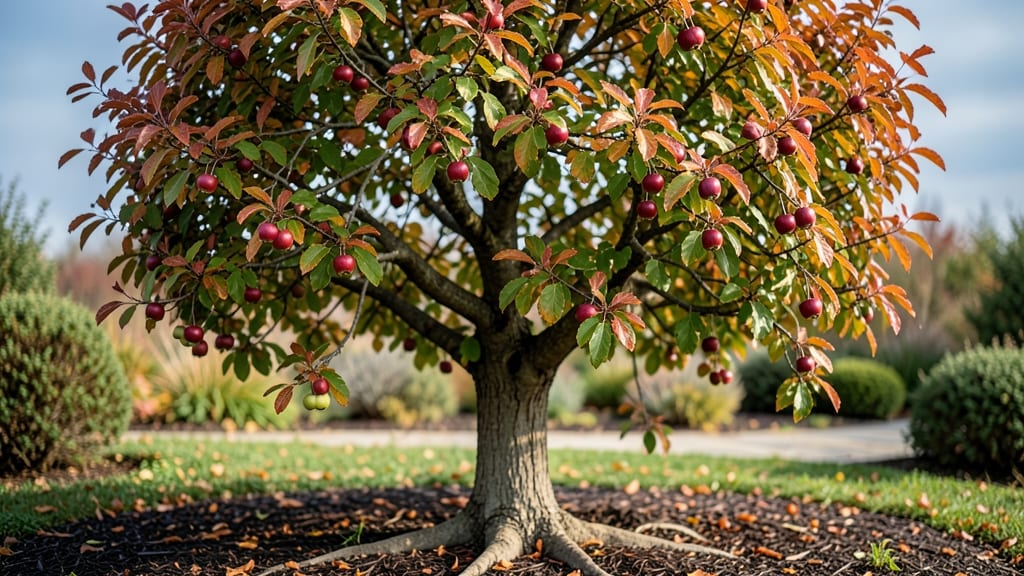
Fall pruning crabapple trees reveals their true structure—when you cut now, you shape next spring's blooms. ✂️ I learned the hard way that waiting until spring means sacrificing up to 25% of potential growth, while fall pruning lets the tree heal before winter's chill sets in.
The key timing window is late October to mid-November, when leaves have fallen but the ground stays workable.
You only need three things: sharp bypass pruners, rubbing alcohol for tool sanitization, and a clear goal—whether that's removing dead wood, thinning crowded branches, or opening up the canopy for better airflow.
The real magic happens when you cut at the branch collar, not too close or too far, which prevents those ugly stubs that invite disease. I've seen trees go from looking like tangled vines to graceful, open frameworks in just one season.
What you'll end up with is a tree that wakes up in spring with stronger branches, fewer broken limbs, and more abundant blooms. The pruned wood actually produces more flowers per stem, and those early spring blossoms become the star of your landscape.
Plus, you skip the messy spring cleanup when sap is flowing and tools get gummed up.
Works for both young crabapple trees and mature specimens, though older trees might need a two-year plan to avoid over-pruning. The same principles apply whether you're working with a 3-foot dwarf or a 20-foot standard—just scale the cuts accordingly.
Here's how to get started without making common mistakes that weaken the tree.
📚 In This Guide
- What you need
- Instructions
- Tips and common mistakes
- Wrapping up and next steps
What you need
- ● Pruning shears (bypass or anvil type) – Choose sharp, high-quality shears (10-12" blades) for clean cuts on small branches.
- ● Loppers (20-24" long) – For medium-sized branches (up to 2" diameter). Look for ratcheting or bypass loppers for precision.
- ● Pruning saw (curved or folding blade) – For branches thicker than 2". A bow saw or pruning saw with a 10-12" blade works best.
- ○ Extension pole pruners (optional but helpful) – Extend your reach for high branches (12-16 ft. poles).
- ● Gloves (cut-resistant or heavy-duty) – Protect your hands from thorns and rough bark.
- ● Safety glasses – Shield your eyes from debris and sap.
- ● Ladder or step stool (if needed) – Ensure stability when working on taller trees. A 4-6 ft. ladder is ideal for most crabapple trees.
- ● Heavy-duty trash bags (2-3) – For collecting fallen branches and debris.
- ○ Disposable pruning sealant (optional) – Helps prevent disease in larger cuts (e.g., Tanglefoot Tree Wound Pruning Sealer).
- ● Rag or paper towels – For wiping down tools and cleaning sap.
- ● First-aid kit (basic) – Just in case of minor cuts or scrapes.
- ● Check the weather forecast – Aim for a dry, calm day to avoid slipping or spreading disease.
- ● Review your tree’s health – Look for signs of disease or pests (e.g., black spots, holes, or oozing sap) before pruning.
- ● Plan your cuts – Sketch a simple diagram of your tree to visualize which branches to remove.
Step-by-step guide to pruning crabapple trees in fall
Fall is the perfect time to shape your crabapple tree for next year’s blooms and health.
✂️ Step 1: Gather the Right Tools for Clean Cuts
Start with a sharp pair of bypass pruning shears for branches under ½ inch thick, and a pruning saw for anything larger. I always sterilize my tools with rubbing alcohol before starting—this prevents spreading disease between cuts. Grab a ladder if your tree is over 8 feet tall, and wear gloves to protect your hands from thorns.
Check the weather first. Prune on a dry, calm day—wet branches are slippery, and wind makes climbing dangerous. I like to work in the late afternoon when temperatures are cooler, which reduces stress on the tree. Bring a bucket of water to clean tools between cuts and a small tarp to collect debris.
🌿 Step 2: Remove Dead, Diseased, or Damaged Branches First
Scan the tree for dead wood (branches that snap when bent or have no bark) and diseased limbs (mushrooms at the base, oozing sap, or unusual discoloration). These should go first—they’re the easiest to spot and the most urgent to remove. Cut back to the branch collar (the swollen area where the branch meets the trunk) to encourage proper healing.
If you find a branch with crabapple scab (a common fungal disease), bag it immediately and dispose of it in the trash—not the compost. Healthy branches should have smooth bark and green leaves (if any remain). I mark each cut with a flag or paint to track progress and avoid over-pruning.
☀️ Step 3: Thin the Canopy for Better Airflow and Light
Step back and look at the tree’s shape. Your goal is to remove crossing branches (rubbing against each other) and suckers (shoots growing from the base or trunk). These compete for nutrients and create weak spots. Aim to thin the canopy by 20-30%—this opens it up for sunlight and reduces future disease risk.
Focus on branches growing inward or downward, as they block light and air. Cut these back to a side branch or bud facing outward. I always make cuts just outside the branch collar at a 45-degree angle—this keeps water from pooling and causing rot. Avoid leaving stubs, even small ones.
⏰ Step 4: Shape the Tree for Next Year’s Growth
Now’s the time to refine the tree’s form. Prune to open the center (remove branches growing straight up from the trunk) and encourage an outward-branching habit. For crabapples, I leave 3-5 main scaffold branches—these will support future blooms and fruit. Cut back any branches that grow too close to each other.
Pay attention to the leader (the central upward-growing branch). If it’s weak or damaged, choose the strongest branch below it to become the new leader. Make your cut just above an outward-facing bud. Avoid topping the tree (cutting the leader flat)—this creates ugly, weak regrowth.
🪴 Step 5: Clean Up and Protect the Tree
After pruning, rake up all debris and dispose of it in the trash—don’t leave it under the tree. This removes hiding spots for pests and reduces disease spread. Seal larger cuts (over ½ inch thick) with pruning sealant to prevent moisture loss and infection. I skip sealant on small cuts—the tree heals faster with natural protection.
Apply a 2-3 inch layer of mulch (but keep it 6 inches away from the trunk) to retain moisture and suppress weeds. Water deeply if fall has been dry, but avoid overwatering—crabapples hate soggy roots. Finally, stake any large branches that might flop in winter winds. Your tree is now ready for spring’s new growth!
Tips & tricks for perfect crabapple tree fall pruning
Fall pruning sets the stage for next year's vibrant blooms—here's how to avoid common pitfalls while maximizing your tree's potential.
Tool Prep Tip: I can't stress enough how important it is to sterilize your tools between cuts, especially if you're dealing with diseased branches. I keep a small bottle of rubbing alcohol in my tool belt and wipe down blades after every 3-4 cuts. This prevents cross-contamination that could spread crabapple scab or other fungal diseases throughout your tree. For stubborn sap buildup, a quick scrape with a pocketknife keeps your tools sharp and efficient.
Branch Identification Trick: When identifying dead wood, I've learned to look for three key signs: branches that snap with a dry crack, bark that peels easily, and a hollow sound when tapped gently. For diseased limbs, check for mushrooms at the base or unusual discoloration—these are dead giveaways. Pro tip: Use a small magnifying glass to inspect buds and bark closely if you're unsure. Healthy buds should be plump and brown, while diseased ones often appear shriveled or oozing.
Canopy Thinning Strategy: The 20-30% thinning guideline is perfect, but here's how I visualize it: Imagine your tree as a pie chart. You want to remove the slices that block sunlight from reaching the center. Focus on branches that grow inward or downward—they're the biggest culprits. I like to work in sections, starting from the outer edges and moving inward. This makes it easier to see the overall shape and prevents accidental over-pruning.
Cleanup Detail: After pruning, I always collect debris in a heavy-duty trash bag and dispose of it immediately—not under the tree. This might seem like overkill, but I've seen firsthand how fallen leaves and twigs can harbor pests over winter. For larger branches, I cut them into 2-foot sections to make disposal easier. If you're composting, only use healthy, disease-free branches—never compost diseased wood or leaves.
Pro Tips for Crabapple Tree Fall
- Fall pruning sets the stage for next year's vibrant blooms—here's how to avoid common pitfalls while maximizing your tree's potential.
- Tool Prep Tip: I can't stress enough how important it is to sterilize your tools between cuts, especially if you're dealing with diseased branches.
- Branch Identification Trick: When identifying dead wood, I've learned to look for three key signs: branches that snap with a dry crack, bark that peels easily, and a hollow sound when tapped gently.
Frequently asked questions
Got questions about crabapple tree fall pruning?
You’re not alone! Here are some of the most common concerns—and their answers—to help you tackle dormancy season like a pro.
When is the exact best time to prune a crabapple tree in fall?
Prune your crabapple tree after leaf drop (late November–early February), but before new growth starts in spring. Aim for dormant season—ideally, when temps are consistently below 40°F (4°C). This timing minimizes stress and disease risk while maximizing healing.
Will pruning in fall harm my tree if I do it too early?
Yes! Pruning too early (before leaves fall) can stress the tree, leaving wounds vulnerable to pests or fungal infections. Wait until full dormancy—when the tree’s energy is conserved. If you’re unsure, observe nearby trees: if they’ve shed leaves and buds are still tight, it’s safe to prune!
Can I prune a crabapple tree in late fall if it’s already been pruned in summer?
Light corrective pruning in late fall is fine, but avoid heavy cuts—stick to 10–15% of the canopy max. Focus on removing deadwood, crossing branches, or weak growth. If summer pruning was minimal, fall is a great time to refine the shape for spring blooms.
How do I prevent pests/infections after fall pruning?
Clean tools with 70% rubbing alcohol before/after pruning, and seal larger cuts (>½ inch) with pruning sealant. Remove all debris from the area to deter pests. Timing matters: Prune on dry, calm days to help wounds dry faster and reduce disease risk.
Will fall pruning affect next year’s flowers or fruit?
Not if done right! Crabapples bloom on old wood, so pruning in fall won’t reduce next year’s flowers—just avoid over-pruning. Focus on structural cuts to open the canopy for better light and air flow. For fruit trees, prioritize vertical branches to encourage heavier harvests.
What if winter storms hit after I prune?
No worries! Fall-pruned trees are hardier and less likely to snap under snow/ice. If branches break, prune them in early spring (before buds swell). Just avoid heavy pruning in winter—wait until dormancy fully breaks to assess storm damage.
Wrapping up and next steps
Pruning your crabapple tree during the dormant season is a game-changer for its health and beauty—think stronger branches, fewer pests, and stunning spring blooms! 🌸 By following the right techniques and timing, you’re setting your tree up for vibrant growth and long-term resilience.
Now that you’re armed with the know-how, grab those pruners and give your crabapple the care it deserves.
Ready to take action? Mark your calendar for late winter or early spring—just before buds swell—and get pruning! Your future self (and your tree!) will thank you.