
Container Gardens
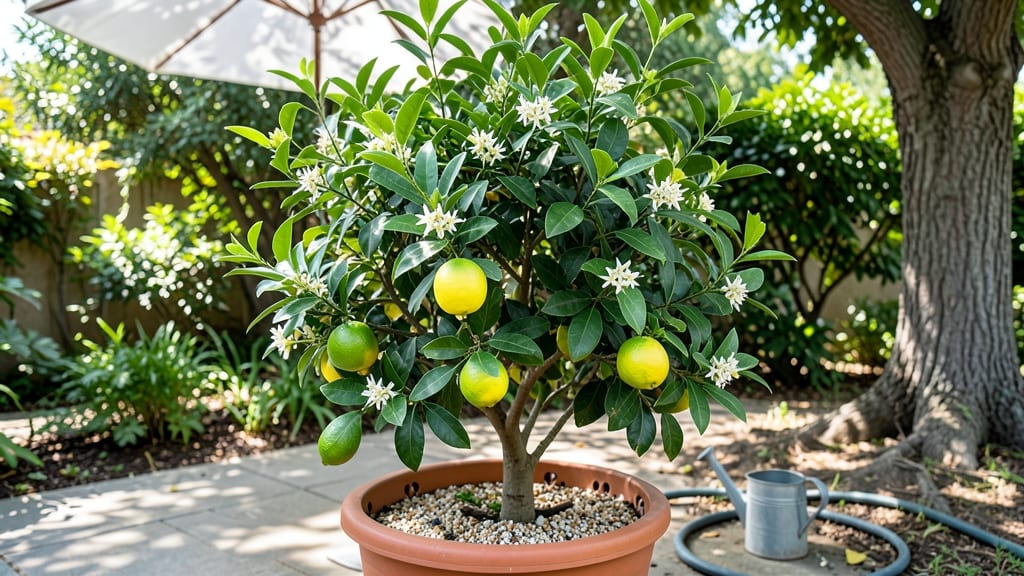
Keeping a lemon tree in a pot is absolutely possible, but success depends on choosing the right container size—at least 15–20 gallons for dwarf varieties—using well-draining soil, and maintaining regular pruning to manage root growth. Even mature trees will need repotting every 2–3 years to stay healthy and productive.
Growing a lemon tree in a container lets you enjoy fresh fruit even in small spaces, but the key is giving it enough room to thrive. 🌱 Smaller pots restrict root development, which directly limits nutrient absorption and fruit production.
I've found that dwarf varieties handle container life better than standard trees, but they still need at least 18 inches of depth to support healthy growth. The right soil mix—combining potting soil with perlite or sand—prevents root rot while ensuring proper drainage, which is critical for citrus trees.
Regular pruning isn't just about shaping the tree; it's essential for controlling root growth and encouraging new branches that produce fruit. 🍋 Without proper maintenance, your lemon tree might become root-bound, leading to stunted growth or even leaf drop.
I recommend repotting during early spring before new growth begins, using a container just 2–3 inches larger in diameter each time to avoid shocking the plant.
💡 In This Article
- How Container Size Affects Lemon Tree Growth and Fruit Yield
- Best Practices for Potted Lemon Tree Care and Maintenance
How container size affects lemon tree growth and fruit yield
Lemon trees thrive in containers because their shallow root systems adapt well to confined spaces—but only if the pot provides enough depth and volume. Roots need at least 18 inches of depth to spread properly, which translates to a 15–20 gallon container for dwarf varieties.
The root zone must hold 3–4 cubic feet of soil to support healthy nutrient absorption and water retention. When roots become root-bound (circumferential growth exceeds pot size), they start circling the container, which restricts water and nutrient uptake, leading to stunted growth and poor fruit production.
The science behind this involves the tree's hydraulic lift system—roots absorb water and minerals through capillary action, but compacted or crowded roots can't maintain this efficiently. 🌱 In a 5-gallon pot, roots compete aggressively for resources, causing the tree to allocate energy to survival rather than flowering or fruiting.
Dwarf varieties like 'Meyer' or 'Improved Meyer' handle containers better than standard types because their genetics limit height (typically 6–10 feet vs. 20+ feet for full-sized trees), but they still need adequate root space to produce meaningful yields.
Undersized containers also trigger stress responses in lemon trees. You'll notice yellowing leaves (chlorosis) due to iron deficiency—even in iron-rich soil—because crowded roots can't access nutrients effectively. The tree may also drop fruit prematurely or produce smaller, less flavorful lemons.
To prevent this, choose containers with drainage holes and avoid plastic pots, which retain too much moisture and promote root rot. Terracotta or fabric pots allow better airflow to the roots, reducing stress.
Here's how pot size impacts fruit yield: a 15-gallon pot might produce 10–20 lemons per year for a dwarf tree, while a 25-gallon pot could yield 20–40 lemons under ideal conditions. The extra space lets roots expand, supporting more branches and flower clusters.
For comparison, a standard lemon tree in the ground can produce 50–100 lemons annually, but container-grown trees compensate with higher flavor concentration due to slower growth and more focused energy.
Seasonal adjustments also play a role. In winter, lemon trees enter dormancy, and their root activity slows.
During this time, even a properly sized pot may feel restrictive because the tree isn't actively growing. 🍋 To counteract this, I recommend adding a 2–3 inch layer of compost to the top of the soil in early spring to stimulate root growth without repotting.
This "top-dressing" method refreshes nutrients without disturbing the root ball, which is especially helpful for mature trees that need frequent repotting.
One common mistake is choosing a pot that's too large too soon. While a 30-gallon pot might seem ideal, it holds excess moisture, leading to root rot.
The rule of thumb is to upgrade container size by only 2–3 inches in diameter every 2–3 years, giving roots just enough space to grow without overwhelming the tree. This gradual approach mimics natural root expansion and prevents shock.