
Propagation
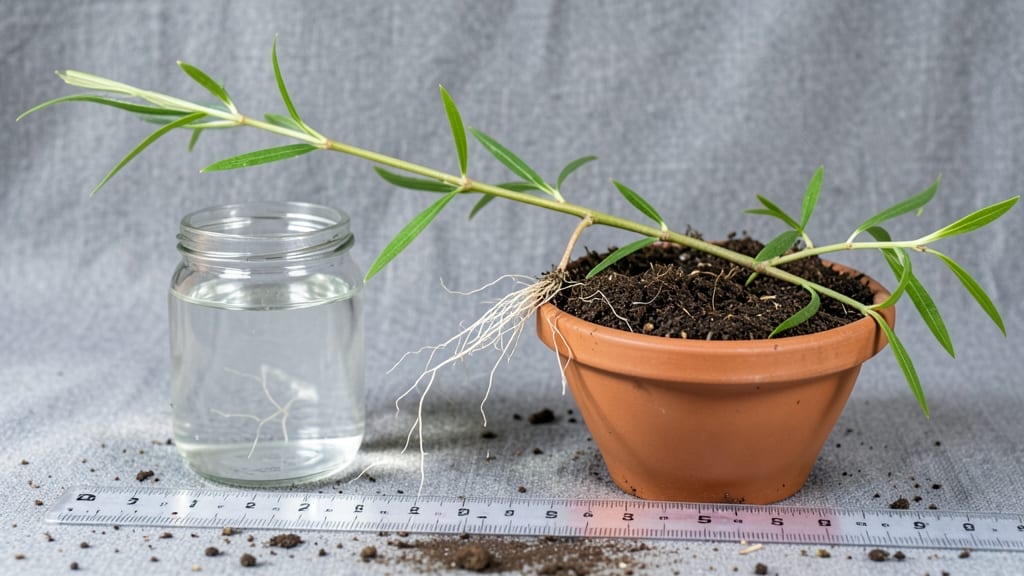
A tree branch can grow roots naturally when it touches moist soil, a process called adventitious rooting. This happens through hormone signals at nodes or wounds, and it's especially common in species like willow, maple, and birch.
This natural rooting phenomenon occurs when branches make contact with damp soil, triggering growth hormones like auxin that prompt root development. 🌱 The process works best with flexible branches that can bend toward the ground, though you can also encourage it by burying a section of the branch in soil.
Species with thin bark and high moisture retention—like willows or poplars—root more easily than dense, woody branches.
For intentional propagation, techniques like air layering or ground layering create ideal conditions by controlling moisture and wound exposure. The key is patience: roots often take weeks to form, but once established, the new growth can be separated to create an independent tree.
This method is perfect for gardeners looking to clone favorite trees or expand their landscape without buying new plants.
💡 In This Article
- How Tree Branches Develop Roots Naturally
- Step-by-Step Guide to Propagating Branches for New Trees
How tree branches develop roots naturally
The magic happens through a process called adventitious rooting, where roots sprout from unexpected places—like stems or leaves—rather than just the main root system.
When a branch touches moist soil, cells at the contact point begin producing auxin, a plant hormone that signals nearby cells to differentiate into root-forming tissues.
This transformation typically starts at nodes (where leaves or buds attach) or small wounds where the bark is damaged, creating entry points for moisture and nutrients. 🌱
Moisture is the critical trigger, but not just any soil will do. The ideal medium should be well-draining yet consistently damp, mimicking the humid conditions that encourage root growth.
Species like willow or poplar, which naturally grow near water, excel at this because their thin bark and flexible stems make contact with soil easier. In contrast, dense branches from oak or maple may require extra encouragement, like a small cut or bend, to initiate rooting.
Temperature also plays a role—most rooting occurs in spring or early summer when soil warmth (around 60-75°F) pairs with increased humidity.
Nature often uses this method to propagate itself. For example, willow branches that droop into streams or riverbanks will root and eventually form new trees, creating dense thickets. This is why you’ll see clusters of identical trees along waterways—each one a clone of its parent!
The process relies on the branch’s ability to photosynthesize while roots form, so partial shade helps conserve energy during the early stages. Without sunlight, the branch may struggle to sustain both root and leaf growth, slowing or halting the process.
Not all branches root with equal ease. Softwood species (like willow, birch, or apple) are the most cooperative, while hardwoods (oak, walnut) often resist unless you intervene with techniques like air layering. The bark’s thickness and composition matter too—thin, flexible bark allows moisture and hormones to penetrate more easily.
Even within a species, younger branches root faster than older, woody ones because their cells remain more responsive to hormonal signals. 🌿
What’s fascinating is how roots form without a traditional root cap or vascular connection to the parent tree. Instead, they develop from undifferentiated cells near the wound site, growing downward into the soil while the branch above continues to photosynthesize.
This dual function—supporting the branch while establishing independence—is why layering works so well. Over time, the rooted section can be severed from the parent, becoming a self-sustaining tree.
This natural process isn’t just a botanical curiosity—it’s a free and reliable way to propagate trees. Gardeners and foresters use it to expand plant collections, restore ecosystems, or create living fences. The key takeaway?
If you’ve ever wondered why a branch touching the ground seems to "take root," it’s not luck—it’s biology at work, guided by hormones, moisture, and a little patience. ✨