
Trees
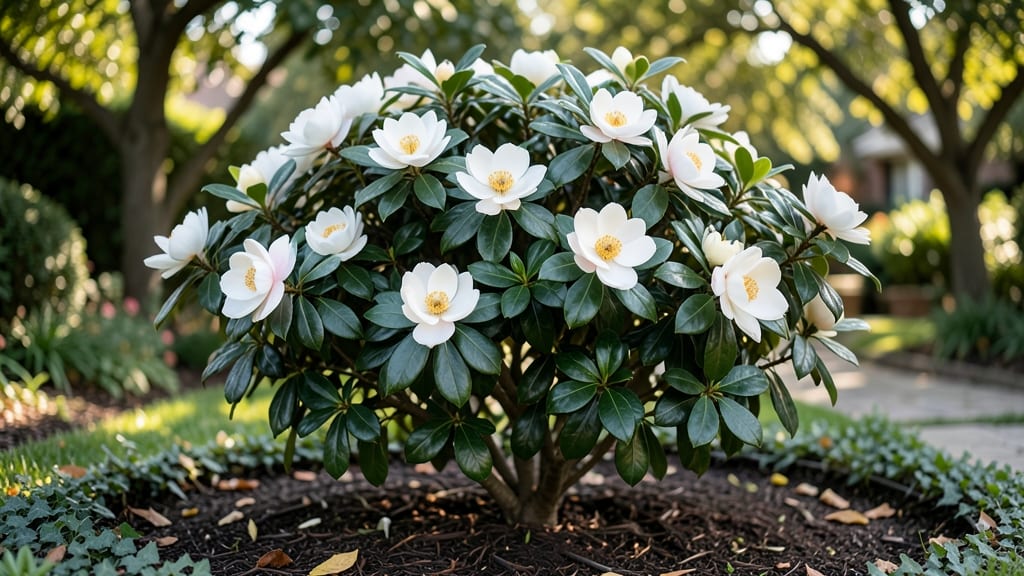
The camellia tree white blooms when others sleep—literally. ✨ These cold-hardy varieties like Camellia sasanqua 'Yuletide' or Camellia japonica 'White Rose' defy winter with delicate winter blooms, while their spring/summer cousins like 'White Cloud' keep the show going year-round.
The secret lies in acidic, well-draining soil and morning sun with afternoon shade—too much heat scorches petals, while too little light stunts flowers.
I’ve watched my sasanqua camellias open in December, their waxy white blooms standing out against frost-kissed leaves, while japonica varieties reward patience with rosy-pink buds that open into pure white. You’ll need regular watering (but no soggy roots) and light pruning after blooming to shape the tree. The payoff?
A 10-foot-tall specimen dripping with flowers from late fall to early spring, when most gardens are bare. Even in Zone 7, these varieties thrive with proper care.
📚 In This Guide
- What you need
- Instructions
- Tips and common mistakes
- Wrapping up and next steps
What you need
- ● Camellia Tree (White Variety): 1 mature plant (3–5 years old) or 1–2 young saplings (1–2 ft tall) from a nursery.
- ● Recommended varieties: Camellia japonica ‘White Swan’ or Camellia sasanqua ‘Yuletide’ (for cold-hardy options).
- ● Planting Soil: 50% well-draining acidic potting mix (pH 5.0–6.5).
- ● 50% organic matter (e.g., peat moss or compost).
- ○ Optional: 1–2 cups of sulfur (to adjust pH if needed).
- ● Fertilizer: 1 lb slow-release acid-loving plant fertilizer (e.g., Miracle-Gro Azalea/Camellia).
- ○ Optional: 1 cup fish emulsion (for a nutrient boost).
- ● Garden Tools: 1 shovel or trowel (for digging).
- ● 1 pruning shears (sterilized with rubbing alcohol).
- ● 1 gloves (garden or work gloves).
- ● Mulch: 3–4 inches of pine bark or wood chips (to retain moisture and acidity).
- ● Watering Supplies: 1 hose with a gentle spray nozzle or watering can.
- ○ Optional: drip irrigation kit (for consistent moisture).
- ● Location: Partial shade to full sun (morning sun + afternoon shade is ideal).
- ● Sheltered from strong winds (young trees are delicate!).
- ● Climate: USDA Zones 7–9 (cold-hardy varieties tolerate down to 10°F).
- ● Pro tip: 🌡️ In colder zones, plant near a south-facing wall for winter protection.
- ● Timing: Best planting time: Early spring (after last frost) or fall (6 weeks before first frost).
Step-by-Step guide to planting and caring for a cold-hardy white camellia tree
Here's how to establish your white camellia for stunning winter-to-spring blooms.
🌱 Step 1: Choose and Prepare the Planting Site
Select a location with partial shade—white camellias thrive in 4-6 hours of morning sun and afternoon shade, especially in hotter climates. The soil should drain well but retain moisture; camellias hate soggy roots. Test your soil's acidity first—aim for pH 5.0-6.5. If your soil is alkaline, amend with sulfur or peat moss before planting.
Dig a hole twice as wide as the root ball but no deeper. Loosen the sides of the hole with a shovel to encourage root spread. Mix the native soil with compost or peat moss to improve drainage and moisture retention. This ensures your camellia establishes quickly, which is critical for cold-hardy varieties that need strong roots to survive winter.
🪴 Step 2: Plant the Camellia Tree Correctly
Remove the camellia from its container and gently loosen the roots if they're circling. Place the tree in the hole so the top of the root ball sits 1-2 inches above ground level—this prevents water from pooling around the trunk. Backfill with the amended soil mixture, tamping lightly as you go to eliminate air pockets.
Water deeply right after planting to settle the soil and eliminate gaps. The root ball should absorb 1-2 gallons of water within 15-30 minutes. Mulch the base with 2-3 inches of organic mulch, keeping it 6 inches away from the trunk to prevent rot. This mulch layer protects roots from temperature swings and retains moisture during dry spells.
☀️ Step 3: Provide Ongoing Care for Year-Round Blooms
Water your camellia 1-2 times weekly during the first growing season, ensuring the soil stays evenly moist but not waterlogged. After establishment, water deeply once a week unless rainfall provides adequate moisture. White camellias are drought-tolerant once mature, but consistent moisture encourages larger, longer-lasting blooms.
Fertilize in early spring with an acid-loving plant fertilizer (look for high nitrogen in early spring, then switch to phosphorus-heavy when buds form). Avoid fertilizing in late summer or fall—this can stimulate tender new growth that won't survive winter. Prune immediately after blooming to shape the tree and remove any dead or crossing branches with clean, sharp pruners.
⏰ Step 4: Prepare for Winter Survival
Cold-hardy white camellias can handle USDA Zones 7-9, but they still need protection in colder climates. Apply a 3-inch layer of mulch around the base in late fall to insulate roots. If your area experiences hard freezes below 10°F, wrap the trunk and branches with burlap or frost cloth to prevent damage. Remove this protection in early spring once temperatures stabilize.
Watch for buds forming in late winter—this is your signal that the tree is preparing for spring blooms. Avoid pruning during this time, as it can remove next year's flowers. If you notice yellowing leaves in winter, it's likely due to overwatering or poor drainage; adjust your care routine accordingly.
Tips & tricks for growing cold-hardy white camellias
These essential insights will help you nurture a thriving white camellia that blooms reliably even in colder climates.
Soil Preparation Secret: When amending your soil with compost or peat moss in Step 1, mix in a handful of elemental sulfur if your soil tests above pH 6.5. This gradual acidifier works better than quick-acting amendments and ensures your camellia gets the ideal pH 5.0-6.5 range over time. The goal is to create that perfect acidic environment where white camellias truly flourish—think of it as creating the perfect acidic "blanket" for your roots.
Planting Depth Caution: That 1-2 inch elevation above ground level in Step 2 isn't just about drainage—it's about protecting your camellia's vulnerable trunk. The extra height creates a natural barrier that prevents water from pooling against the bark, which can cause rot. After planting, gently press the soil around the base to eliminate air pockets while maintaining this slight elevation. This small detail makes all the difference in winter survival.
Watering Wisdom: The 15-30 minute absorption test after planting in Step 2 reveals more than just soil compaction. If your root ball absorbs 1-2 gallons in under 15 minutes, your soil is too sandy and needs more organic matter. If it takes longer than 30 minutes, your soil is too clay-heavy. Adjust your compost ratio accordingly—aim for soil that drinks up water like a thirsty traveler but doesn't drown. This balance is crucial for those cold-hardy varieties that need strong roots to withstand winter.
Winter Protection Strategy: For areas experiencing hard freezes below 10°F, create a protective "bubble" around your camellia. After applying the 3-inch mulch layer, wrap the trunk with burlap and gently secure branches with frost cloth. This creates a microclimate that can raise temperatures by 5-10 degrees around the plant. Remove this protection in early spring only after you've confirmed three consecutive days above freezing—your camellia will thank you with more abundant blooms next season.
Pro Tips for Camellia Tree White
- These essential insights will help you nurture a thriving white camellia that blooms reliably even in colder climates.
- Soil Preparation Secret: When amending your soil with compost or peat moss in Step 1, mix in a handful of elemental sulfur if your soil tests above pH 6.5.
- Planting Depth Caution: That 1-2 inch elevation above ground level in Step 2 isn't just about drainage—it's about protecting your camellia's vulnerable trunk.
Frequently asked questions
Got questions about growing and caring for white camellia trees? You’re not alone! Here are some of the most common concerns—and their answers—to help you nurture a stunning, cold-hardy bloomer.
How cold-hardy is the white camellia tree, really?
The Camellia japonica (like ‘White Rose’ or ‘White Cloud’) typically thrives in USDA Zones 7-9, but some modern hybrids (e.g., ‘Winter’s Star’) can handle Zone 6 with protection. Mulch heavily in winter and plant in sheltered spots to boost resilience. Pro tip: Avoid late-spring frosts—they can damage tender buds!
When should I prune my white camellia for best blooms?
Prune right after flowering (late spring/early summer) to shape the tree and encourage next year’s blooms. Avoid heavy pruning in fall or winter, as it removes next season’s flower buds. Use clean, sharp shears and remove only dead or crossing branches. Bonus: Light shaping in summer won’t hurt, but skip heavy cuts!
Why aren’t my white camellia flowers opening?
Bud blast (dropping buds) is common due to late frosts, drought, or poor drainage. Ensure your tree gets morning sun and afternoon shade, consistent moisture, and acidic soil (pH 5.0–6.0). If buds swell then drop, try shading the tree in early spring or applying a bud blast spray (like hydrogen peroxide). Patience helps—some varieties bloom later!
Can I grow a white camellia in a container?
Yes! Dwarf varieties like ‘Snowflake’ or ‘Yuletide’ thrive in 15–20 gallon containers with well-draining soil. Use a mix of peat moss, pine bark, and perlite, and repot every 2–3 years. Place in partial shade and water when the top inch of soil dries. Winter tip: Move pots to a sheltered garage or wrap in burlap for frost protection!
Are there white camellias that bloom year-round?
While no camellia blooms truly year-round, Camellia sasanqua varieties (like ‘Crimson King’ or ‘Yuletide’) offer fall/winter blooms, while Camellia japonica shine in late winter/early spring. For extended color, plant both types! Pro move: Add Camellia x williamsii hybrids for a 3-season show.
Still stumped? Drop your question below—we’ve got answers!
Wrapping up and next steps
The white camellia tree is a stunning, cold-hardy gem that brings year-round beauty to your landscape—whether you’re a seasoned gardener or just starting out. 🌸 With its elegant blooms, evergreen foliage, and resilience in cooler climates, it’s the perfect choice for adding sophistication and charm to any garden.
Now that you’re equipped with the know-how to plant, care for, and troubleshoot this variety, why not take the next step?
Ready to transform your outdoor space? Start by sketching a planting plan, gathering your supplies, and reaching out to local nurseries to find the perfect white camellia tree for your zone. Happy gardening—your future garden will thank you! 🌿✨