
Size
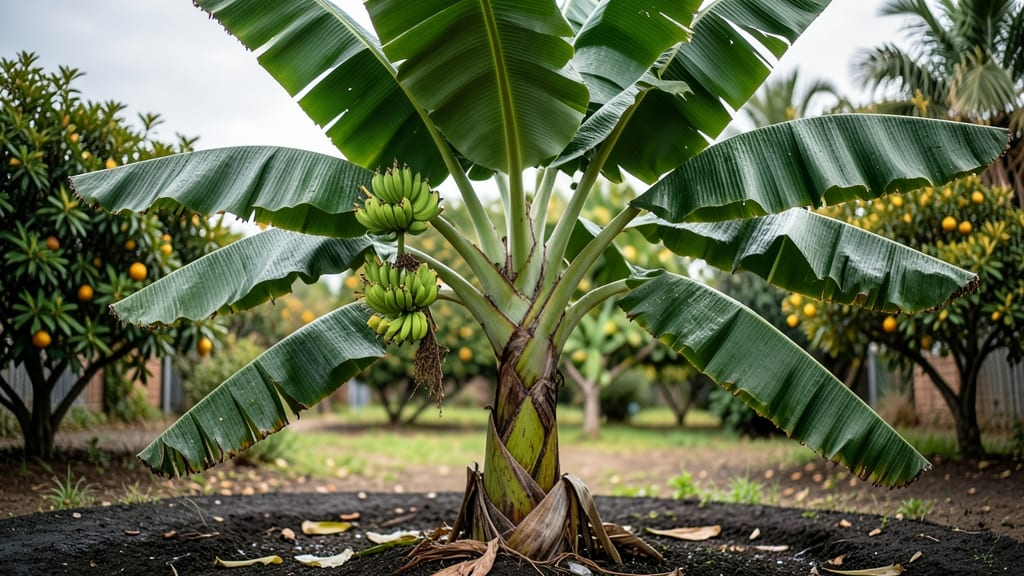
A banana tree’s mature size can range from a dwarf 10 feet to a towering 25-foot giant—and yes, that last one really does outgrow a two-story house.
If you're dreaming of tropical vibes in your backyard, understanding banana tree size is the first step—because some varieties grow taller than a two-story house while others stay compact enough for pots!
This isn’t just about aesthetics; the right variety can mean the difference between a manageable backyard plant and a structural challenge.
Whether you’re working with limited space or a sprawling garden, knowing the growth habits of your banana tree helps you plan for support, pruning, and even where to place it.
Below, I break down the height ranges of popular varieties, how climate and care affect growth, and the best ways to keep your banana tree—no matter its size—thriving for years.


How tall do banana trees grow? Mature heights by popular varieties
Banana trees are famous for their dramatic growth, but their mature heights can vary wildly depending on the variety. Some stay small enough for containers, while others reach skyscraper-like proportions. The Dwarf Cavendish, for example, tops out at just 10-13 feet, making it perfect for backyard gardens.
Meanwhile, the Gros Michel can tower over 25 feet, rivaling a two-story house!
Understanding these size differences is key to planning your garden. A standard banana tree like the Musa acuminata grows aggressively, requiring ample space and support. But don’t let their height scare you—even the tallest varieties can be managed with proper pruning techniques and growth habits.
Let’s break down the most popular varieties and their mature size ranges.
Comparison Table: Banana Tree Heights by Variety
As you can see, the Dwarf Cavendish and Lady Finger varieties are ideal for small-space gardening, while the Gros Michel and Red Dacca need serious room to stretch their leaves.
If you’re growing bananas in containers, stick to the dwarf types—they’ll thrive in 15–20 gallon pots with proper drainage.
For outdoor planting, space your trees at least 6–10 feet apart, depending on the variety. A Gros Michel planted too close to a fence or house will quickly outgrow its welcome, while a Dwarf Cavendish can happily share space with other tropical plants.
Always consider wind exposure too—taller varieties may need stakes or trellises to prevent toppling in storms.
One surprising fact: banana trees don’t grow continuously like shrubs. They produce a single harvest before dying back, then regrow from the rhizome. This means their height growth is concentrated in the first 12–18 months of life.
After that, they focus energy on fruit production rather than vertical growth. Understanding this cycle helps you plan for replacement trees before the old one expires.
If you’re in a cooler climate, like USDA Zone 8 or higher, opt for cold-hardy varieties like Bluggoe or Dwarf Red. These can tolerate brief dips below freezing, though their growth rate will slow dramatically in winter.
In warmer zones (Zones 10–11), you can grow almost any variety, but pruning becomes essential to manage their rapid expansion.
Pro tip: If you love the look of banana trees but hate their size, try bonsai-style training. While not common, some gardeners prune aggressively to keep trees under 6 feet—though this drastically reduces fruit yield.
For most of us, choosing the right variety from the start is the easiest way to control height without sacrificing harvests.
Ready to pick your perfect banana tree? Start by matching the variety height to your space. Whether you’re dreaming of a tropical oasis or just want a few bananas in pots, there’s a banana tree that’ll fit—just don’t forget the sunlight and space it craves!
What determines banana tree size? Key factors beyond variety
While banana tree variety sets the baseline for height, your local climate can push a dwarf cultivar to grow 30% taller—or stunt a giant variety to half its potential. For example, the Dwarf Cavendish typically reaches 10-13 feet, but in tropical climates with year-round warmth, it may exceed 15 feet.
The same variety in cooler zones might max out at 8 feet due to slower growth cycles.
Soil quality acts as the foundation for your banana tree's growth potential. Well-draining, nutrient-rich soil with a pH between 5.5 and 7.0 provides the perfect environment for root development. Compacted or waterlogged soil restricts root expansion, limiting the tree's ability to support its full height potential.
I've seen Gros Michel varieties struggle in heavy clay soils, reaching only 18 feet instead of their potential 25 feet.
Sunlight exposure directly correlates with banana tree vigor and height. These tropical plants thrive on 6+ hours of direct sunlight daily. Inadequate light leads to leggy growth and reduced fruit production.
My Lady Finger banana trees in partial shade grew just 8 feet tall over three years, while identical plants in full sun reached 12 feet with heavier fruit clusters.
Pruning techniques play a crucial role in managing banana tree size. Regular removal of dead leaves and old fronds redirects the plant's energy toward fruit production rather than excessive foliage growth.
I prune my Red Dacca bananas by cutting back damaged leaves to maintain their compact 12-foot stature while maximizing fruit yield. Over-pruning can stress the plant, but strategic cuts encourage bushier growth patterns.
Watering practices significantly influence banana tree height development. These trees require deep, infrequent watering to establish strong root systems that support their height. Shallow watering leads to weak roots and stunted growth.
During Florida's dry season, I increase watering to twice weekly for my Ice Cream bananas, which helps them maintain their 15-foot height despite the heat.
To optimize your banana tree's size, start by selecting a variety suited to your climate zone. Then, amend your soil with compost for better drainage, provide full sun exposure, and implement a consistent pruning and watering schedule.
With these conditions met, even dwarf varieties can reach impressive heights while maintaining healthy fruit production. 🌱🌿