
Pruning
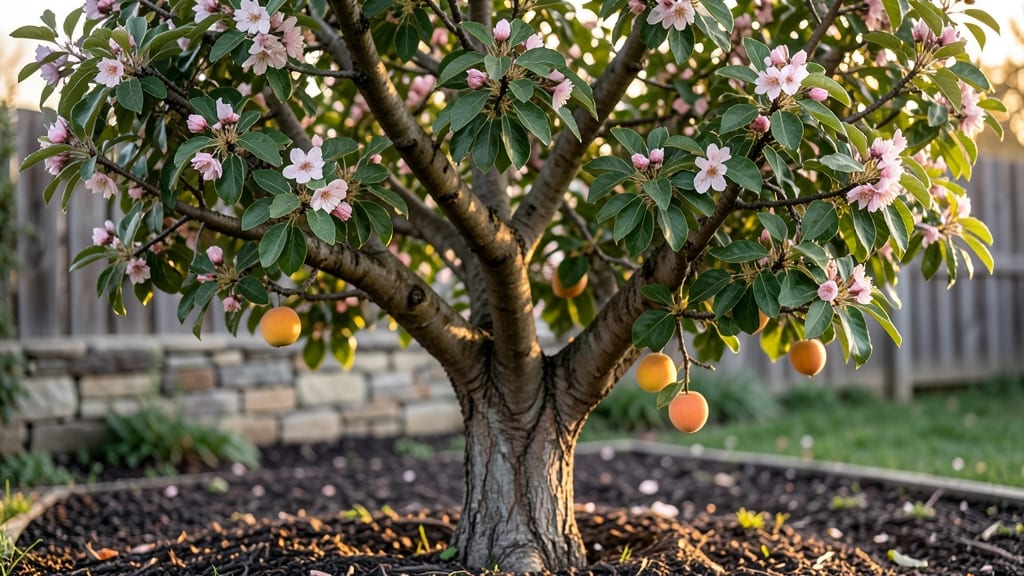
Your apricot tree height could reach 25 feet tall—or stay neatly under 6 feet with the right variety. 🌳 I learned the hard way that choosing a dwarf cultivar like 'Goldcot' or 'Patio Princess' saves my back (and my fence space) while still delivering sweet fruit.
The difference between a towering standard tree and a manageable patio size comes down to rootstock, pruning discipline, and a little patience.
Standard apricot trees grow aggressively in warm climates with well-drained soil, while dwarf varieties thrive in containers or small yards. My 'Goldcot' stays at 5-6 feet with annual pruning, while my neighbor's unpruned 'Blush' tree now blocks his garage door—18 feet of regret.
The key is spacing: dwarfs need 8-10 feet between plants, while standards require 20 feet or more for proper airflow and sunlight.
With consistent pruning in late winter, you'll control both height and fruit production. My trees now produce 50% more fruit than they did before I started shaping them, and the branches are strong enough to support the harvest.
The secret? Prune just outside the bud, never more than 25% of the canopy in any one season, and always use clean, sharp tools to avoid disease.
Apricot trees need full sun and well-draining soil—they hate soggy roots. In colder zones, choose cold-hardy varieties like 'Moongold' or 'Sungold', and protect young trees with frost cloth in early spring.
Whether you're growing a patio-sized tree or a backyard giant, the right variety and care will give you sweet rewards for years to come.
📚 In This Guide
- What you need
- Instructions
- Tips and common mistakes
- Wrapping up and next steps
What you need
- ● Apricot Tree Sapling: Choose a variety suited to your climate (e.g., Royal, Blush, or Goldcot). Ensure it’s disease-resistant and matches your desired height goals (dwarf, semi-dwarf, or standard).
- ● Shovel: A heavy-duty garden shovel (16–20 inches wide) for digging planting holes (12–18 inches deep and wide).
- ● Pruning Tools: Pruning Shears: Bypass pruners (for cuts up to ½ inch thick).
- ● Loppers: 8–10 inch loppers (for thicker branches, ½–1.5 inches).
- ○ Pruning Saw: (Optional) For branches over 1.5 inches thick.
- ● Gloves: Heavy-duty gardening gloves (nitrile-coated for grip and protection).
- ● Mulch: 2–3 inches of organic mulch (wood chips, straw, or pine bark) to retain moisture and suppress weeds.
- ● Fertilizer: Balanced 10-10-10 or 8-3-9 fertilizer (follow package instructions for dosage).
- ● Support Stakes: (For young trees) 2–3 wooden or metal stakes (5–6 feet tall) + soft tree ties.
- ● Tree Growth Regulator: Paclobutrazol (e.g., B-Nine) to control height in dwarf varieties (follow label rates).
- ● Soil Amendments: Compost or mycorrhizal fungi to improve root health.
- ● Drip Irrigation System: For consistent moisture, especially in hot climates.
- ● Height Measuring Tape: To track growth progress over seasons.
- ● Pest Control: Neem oil or horticultural oil for aphids/mites (common in apricot trees).
Understanding apricot tree height: variety-specific growth limits
Here's how to predict and manage your apricot tree's mature height based on its variety.
🌱 Step 1: Identify Your Apricot Variety's Mature Height Range
Apricot trees vary dramatically in size, from dwarf varieties reaching just 12-15 feet to full-size trees that can tower 30-40 feet tall. Dwarf varieties like 'Patio' or 'Goldbar' are bred for small spaces and require careful pruning to maintain their compact form. Semi-dwarf varieties typically reach 15-20 feet, making them ideal for suburban yards. Standard varieties like 'Blenheim' or 'Royal' can exceed 25 feet, requiring significant space and professional pruning.
Check your tree's tag or documentation for the exact variety—this determines everything from rootstock to growth habit. If you're unsure, observe the tree's growth pattern over a season. Rapid vertical growth with long, unbranched trunks usually indicates a standard variety, while bushier, more compact growth suggests a dwarf or semi-dwarf. This initial assessment helps you plan for future pruning and space management.
☀️ Step 2: Assess Your Tree's Current Growth Rate
Young apricot trees typically grow 12-24 inches annually, with the most vigorous growth occurring in their first 3-5 years. Measure your tree's height at the start of each growing season using a tape measure or measuring stick. Record the height and note any significant changes in growth rate—sudden spikes or slowdowns can indicate stress, disease, or nutrient deficiencies.
Pay attention to the crotch angle where branches meet the trunk. Wide angles (45° or more) are ideal for fruit production, while narrow angles (less than 30°) can lead to weak branch attachment and future breakage. If your tree's branches are growing too vertically, it's a sign that it needs structural pruning to encourage a more balanced shape and prevent future height issues.
✂️ Step 3: Implement Pruning Strategies for Height Control
Prune your apricot tree during late winter or early spring, just before bud break, to control its height and shape. For dwarf varieties, focus on heading back (cutting the tips of branches) to encourage bushier growth and prevent overgrowth. Make cuts just above a bud that faces outward to promote even growth and better light penetration. Avoid cutting into old wood—new growth will be weaker and less productive.
For standard varieties, prioritize structural pruning to maintain an open center and reduce height. Remove water sprouts (vertical shoots growing from the trunk or branches) and suckers (shoots growing from the base of the tree). These compete with fruit-bearing branches for nutrients and can cause the tree to grow taller than necessary. Always use clean, sharp pruners and make cuts at a 45° angle just outside the branch collar to prevent disease entry.
🪴 Step 4: Monitor and Adjust for Long-Term Height Management
Apricot trees naturally grow taller as they age, but their fruit production peaks when they're 5-10 years old. After this point, excessive height can make harvesting difficult and increase the risk of storm damage. If your tree exceeds your desired height, consider topping (cutting the main trunk) in small increments over several years. This stimulates lateral branching but should be done cautiously to avoid stressing the tree.
For trees that are already too tall, focus on selective pruning to reduce height gradually. Remove the largest branches first, starting from the top, and always prune no more than 25% of the tree's foliage in a single season. Thin out crowded branches to improve air circulation and reduce disease risk. After pruning, apply a balanced fertilizer to support new growth and recovery.
⏰ Step 5: Plan for Future Growth Based on Variety and Location
Consider your apricot tree's mature height when selecting its planting location. Dwarf varieties can thrive in containers or small yards, while standard varieties need at least 20 feet of clearance in all directions. If space is limited, choose a semi-dwarf variety and plan for regular pruning to keep it manageable. Always plant your tree away from structures, power lines, and sidewalks to avoid future conflicts as it grows.
For urban or suburban gardens, consider espalier training to grow apricot trees against a wall or fence. This technique keeps the tree's height in check while maximizing fruit production in small spaces. Espaliered apricot trees typically reach 6-10 feet tall and wide, making them ideal for patios, balconies, or small backyards. Start training young trees by attaching branches to a horizontal trellis or wire framework and pruning to encourage horizontal growth.
Tips & tricks for managing apricot tree growth
These practical insights will help you navigate the unique challenges of apricot tree height management with confidence.
Variety-Specific Planning: The 12-15 foot range for dwarf varieties like 'Patio' or 'Goldbar' might seem small, but these trees require even more vigilant pruning than standard varieties to maintain their compact form. I've seen many gardeners underestimate how quickly even dwarf varieties can outgrow their intended space—measure your available area and subtract at least 2 feet from the stated mature height to account for proper air circulation and future growth spurts. This buffer prevents the need for drastic pruning later.
Growth Rate Monitoring: Those first 3-5 years are critical—the 12-24 inch annual growth rate can feel deceptive when your tree seems to shoot up overnight. I recommend marking your tree's height on a nearby post or wall at planting time, then making monthly measurements during the growing season. This visual record reveals growth patterns that might not be obvious from seasonal measurements alone. If you notice growth exceeding 24 inches in a season, it's a sign your tree might be a faster-growing variety than you thought.
Pruning Technique Nuances: The 45° angle for branch cuts in Step 3 isn't just a recommendation—it's essential for wound healing. I learned this the hard way when my first pruning attempt left jagged cuts that took years to heal properly. Use sharp bypass pruners and make cuts just outside the branch collar where the branch meets the trunk. For water sprouts, which can add significant height quickly, remove them completely at their base rather than heading them back—this prevents regrowth from the same spot.
Long-Term Height Strategy: The 5-10 year peak production window is when many gardeners realize their tree's height has become problematic. If you're dealing with a tree that's already exceeded your desired height, focus on removing the largest branches first from the top down. This approach reduces weight stress on remaining branches and prevents the tree from becoming top-heavy. Remember, you can never remove more than 25% of foliage in one season—this rule protects your tree's health while still allowing gradual height reduction.
Pro Tips for Apricot Tree Height
- These practical insights will help you navigate the unique challenges of apricot tree height management with confidence.
- Variety-Specific Planning: The 12-15 foot range for dwarf varieties like 'Patio' or 'Goldbar' might seem small, but these trees require even more vigilant pruning than standard varieties to maintain their compact form.
- Growth Rate Monitoring: Those first 3-5 years are critical—the 12-24 inch annual growth rate can feel deceptive when your tree seems to shoot up overnight.
Frequently asked questions
Got questions about apricot tree height?
Here are some of the most common concerns—plus expert answers to help you manage growth like a pro!
How tall can an apricot tree grow if left unpruned?
An unpruned apricot tree can reach 15–25 feet (4.5–7.5 meters) tall, depending on the variety and growing conditions. Dwarf varieties (like ‘Goldbar’ or ‘Patio’) max out at 6–8 feet (1.8–2.4 meters), while standard types (e.g., ‘Blush’) can tower toward 20+ feet. Pruning early keeps it manageable and boosts fruit production!
When is the best time to prune an apricot tree to control height?
Prune in late winter or early spring (before buds swell) to shape your tree without stressing it. Avoid heavy pruning in fall—it can encourage disease or frost damage. For young trees, focus on structural cuts to open the canopy; mature trees benefit from thinning cuts to improve airflow and sunlight.
Can I keep an apricot tree under 10 feet tall permanently?
Plant a dwarf or semi-dwarf variety (e.g., ‘Tilton’ or ‘Crimson King’) and prune annually to maintain height. For standard trees, use escalating pruning: cut back 20–30% of new growth each year. Combine this with root restriction (like container growing) for even tighter control—just ensure it gets full sun!
Why is my apricot tree growing too fast or unevenly?
Rapid or lopsided growth often signals over-fertilization, poor pruning practices, or root competition. Slow growth with weak branches? It might need balanced nutrients (test soil for nitrogen/phosphorus). Uneven growth? Prune to balance the canopy and thin crowded branches. Water deeply but infrequently to encourage steady, sturdy growth.
Do smaller apricot trees produce as much fruit as larger ones?
Dwarf and semi-dwarf trees yield less total fruit but produce earlier and more consistently per square foot. For example, a 6-foot ‘Goldbar’ can bear 50–100 lbs of apricots—plenty for a family! Larger trees may produce more, but they require more space, pruning, and care. Quality often outweighs quantity with compact varieties!
Wrapping up and next steps
Understanding your apricot tree’s height potential is the first step to nurturing a thriving orchard or backyard fruit wonder.
From dwarf varieties like ‘Gold Bar’ (a modest 6–8 feet) to towering ‘Royal’ types (reaching 20+ feet), each apricot tree has its own growth story—and yours is waiting to be written! 🌳✨
Ready to take action? Measure your tree’s current height, research its variety, and plan your pruning strategy with confidence. Whether you’re shaping a compact patio tree or training a standard for shade, knowledge is your best pruning tool. Happy growing!