
Pests and Diseases
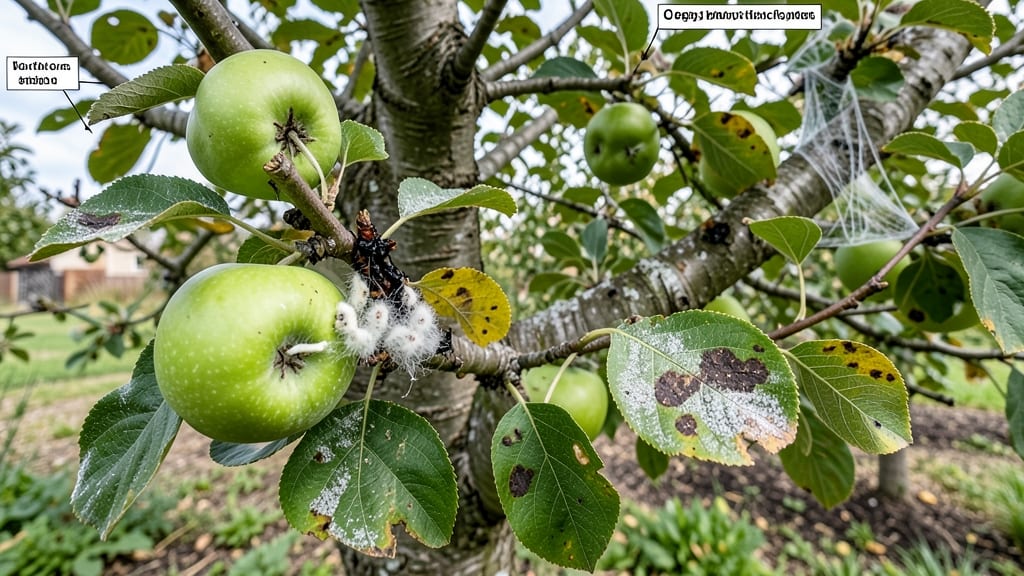
Apple trees fight back when pests and diseases strike—but catching them early is the real game-changer. 🍏 I’ve watched apple scab turn leaves into crusty messes and codling moths hollow out fruit in weeks, and the difference between a thriving tree and a struggling one often comes down to what you notice (and when).
Most problems start small: tiny brown spots on leaves, sticky residue on branches, or fruit that feels soft when it shouldn’t. The good news? Organic fixes—like neem oil sprays, copper fungicides, or even introducing beneficial insects—can stop outbreaks before they spiral.
My trees stay healthy with a mix of prevention and quick action, and I’ll show you exactly how.
By the end, you’ll spot early signs before they become full-blown crises, and you’ll have a toolkit of natural remedies that actually work. No more guessing whether that leaf spot is harmless or a sign of apple scab—just clear steps to keep your tree productive and your harvest intact.
Whether you’re dealing with aphids, fire blight, or maggots, this guide cuts through the confusion. Let’s get your apple tree back to its best—without harsh chemicals.
Root Causes Of Apple Tree Struggles
Apple trees, like any living organism, are vulnerable to pests and diseases—but why do these issues arise in the first place? The answer lies in a mix of environmental factors, tree health, and the relentless biology of invaders.
Understanding these root causes helps you prevent, detect, and treat problems before they spiral out of control. Let’s break down the science behind why your apple tree might be under siege.
Healthy trees naturally resist pests and diseases, but when their defenses weaken, invaders strike. Here’s why:
- Nutrient Deficiencies: Apple trees need balanced nutrients—especially nitrogen, phosphorus, and potassium—to stay strong. A deficiency (often from poor soil or improper fertilization) makes them prime targets for fungal infections like apple scab or bacterial diseases.
- Stress from Environmental Factors:
- 🌡️ Extreme Heat or Drought: Prolonged dry spells or scorching temperatures weaken the tree’s ability to fight off pests like codling moths or woolly aphids.
- ❄️ Cold Damage: Freezing temperatures can crack bark, creating entry points for Nectria canker or other fungal pathogens.
- 🌊 Poor Drainage: Waterlogged roots suffocate the tree, making it susceptible to root rot and attracting sap-sucking insects.
- Improper Pruning: Over-pruning or cutting at the wrong time (late winter/early spring) stresses the tree, slowing recovery and leaving it vulnerable to diseases like fire blight.
💡 Pro Tip: Conduct a soil test every 2–3 years to check nutrient levels. Mulch properly (2–4 inches of organic mulch, kept away from the trunk) to retain moisture and protect roots.
Pests don’t randomly attack apple trees—they’re drawn by specific conditions that make your tree an all-you-can-eat buffet. Here’s how it happens:
| Pest | Why They Target Your Tree | Trigger Factors |
|---|---|---|
| Codling Moth | Lays eggs in fruit; larvae burrow inside, ruining apples. | Overripe or damaged fruit, lack of natural predators (like parasitic wasps), and warm summers. |
| Apple Maggot | Adults lay eggs in fruit skin; maggots feed internally. | Weedy, unkempt orchards (provide shelter), and nearby wild apple or hawthorn trees (alternative hosts). |
| Woolly Aphid | Sucks sap, excretes honeydew (attracts sooty mold), and weakens branches. | Dense foliage (reduces airflow), old or stressed trees, and mild winters (they survive cold better than you’d think!). |
| Japanese Beetle | Defoliates leaves, skeletons branches, and stresses the tree. | Grassy lawns (grubs feed on roots), nearby roses or grapes (alternative hosts), and drought-stressed trees. |
🎯 Actionable Fix: Remove fallen fruit promptly (codling moths overwinter in debris) and install pheromone traps for codling moths in early spring to disrupt mating.
Fungi and bacteria thrive in specific conditions, often exploiting weaknesses in your apple tree. Here’s their game plan:
- Apple Scab (Venturia inaequalis):
- 💧 Spores spread via rain: Warm, wet springs (50–70°F with frequent rain) create the perfect storm for spore germination.
- 🍃 Dense foliage traps moisture: Poor airflow lets spores linger on leaves, leading to black, crusty spots.
- Fire Blight (Erwinia amylovora):
- 🌸 Bacteria enter through wounds: Pruning cuts, storm damage, or insect bites provide entry points.
- 🌡️ Warm, rainy weather accelerates spread: Ideal conditions are 75–90°F with high humidity.
- Powdery Mildew (Podosphaera leucotricha):
- 🌿 Loves shaded, humid conditions: Trees planted too closely together or in low-light areas are high-risk.
- 🍂 Overwinters on buds and twigs: Dormant spores reactivate in spring with warm, damp air.
✨ Prevention Hack: Space trees 15–20 feet apart for airflow, and apply copper fungicide (like Cueva) at bud break to prevent bacterial diseases.
By addressing these root causes—stress, pest attraction, and fungal conditions—you’re not just treating symptoms; you’re cutting off the problem at the source. Next, we’ll dive into early detection signs so you can act before damage spreads.
Practical fixes for apple tree woes
---
When pests and diseases strike your apple tree, quick action can mean the difference between saving your harvest and losing it. Below, we’ve mapped out targeted solutions for common issues—from chewed leaves to fungal spots—so you can tackle problems head-on with organic, effective methods. Prevention tips are included to keep your tree thriving long-term!
---
If your leaves are covered in olive-green or black velvety spots, Venturia inaequalis (apple scab) is likely the culprit. This fungus thrives in wet, humid conditions and can defoliate your tree if left unchecked.
#### 🔥 How to Treat It 1. 🍳 Prune Infected Leaves & Fruit - Remove and destroy (don’t compost!) heavily infected leaves and fruit in the fall and spring. This reduces fungal spores for next season. - Thin out the canopy for better airflow—fungi love crowded, damp spaces.
2. 👨🍳 Apply Organic Fungicides Early - Baking soda spray: Mix 1 tbsp baking soda, 1 tbsp horticultural oil, and a drop of dish soap in 1 gallon of water.
Spray in early spring (before buds swell) and after rain. - Neem oil or copper fungicide: Spray every 7–10 days during wet periods. Follow label instructions for safety. - Pro tip: 🌡️ Time sprays for just before rain—this washes the fungus away and leaves a protective layer.
3. ⏰ Prevent Future Outbreaks - Mulch properly: Use 2–4 inches of organic mulch (straw or wood chips) to keep soil moist but not soggy. - Water at the base: Avoid overhead watering, which splashes spores onto leaves. - Plant resistant varieties: Consider ‘Liberty’ or ‘Enterprise’ apples, bred to resist scab.
---
The codling moth’s larvae burrow into apples, turning them into inedible, wormy messes. These pests are sneaky but beatable with a few key strategies.
#### 🔪 How to Treat It 1. 🍎 Monitor & Trap Adult Moths - Hang pheromone traps in early summer (when adults emerge).
Check weekly and replace lures as needed. - Pro tip: 🎯 Place traps 10–15 feet above ground and away from the tree to attract moths before they lay eggs.
2. 👨🍳 Use Organic Sprays at Critical Times - Kaolin clay (Surround WP): Creates a protective film that moths can’t penetrate. Reapply after rain. - Bt (Bacillus thuringiensis): A bacterial spray safe for bees, effective against larvae.
Apply when moths are active (check local bloom times). - Spinosad: Derived from soil bacteria, this spray kills larvae but is toxic to bees—apply only at dusk.
3. ✨ Prevent Egg Laying & Larvae - Wrap trunks: Use tree bands (sticky or cardboard) in early spring to trap crawling larvae. - Remove fallen fruit: Pick up and dispose of dropped apples immediately—they’re prime hiding spots for larvae. - Drop cloths: Lay tarps under trees and shake branches to dislodge eggs before they hatch.
---
Tiny but mighty, aphids and mites drain your tree’s sap, causing curled leaves, sticky honeydew, and sooty mold. They multiply fast, so act quickly!
#### 💡 How to Treat It 1. 🔥 Blast Them Off with Water - Strong spray: Use a hose to knock off aphids from leaves and stems.
Do this early morning for best results. - Soapy water: Mix 1 tsp mild soap (like Castile) with 1 quart of water. Spray directly on infestations.
2. 👨🍳 Introduce Beneficial Insects - Ladybugs & lacewings: Release these natural predators (available at garden centers). They’ll devour aphids in days! - Predatory mites: For spider mites, introduce Phytoseiulus persimilis—they hunt mites without harming your tree.
3. 🌿 Prevent Future Infestations - Encourage biodiversity: Plant dill, fennel, or yarrow nearby to attract beneficial insects. - Avoid broad-spectrum pesticides: These kill helpful bugs too. Stick to targeted organic sprays. - Prune for airflow: Dense foliage traps humidity, inviting mites. Thin branches in late winter.
---
If your tree’s leaves yellow, wilt, or drop prematurely—even with healthy-looking roots—root rot (Phytophthora or Armillaria) may be the issue. This fungal disease thrives in waterlogged soil.
#### 🔪 How to Treat It 1. 🌧️ Improve Drainage Immediately - Raise the soil: Mound soil around the base of the tree to prevent water pooling. - Install a French drain: If your yard floods, redirect water away from the roots. - Aerate compacted soil: Use a garden fork to loosen soil 12–18 inches deep.
2. 🍳 Fungal Remedies - Hydrogen peroxide (3%): Mix 1 part peroxide with 10 parts water and pour around the root zone to kill fungi. - Mycorrhizal fungi: Add these beneficial soil fungi to outcompete pathogens. Sprinkle at the drip line.
3. ⏰ Long-Term Prevention - Mulch correctly: Use only 2–3 inches of mulch and keep it 6 inches away from the trunk. - Avoid overwatering: Water deeply but infrequently—apple trees prefer dry feet! - Choose resistant rootstock: If replanting, opt for rootstock like ‘M.9’ or ‘G.41’, which tolerate wetter soils better.
---
With these practical, organic fixes, you can rescue your apple tree and protect future harvests. The key? Act fast at the first sign of trouble, and prioritize prevention to keep your tree happy and productive. 🍏🌿
Frequently asked questions
What are the first signs my apple tree has apple scab?
Look for olive-green or black velvety spots on the upper surface of leaves, often with yellow halos. Check undersides too—spores spread there first. Tiny brown spots on young fruit are another early warning. Act fast: prune infected leaves and apply a baking soda spray (1 tbsp baking soda + 1 tbsp oil + dish soap in 1 gallon water).
How do I tell if my apple tree has fire blight vs. normal wilting?
Fire blight causes shepherd’s crook (branches bend like a shepherd’s staff) and blackened, oozing cankers. Leaves curl and turn brown at the edges, then the whole branch dies back. Unlike drought stress, fire blight spreads upward from infected areas. Prune 6 inches below infected spots and sterilize tools with rubbing alcohol.
Are there any organic ways to control codling moths without harming bees?
Yes! Use pheromone traps to disrupt mating, and apply kaolin clay (Surround WP) or Bt (Bacillus thuringiensis)—both are bee-safe. For extra protection, wrap trunks with sticky bands in early spring to trap crawling larvae. Avoid spinosad at bloom time (it’s toxic to bees) and always apply organic sprays after dark.
Can I still save my apple tree if it has woolly aphids?
Start by blasting aphids off with a strong hose spray in the early morning. Follow up with a soapy water spray (1 tsp mild soap per quart of water) or introduce ladybugs/lacewings. Prune for better airflow and plant dill or yarrow nearby to attract natural predators. Repeat treatments every 5–7 days until aphids disappear.
Why does my apple tree keep getting powdery mildew even after treatment?
Powdery mildew thrives in shaded, humid conditions—check for overcrowded branches or nearby structures blocking sunlight. Thin the canopy, space trees 15–20 feet apart, and water at the base (not overhead). Apply neem oil or baking soda spray every 7–10 days during humid weather. Remove heavily infected leaves promptly.