
Pruning
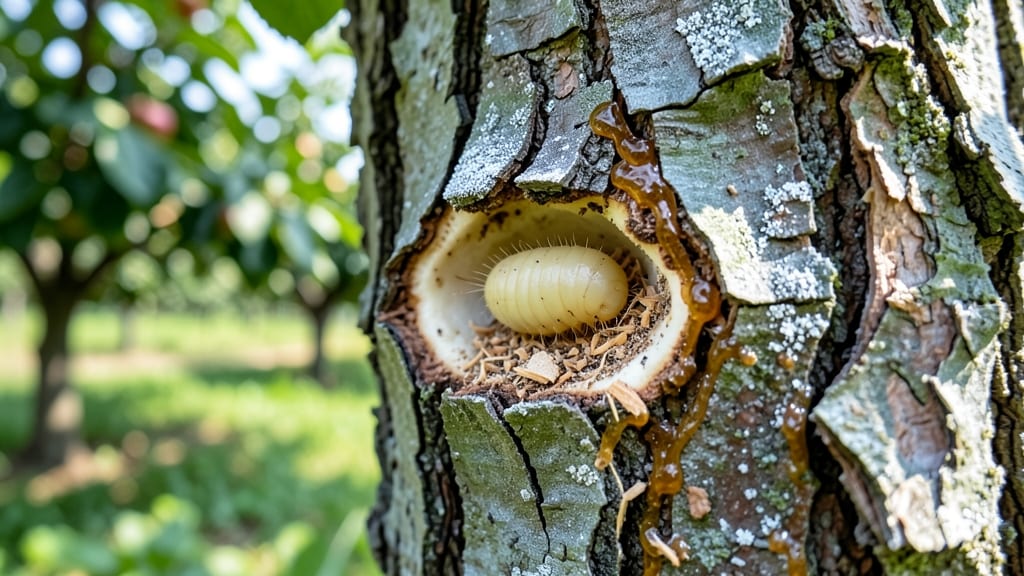
Apple tree borer damage turns your thriving orchard into a sad, sawdust-spewing mess. 🌳 I’ve watched healthy trees decline in weeks from these sneaky pests—tiny holes in bark, oozing sap, and branches that suddenly wilt like they’ve given up.
The key to saving your tree? Spotting the signs early and acting fast before the borers win.
The damage starts small—tiny holes in the bark, sawdust-like frass piled at the base, or weeping sap that hardens into crusty streaks. By the time you see wilting leaves or dead branches, the borers are already tunneling deep into the tree’s heartwood.
That’s why I check my trees every spring for these red flags, and I’ve saved more than one tree by catching it in time.
You can fight back with organic methods like pruning infested branches (sterilize your tools first!) or applying borer-specific traps. For bad cases, targeted insecticides work—but the real win is prevention.
Healthy trees with proper pruning and watering are far less tempting to borers. Think of it as armor for your apple tree.
This isn’t a one-time fix; it’s a year-round game of defense. I’ll show you how to monitor, treat, and protect your tree so you can keep enjoying those crisp, homegrown apples for decades—not just a few seasons. Let’s get your tree back in fighting shape.
Root Causes of Apple Tree Decline
When an apple tree suddenly weakens, wilts, or dies despite seemingly ideal growing conditions, the culprit is often the apple tree borer—a destructive wood-boring beetle that turns a healthy tree into a hollowed-out shell.
But why does this happen? The answer lies in a mix of biological triggers, environmental factors, and tree vulnerabilities. Understanding these causes is the first step to protecting your orchard or backyard tree.
The primary driver of apple tree borer damage is the beetle itself, specifically species like the Saperda candida (apple tree borer) or the Anobium punctatum (furniture beetle, which can also target stressed trees). These insects lay eggs in the bark or wood of weakened or injured trees.
Once the larvae hatch, they burrow into the cambium layer—the tree’s nutrient-transporting tissue—creating tunnels that disrupt water and nutrient flow.
🔬 Key triggers:
- Stress signals: Beetles are drawn to trees emitting stress hormones (like ethylene) due to drought, poor soil, or disease.
- Fresh wounds: Pruning cuts, storm damage, or cracked bark provide easy entry points for egg-laying females.
- Tree age: Mature apple trees (10+ years) are more susceptible because their bark is thicker, making it harder for predators to reach larvae.
💡 Pro tip: Healthy trees with intact bark are far less appealing to borers. Regular inspections after pruning or storms can reduce risk.
Apple trees under stress are like open invitations to borers. Environmental factors create the perfect storm for infestations:
| Factor | How It Helps Borers | Actionable Fix |
|---|---|---|
| Drought | Water scarcity forces trees to divert energy to survival, reducing defensive resin production. | Deep watering (1–2 inches per week) and mulching to retain moisture. |
| Poor Soil | Compacted or nutrient-deficient soil starves roots, weakening structural integrity. | Test soil pH (ideal: 6.0–6.5) and amend with compost or organic matter. |
| Extreme Heat/Cold | Temperature swings shock trees, making them vulnerable to pests and disease. | Plant windbreaks or use shade cloth in hot climates; avoid winter damage with mulch. |
| Fungal/Bacterial Infections | Diseases like fire blight or canker create entry points and weaken defenses. | Prune infected branches immediately (sterilize tools with 70% alcohol) and apply copper fungicide. |
🎯 Prevention focus: Healthy trees are resilient. Prioritize soil health, proper watering, and disease management to make your apple tree less attractive to borers.
Physical damage—whether from pruning mistakes, construction, or wildlife—creates perfect conditions for borer infestations. Here’s how:
- Improper pruning: Large, jagged cuts or cutting too close to the trunk expose inner wood, giving borers a direct path. Always prune during dormancy and use sharp, clean tools.
- Mechanical damage: Lawnmowers, string trimmers, or even hanging fruit can gouge bark, creating entry wounds. Keep equipment away from the trunk.
- Animal activity: Rabbits, deer, or rodents can gnaw on bark, while birds may peck at weakened branches. Use tree guards or fencing to deter wildlife.
- Storm or hail damage: Broken branches or split bark provide immediate access. Remove damaged limbs promptly and seal wounds with pruning sealant.
✨ Quick fix: If you notice fresh wounds, apply a thin layer of Tanglefoot or tree wound dressing to deter egg-laying beetles while the tree heals.
By addressing these root causes—biological, environmental, and physical—you can drastically reduce the risk of apple tree borer damage. The key is proactive care: healthy trees are the best defense against these silent destroyers.
Fixing Apple Tree Borer Issues
Now that you’ve identified the signs of apple tree borer damage, it’s time to take action. These pests can weaken or even kill your tree if left unchecked, but with the right approach, you can restore your tree’s health and prevent future infestations.
Below are practical, step-by-step solutions tailored to the root causes of borer damage, along with proactive prevention tips to keep your apple tree thriving.
---
If you’ve spotted sawdust-like frass, exit holes, or oozing sap, the borers are already inside the tree. The first line of defense is pruning out the damaged branches to stop the spread.
- 🔪 Cut out infected branches at least 6–12 inches below the visible damage (borers can tunnel deeper than you see). - Dispose of infested wood immediately—don’t compost it!
Burn it or seal it in a trash bag to prevent reinfestation. - Sterilize your pruning tools with rubbing alcohol or bleach between cuts to avoid spreading larvae or disease.
⚠️ Pro Tip: If the trunk is heavily damaged, consult an arborist—large-scale borer infestations may require professional intervention.
---
Once the dead wood is removed, target the remaining borers with chemical or organic treatments, depending on your preference.
#### 💊 Chemical Solutions (Fast & Effective) - Systemic Insecticides (Best for Severe Infestations): - Imidacloprid (e.g., Merit, Bayer Advanced Tree & Shrub) – Apply as a soil drench in early spring (before borers emerge) or late summer (when they’re active). - Dinotefuran (e.g., Safari, Bayer Tree & Shrub) – Another systemic option that moves through the tree’s vascular system. - 📌 How to Apply: Mix the concentrate with water and water the base of the tree thoroughly (follow label instructions).
- Contact Sprays (For Visible Larvae/Pupae): - Permethrin (e.g., Ortho Tree & Shrub Insect Killer) – Spray directly on entry holes and cracks in the bark. - Bifenthrin (e.g., Ortho BugClear) – Effective against adult borers but must be applied preventatively in spring.
#### 🌿 Organic & Natural Remedies (Safer for Pollinators) - Beneficial Nematodes (Steinernema carpocapsae): - These microscopic worms paralyze and kill borer larvae when applied to the soil. - 📌 How to Use: Mix with water and pour around the tree’s drip line in early morning or late evening (avoid direct sunlight). - Best Time: Apply in late summer or early fall when larvae are young and vulnerable.
- Neem Oil or Horticultural Oil: - Smothers eggs and young larvae but won’t kill mature borers. - 📌 How to Apply: Spray thoroughly on bark and branches in early spring (dormant season) or late fall.
- Pheromone Traps (Preventative): - Apple tree borer traps (e.g., Great Lakes IPM) disrupt mating cycles. - 📌 How to Use: Hang traps before adult borers emerge (late spring) and check weekly.
---
A weak or stressed tree is more susceptible to borers. Boost your apple tree’s defenses with these long-term care strategies:
| Action | How to Do It | Best Time | |--------------------------|-----------------------------------------------------------------------------------|-----------------------------| | Water Deeply & Regularly | 1–2 inches per week (deep watering encourages strong root growth). | Spring–Fall | | Mulch Properly | Apply 2–4 inches of organic mulch (wood chips, straw) 3–4 inches from trunk. | Early Spring | | Fertilize Correctly | Use a balanced fertilizer (10-10-10) in early spring; avoid over-fertilizing. | Late Winter/Early Spring | | Prune for Airflow | Remove crowded branches to reduce humidity (borers love damp, shaded areas). | Late Winter/Dormant Season | | Monitor for Stress | Watch for drought, disease, or pest signs (e.g., aphids, mites) early. | Year-Round |
✨ Pro Tip: Avoid wounding the bark—rough pruning or girdling (removing a strip of bark) creates entry points for borers.
---
Even after treatment, apple tree borers can return. Stay one step ahead with these preventative measures:
- 🕵️ Regular Inspections: - Check your tree monthly for new holes, sawdust, or sap—early detection = easier treatment. - 🔍 Focus on: Trunk cracks, branch junctions, and areas with peeling or damaged bark.
- 🐝 Encourage Natural Predators: - Woodpeckers love borers—install a woodpecker-friendly feeder near your tree. - Parasitic wasps (e.g., Goniozus legneri) attack borer larvae—plant native flowers to attract them.
- 🚫 Avoid Overwatering: - Soggy soil = borer paradise. Ensure proper drainage and water only when the top 2 inches of soil are dry.
- 🎯 Use Tree Sealants (For Fresh Wounds): - Apply pruning sealant (e.g., Tanglefoot Tree Wound Pruning Seal) to large cuts to prevent borers from entering.
---
| Action Taken | Expected Results | |--------------------------|------------------------------------------------------------------------------------| | Pruned Infested Branches | Stops spread within 1–2 weeks; new growth may appear in 1–2 months. | | Applied Systemic Insecticide | Kills larvae in 2–4 weeks; full effect seen in new growth season (spring). | | Used Beneficial Nematodes | Reduces larvae by 50–80% in 4–6 weeks; repeat annually for best results. | | Improved Tree Care | Stronger tree = fewer borer attacks within 1 growing season. |
--- Final Thought: While apple tree borers are a serious threat, early action and consistent care can save your tree. Combine pruning, targeted treatments, and preventive measures for the best results—and watch your apple tree bounce back to health! 🍏💪
Frequently asked questions
What does apple tree borer damage look like on my tree?
Look for tiny 1/8-inch holes in the bark with sawdust-like frass (borer waste) piled nearby. You may also see oozing sap or crusty resin around wounds, and branches may wilt or die suddenly. Check the trunk and branch junctions first—these are favorite entry points.
Can my apple tree recover from borer damage?
Yes, with early treatment! If caught soon, pruning infected branches and applying insecticides can save the tree. For severe cases, consult an arborist—they may recommend systemic treatments or even tree injections for large infestations. Healthy trees recover faster, so focus on proper watering and soil care too.
Are there natural ways to prevent apple tree borers?
Start with beneficial nematodes (like Steinernema carpocapsae) applied to the soil in late summer. Also, neem oil sprays in early spring can deter egg-laying beetles. Encourage woodpeckers (they eat borers!) by installing a feeder, and use pheromone traps before adult beetles emerge.
How long does it take to see results after treatment?
Pruning infected branches shows improvement in 1–2 weeks by stopping spread. Systemic insecticides take 2–4 weeks to kill larvae, while organic methods like nematodes work in 4–6 weeks. Monitor for new growth in 1–2 months—patience is key!
Will apple tree borers come back next year?
Yes, they often do—but you can break the cycle! Focus on preventative care: seal fresh wounds, maintain tree health, and reapply treatments in late summer/early fall when larvae are young. Regular inspections (monthly) help catch early signs before they become a major problem.