
Pruning
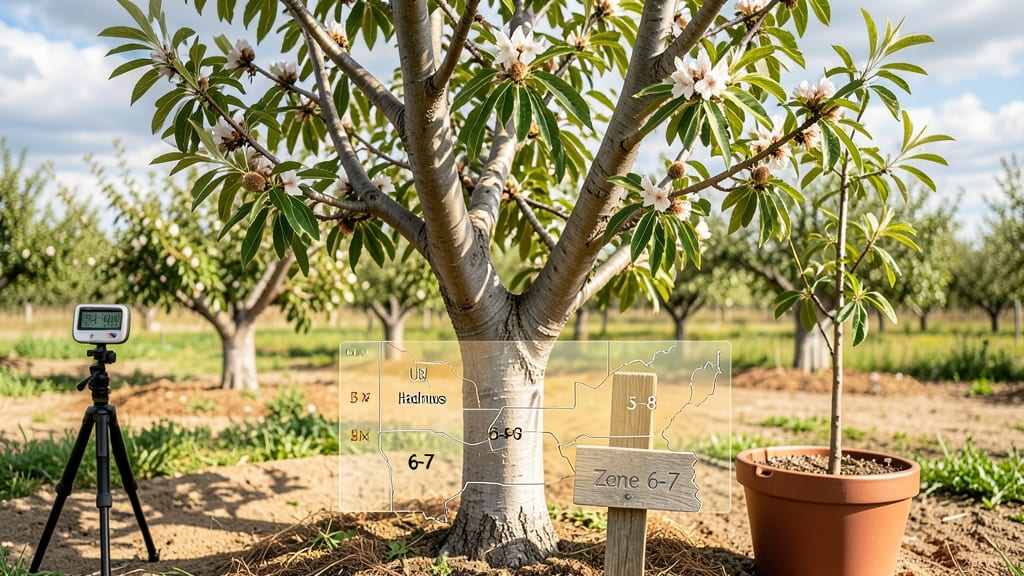
Almond trees grow best in USDA hardiness zones 5 through 9, with peak performance in zones 6-8 where they experience gentle winters and warm summers without extreme heat. Proper soil drainage and full sunlight are essential for healthy growth and maximum nut production.
Understanding the right almond tree zone is key to success—these trees need consistent temperatures between 10°F (-12°C) and 100°F (38°C) to thrive. 🌳 Zones 6-8 provide the perfect balance, protecting them from harsh freezes while avoiding heat stress that can reduce yields.
In colder zones (5), protective measures like windbreaks or mulching help simulate ideal conditions. I've seen firsthand how even a few degrees difference can impact flowering and fruit set!
California remains the top producer, but states like Arizona and Georgia are expanding their almond orchards thanks to microclimates that extend growing seasons. Well-drained, slightly alkaline soil (pH 6.5-7.5) paired with 6-8 hours of direct sunlight daily creates the best conditions.
For those in marginal zones, drip irrigation and frost cloths can make all the difference during critical growth periods.
💡 In This Article
- Understanding USDA Zones for Almond Tree Cultivation
- Best States and Regions for Growing Almond Trees
Understanding USDA zones for almond tree cultivation
The USDA hardiness zone system categorizes regions based on average annual minimum temperatures, and almond trees have specific thresholds that determine their viability. These trees can tolerate cold down to 10°F (-12°C) but suffer damage below -5°F (-21°C), which is why zone 5 is the lower limit.
The upper threshold of zone 9 reflects their sensitivity to prolonged heat above 100°F (38°C), which stresses the tree and reduces flowering. 🌡️
Zones 6-8 provide the ideal balance because they offer 150-200 frost-free days annually, allowing for proper dormancy in winter and active growth in summer. During dormancy (December-February), almond trees need temperatures between 32-45°F (0-7°C) to break bud dormancy, a process called chilling hours.
California's Central Valley, for example, accumulates 600-800 chilling hours, perfect for consistent production, while southern zones like Florida may only get 300-400 hours, requiring special low-chill varieties.
Frost sensitivity is critical during flowering (February-March), when temperatures below 28°F (-2°C) can destroy blossoms and reduce yields by up to 70%. This is why growers in zones 6-7 often use frost fans or sprinkler systems to raise temperatures by 2-4°F (1-2°C) during vulnerable periods.
The tree's root system also plays a role—deeper roots in well-drained soil help regulate temperature fluctuations, while shallow roots in compacted soil increase frost risk. 🌱
Summer heat stress becomes a factor in zones 8-9, where temperatures exceeding 95°F (35°C) for extended periods can cause leaf scorch and premature nut drop. Almond trees adapt by entering a semi-dormant state during peak heat, but this reduces photosynthesis and energy storage for the next season.
In contrast, zones 6-7 provide the sweet spot with 75-90°F (24-32°C) average summer temps, supporting both growth and fruit development without extreme stress.
Soil temperature also interacts with zone suitability. Almond roots prefer soil temps between 50-75°F (10-24°C) for optimal nutrient uptake. In cooler zones (5), soil may stay too cold for root activity until late spring, delaying growth. Conversely, in hot zones (9), soil can exceed 85°F (29°C), causing root burn.
Mulching with straw or wood chips helps moderate these extremes by keeping soil temps within the 60-70°F (15-21°C) range during critical growth periods. 🌡️
What most growers don't realize is that elevation within a zone matters too. A high-elevation area in zone 7 might experience 10-15°F (5-8°C) cooler nighttime temps than a lowland zone 8, creating microclimates that can extend or restrict growing conditions.
For example, California's Sierra foothills (zone 7) produce excellent almonds despite being in the same state as coastal zone 9 areas that struggle with heat stress.
This elevation effect explains why some zone 6 regions outperform zone 7 neighbors—it's not just about the number, but the specific climate patterns within that zone. 🏔️