
Trees
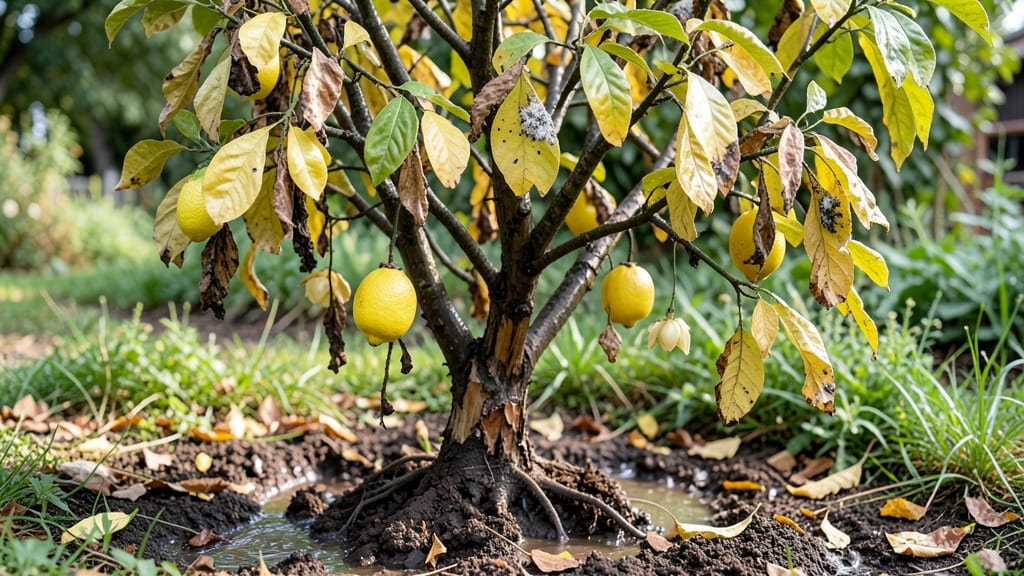
Your lemon tree’s drooping leaves and yellowing foliage might be screaming for help—this is what overwatered citrus looks like up close. 🌿 The first sign? Soft, mushy stems that collapse when gently squeezed, paired with leaves that turn a sickly yellow before falling off.
Worse yet, the soil smells like wet socks, not fresh earth, and roots turn brown or black when exposed. The real damage happens below ground: root rot sets in when roots can’t breathe, turning healthy white roots into a slimy mess.
Even with water in the pot, the tree wilts because it’s drowning—not drinking. I’ve seen this happen after just two weeks of overwatering, especially in containers without drainage holes. Here’s the good news: you can revive it. First, check drainage—if water pools at the bottom, your tree is in trouble.
Let the top 2–3 inches of soil dry completely between waterings, and repot if the roots are circling or rotting. Within weeks, new growth signals the turnaround. For long-term health, stick your finger in the soil. If it’s damp past 2 inches, wait.
Lemon trees prefer thirst over soggy roots—once you adjust, you’ll notice leaves perking up within days. Trust the process!
Root Causes Of Overwatering
When your lemon tree starts showing signs of distress—like soggy soil, yellow leaves, or a wilted appearance—it’s often a cry for help from its roots. But why does this happen?
Overwatering isn’t just about giving your tree too much water; it’s a chain reaction triggered by poor drainage, human habits, or environmental factors. Let’s break down the real culprits behind an overwatered lemon tree and why they turn your citrus companion into a sad, soggy mess.
Lemon trees, like most citrus varieties, hate soggy feet. When planted in soil that doesn’t drain well—whether it’s heavy clay, compacted garden soil, or a pot without drainage holes—water pools around the roots instead of flowing away. This creates an anaerobic (oxygen-free) environment, where roots suffocate.
- Science behind it: Roots need oxygen to respire and absorb nutrients. When soil stays waterlogged, beneficial microbes die off, and harmful bacteria (like Pythium or Phytophthora) thrive, rotting roots and blocking nutrient uptake.
- Actionable fix:
- Amend heavy soil with perlite, sand, or compost to improve aeration.
- Ensure pots have drainage holes and use a cache pot (a decorative outer pot with a saucer) to catch excess water.
- If planting in ground, choose a well-draining spot—avoid low areas where water pools.
We’ve all been guilty of it: seeing dry soil and thinking, “More water = happier tree!” But lemon trees are drought-tolerant once established, and their roots need time to dry out between waterings.
Frequent shallow watering (like sprinkling daily) keeps the topsoil wet while the lower roots stay parched, leading to thirsty but drowned roots.
- Science behind it: Lemon trees have a deep taproot system that needs to reach down for moisture. Shallow watering encourages surface root growth, which is more prone to rot and less efficient at absorbing water.
- Actionable fix:
- Water deeply but infrequently—aim for 1–1.5 inches per week (adjust for climate).
- Use the finger test: Stick your finger 2–3 inches into the soil. If it’s dry, water; if damp, wait.
- Avoid watering on a schedule—check soil moisture instead.
Here’s a sneaky one: if your lemon tree isn’t getting enough sunlight, it might look thirsty even when it’s not. Without adequate light (6–8 hours of direct sun), the tree can’t photosynthesize efficiently, so it signals distress by wilting or yellowing leaves—cues that often lead gardeners to overwater.
- Science behind it: Photosynthesis powers the tree’s ability to regulate water. Low light = reduced transpiration (water loss through leaves), making the tree retain more moisture than it needs. This creates a false sense of drought, prompting overwatering.
- Actionable fix:
- Move potted trees to a sunnier spot (south or west-facing windows for indoor trees).
- For outdoor trees, prune nearby shade trees or relocate if possible.
- If light is limited, reduce watering frequency—the tree needs less water in low light.
Potted lemon trees are especially vulnerable because containers dry out faster than ground soil—but they’re also prone to overwatering if not managed correctly. Small pots with no drainage, or those without proper soil composition, trap moisture and restrict root growth, leading to root-bound stress.
- Science behind it:
- Limited root space: Roots grow in a confined area, depleting nutrients and oxygen quickly.
- Evaporation imbalance: Pots dry out at the top but stay wet at the bottom, creating a moisture gradient that confuses the tree’s water needs.
- Heat stress: Dark-colored pots absorb heat, increasing evaporation and making soil dry out unevenly.
- Actionable fix:
- Use pots with drainage holes and elevate them to prevent saucer waterlogging.
- Choose terracotta or fabric pots (they breathe better than plastic).
- Repot every 2–3 years to refresh soil and give roots room to grow.
- Use a well-draining citrus mix (50% potting soil, 30% perlite, 20% compost).
Humidity and rainfall can throw off your watering routine without you realizing it. High humidity slows evaporation, making soil stay damp longer, while sudden rain can over-saturate the soil, especially in pots. If you’re not adjusting for these factors, your lemon tree might be drowning in “just enough” water.
- Science behind it:
- Humidity’s role: High humidity reduces transpiration, so the tree releases less water vapor. This makes it seem like the soil is dry when it’s not.
- Rainfall impact: A heavy downpour can add 1–2 inches of water to the soil instantly—enough to trigger rot if you water again on schedule.
- Actionable fix:
- Adjust watering based on weather forecasts—skip watering if rain is expected.
- In humid climates, water less frequently but deeply.
- Use a moisture meter to check soil hydration accurately.
💡 Pro Tip: If you’re unsure whether your lemon tree is overwatered or underwatered, check the roots. Healthy roots are white or light tan; mushy, black, or foul-smelling roots = overwatering. Brown, dry roots = underwatering. Adjust your care based on what you find!
How to Fix an Overwatered Lemon Tree
An overwatered lemon tree can be revived with the right care—don’t panic! The key is to drain excess moisture, adjust your watering habits, and improve soil conditions. Below are practical, step-by-step solutions tailored to the root causes of overwatering, plus tips to keep your tree thriving long-term.
---
Problem: Continuing to water a soggy tree worsens root rot and fungal growth. Fix: - Pause watering for at least 3–5 days to let the soil dry out. - If the top 1–2 inches of soil are still damp after 48 hours, wait longer. - Check the roots (gently lift a small section of soil) to confirm they’re not mushy or blackened.
💡 Pro Tip: If your tree is in a pot, lift it to gauge weight—overly heavy soil means it’s still too wet.
---
Problem: Poor drainage traps water, suffocating roots. Fix: - Repot if needed: If your tree is in a container, move it to a pot with drainage holes (terracotta works best). - Add perlite or sand: Mix 20–30% perlite, coarse sand, or pumice into the soil to aerate it. - Raise the pot: Place it on feet or a saucer to prevent water pooling at the bottom.
✨ Prevention Tip: Always use well-draining citrus soil mix (avoid heavy clay or garden soil).
---
Problem: Yellow, mushy, or black leaves won’t recover and can spread disease. Fix: - Snip off yellowing, wilting, or blackened leaves with clean pruning shears. - Focus on lower branches first, as they’re most affected by root issues. - Disinfect tools with rubbing alcohol to prevent bacterial spread.
🌡️ Warning: Avoid pruning more than 20–30% of the tree at once—stress weakens recovery.
---
Problem: Overwatering often stems from inconsistent habits (e.g., daily light sprinkles). Fix: - Water deeply but infrequently: Soak the soil until water drains from the bottom, then wait until the top 2–3 inches are dry before watering again. - Morning watering is best: Wet leaves in the evening can encourage fungal growth. - Use the "finger test": Stick your finger 2 inches into the soil—if it’s dry, it’s time to water.
🎯 Prevention Tip: Group watering sessions (e.g., every 7–10 days in summer, every 2–3 weeks in winter) instead of daily light doses.
---
Problem: Black, smelly roots mean root rot has set in. Fix: - Trim affected roots: Cut away black, mushy roots with sterilized shears, leaving only firm, white roots. - Apply fungicide: Use a copper-based or hydrogen peroxide (3%) spray on roots before repotting. - Repot in fresh soil: Use a sterile, well-draining mix and avoid compacting the soil too tightly.
💡 Pro Tip: If root rot is extensive, propagate healthy cuttings to save the tree.
---
Problem: Recovery takes time, and signs of stress may linger. Fix: - Watch for new growth: Healthy leaves should emerge within 2–4 weeks. - Fertilize lightly: Wait 4–6 weeks after repotting, then use a balanced citrus fertilizer (low nitrogen). - Mulch carefully: Add a thin layer of mulch (1–2 inches) to retain moisture without suffocating roots.
🌱 Long-Term Care: - Avoid soggy spots: Ensure the planting area has no standing water. - Check humidity: Lemon trees prefer moderate humidity—mist leaves occasionally if your climate is dry. - Winter slowdown: Reduce watering in cool months (lemon trees are dormant).
--- 🚀 Ready to Revive? Follow these steps consistently, and your lemon tree should bounce back within a few weeks. Prevention is key—now that you know the signs, you’ll catch overwatering early next time! 🍋✨
Frequently asked questions about overwatered lemon trees
How can I tell if my lemon tree is overwatered vs. underwatered?
Check the soil first: stick your finger 2–3 inches deep. If it's damp, you're likely overwatering. Look for yellowing leaves that fall easily, mushy stems that collapse when pressed, and black, foul-smelling roots. Underwatered trees have dry, crispy soil, brown leaf edges, and dry, brittle roots. The key difference? Overwatered trees wilt even when the soil is wet.
Why do my lemon tree's leaves turn yellow after watering?
Yellow leaves after watering are a classic overwatering sign. The excess moisture drowns roots, preventing nutrient uptake, which causes chlorophyll (the green pigment) to break down. Start by letting the top 2–3 inches of soil dry completely between waterings. If the yellowing spreads to new growth, your tree may have root rot—check for mushy, black roots and repot in fresh, well-draining soil.
Can I save my lemon tree if the roots are black and smelly?
Yes, but act fast! Trim away all black, mushy roots with sterilized shears, leaving only firm, white roots. Repot in a well-draining citrus mix (50% potting soil, 30% perlite, 20% compost) and avoid watering for 3–5 days to let roots recover. Apply a copper-based fungicide to prevent further rot. With proper care, new roots should form within 4–6 weeks, and leaves will perk up.
How often should I water my lemon tree to prevent overwatering?
Water deeply but infrequently: aim for 1–1.5 inches per week in summer, cutting back to every 2–3 weeks in winter. Always check soil moisture first—the finger test is foolproof. Lemon trees prefer dry soil between waterings, so wait until the top 2–3 inches are dry before watering again. Morning watering is best to prevent fungal growth from wet leaves.
What should I do if my potted lemon tree has no drainage holes?
Repot immediately! Without drainage, water pools at the bottom, suffocating roots. Choose a terracotta or fabric pot with holes, and elevate it on feet or a saucer to prevent waterlogging. Mix 20–30% perlite or coarse sand into fresh citrus soil to improve drainage. After repotting, pause watering for 3–5 days to let roots adjust before resuming the finger test method.