
Watering
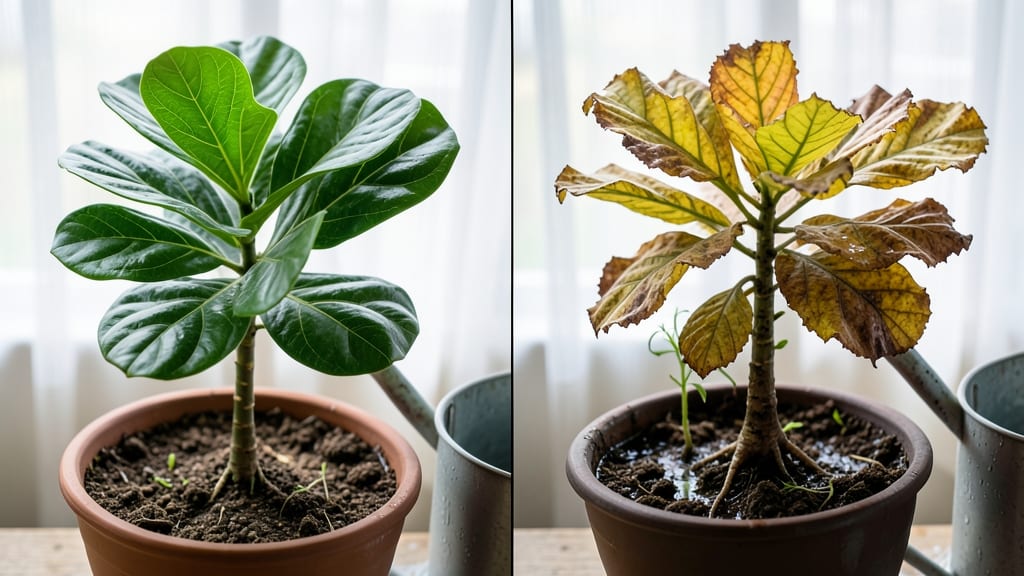
What does an overwatered ficus tree look like? Those yellowing leaves and drooping branches aren’t just sad—they’re screaming "I'm drowning!" 🌱 I've seen this exact scene play out more times than I'd like to admit, and the good news is, it's almost always fixable.
The first step is recognizing the difference between overwatered and underwatered stress, which can look eerily similar at first glance.
Overwatered ficus trees develop soft, mushy stems that collapse easily when touched, and the leaves turn yellow starting at the bottom before spreading upward. The soil stays soggy for days after watering, often with a foul smell, and roots may appear brown and rotten if you peek at them.
Contrast that with underwatered plants, which have crisp, dry leaves that yellow from the edges inward and soil that's bone-dry several inches down.
Here's the game-changer: let the top 2-3 inches of soil dry completely between waterings. I know it sounds counterintuitive when your plant looks so pitiful, but cutting back on water immediately can save your tree.
Within a week, you'll start seeing new growth pushing through, and those droopy branches will perk right back up.
This works for both potted and in-ground ficus trees, though container plants need more frequent monitoring since their soil dries faster. The key is patience—recovery takes time, but with consistent care, your ficus will bounce back stronger than ever.
Trust the process, and soon you'll have a thriving tree that's the envy of your neighborhood.
Common Causes of Overwatering
Overwatering your ficus tree can turn it into a soggy, stressed plant—far from the lush, thriving specimen you envisioned. 🌧️🌱 But why does this happen? The truth is, it’s often a mix of well-intentioned mistakes and environmental factors.
Let’s break down the science (and the real culprits) behind why your ficus might be drowning in its own pot.
Ficus trees are tropical plants, but that doesn’t mean they love constant moisture. In fact, their roots are highly sensitive to waterlogging—a condition where soil stays saturated for too long, cutting off oxygen supply. Here’s why this happens:
- Ignoring soil dryness: Many gardeners water on a fixed schedule (e.g., every Tuesday and Thursday) without checking if the top 1–2 inches of soil are dry. Ficus trees prefer their soil to dry out between waterings, especially in pots, where drainage is critical.
- Assuming "more water = healthier plant": Yellowing leaves or wilting can trigger panic, leading to immediate overcompensation with water. But ficus trees cannot process excess water—roots suffocate, and nutrients become inaccessible.
- Seasonal misjudgments: Winter slows root activity, but some people water as heavily as in summer. Cold soil retains moisture longer, increasing the risk of rot.
Pro Tip: 🌡️ Stick your finger 1–2 inches into the soil—if it’s damp, wait. Use a moisture meter for precision, especially in clay pots (which hold water longer).
Not all pots are created equal—and neither are their drainage systems. Ficus trees in containers are especially vulnerable to overwatering because:
| Problem | Why It Matters |
|---|---|
| No drainage holes | Water pools at the bottom, creating a permanent wet zone where roots rot. Even "self-watering" pots can trap excess moisture. |
| Compacted or dense soil | Heavy soils (like clay or poorly amended mixes) don’t allow oxygen or water to move freely. Roots suffocate, and fungi thrive. |
| Overpotting | A pot too large for the root system holds excess water for weeks. Ficus trees prefer snug pots that dry out faster. |
Fix It: 🔧 Always use pots with drainage holes and a well-draining soil mix (e.g., 50% potting soil, 30% perlite, 20% orchid bark). Elevate pots on saucers to prevent saucer water from seeping back in.
Humidity, temperature, and even your home’s airflow play a sneaky role in overwatering. Here’s how:
- High humidity: Air saturated with moisture slows evaporation from soil. In tropical climates or bathrooms, ficus roots stay wet longer, even if you water "normally."
- Low light + overwatering = double trouble: Ficus trees photosynthesize less in dim light, so they don’t transpire (release water) as efficiently. This traps moisture in the soil.
- Cold drafts or AC vents: Cool air near roots reduces microbial activity that breaks down excess water, leading to stagnant, anaerobic soil.
Adjust Accordingly: 🌡️ In humid conditions, reduce watering by 30–50%. Move ficus trees near bright, indirect light (e.g., east or north-facing windows) to boost transpiration. Avoid placing them in drafty spots.
When soil stays soggy, pathogens move in. Ficus trees are prone to:
- Root rot (Phytophthora, Pythium): Waterlogged roots lose their protective bark, inviting fungi that block water and nutrient uptake. Leaves yellow and drop as the tree starves.
- Bacterial leaf spot (Xanthomonas): Excess moisture on leaves creates ideal conditions for bacteria, causing brown, oily spots that spread rapidly.
Signs of Infection: 🚨
- Mushy, black roots when removed from soil.
- Leaves with water-soaked or mushy patches.
- A foul, sour smell from the soil.
Act Fast: 💡 Repot the tree in fresh, sterile soil and trim all mushy roots with sterile scissors. Treat with a fungicide (like copper-based sprays) and never let the soil stay wet again.
Revive Your Ficus Tree Now
Overwatering can turn your lush ficus tree into a sad, droopy mess—but don’t panic! With the right steps, you can nurse it back to health and prevent future waterlogging. Below, we’ll break down cause-specific fixes and share pro tips to keep your ficus thriving.
---
If your ficus leaves are turning yellow (especially starting from the bottom), the roots are likely suffocating from excess moisture.
#### 🔥 Step 1: Stop Watering Immediately - Let the soil dry out completely before watering again. Stick your finger 2-3 inches deep—if it’s damp, wait. - Skip the top layer: Yellowing often starts at the base because lower roots are drowning.
Focus on drying the root zone first.
#### 🍳 Step 2: Check the Roots (Gently!) - Remove the plant from its pot and inspect the roots.
Healthy roots are firm and white; mushy or black roots mean rot. - Trim dead roots with sterilized scissors (snip at a 45-degree angle) to prevent spread. - 💡 Pro Tip: If roots smell foul, rinse them in hydrogen peroxide (3%) for 10 minutes to kill fungus before replanting.
#### 👨🍳 Step 3: Repot in Fresh, Well-Draining Soil - Use a clean pot with drainage holes (terracotta is ideal—it breathes!). - Mix potting soil with perlite or orchid bark (50/50 ratio) to improve aeration. - Replant at the same depth—burying the stem too deep traps moisture.
#### 🥘 Step 4: Adjust Your Watering Routine - Water only when the top 1-2 inches of soil are bone-dry (usually every 10-14 days for ficus). - Bottom-watering trick: Place the pot in a tray of water for 10 minutes, then drain excess.
This encourages roots to grow downward. - 🎯 Prevention: Use a moisture meter or the "knuckle test"—if your knuckle feels dry after pressing into the soil, it’s time to water.
---
Droopy leaves or stems signal root asphyxiation or nutrient starvation from compacted, soggy soil.
#### ⏰ Step 1: Give It a "Dry Spell" - Skip watering for 1-2 weeks to let the roots recover. Ficus trees are drought-tolerant once established! - Mist leaves lightly (if needed) to prevent transpiration stress, but avoid soggy soil.
#### 🔪 Step 2: Prune Damaged Foliage - Snip yellow, mushy, or blackened leaves with clean pruners. This redirects energy to healthy growth. - Don’t over-prune—remove only 20-30% of the plant at once to avoid shocking it.
#### 🌡️ Step 3: Boost Airflow & Light - Move your ficus to a bright, indirect spot (no harsh sun).
Low light + overwatering = recipe for rot. - Increase airflow: Place a small fan nearby (on low) to dry leaves faster and deter fungal growth. - 🌡️ Pro Tip: If your home is humid (like a bathroom), run a dehumidifier near the plant or open windows occasionally.
#### 📊 Step 4: Fertilize Lightly (If Needed) - Wait 4-6 weeks after repotting before fertilizing. - Use a balanced, diluted liquid fertilizer (like 10-10-10) once a month in spring/summer. Over-fertilizing wet soil burns roots! - 💪 Organic boost: Mix worm castings into the soil for slow-release nutrients.
---
Once your ficus recovers, keep these habits to avoid future overwatering:
- ✨ Upgrade Your Pot: Terracotta pots dry out faster than plastic.
If you love plastic, add extra perlite to the soil. - 🌧️ Rainy Season Hack: Move potted ficus under a covered porch or elevate pots on saucers with pebbles to prevent water pooling. - 🔍 Monitor the Soil: Use coffee grounds or coconut coir in the soil—they darken when wet, helping you track moisture levels. - 🌱 Rotate Your Plant: Turn the pot quarter-turn weekly so all sides get even light, preventing one-sided stress. - 🚫 Avoid Ice Cube Watering: While it sounds clever, cold water shocks roots.
Use room-temperature water instead.
--- Remember: Ficus trees are forgiving! With these fixes, you’ll see new green leaves in 4-6 weeks. Stay patient, and your tree will bounce back stronger than ever. 🌿💚
Frequently asked questions about overwatered ficus trees
How can I tell if my ficus tree is overwatered vs. underwatered?
Check the leaves first: overwatered ficus trees show yellowing starting at the bottom leaves and spreading upward, while underwatered trees yellow from the edges inward. Overwatered plants also have soft, mushy stems that collapse easily, and the soil stays soggy for days with a foul smell. Underwatered ficus trees have crisp leaves that feel dry to the touch and soil that's bone-dry several inches down.
Can I save a ficus tree with root rot from overwatering?
Yes, but you need to act fast! Remove the plant from its pot and trim all black, mushy roots with sterilized scissors. Repot in fresh, well-draining soil mix (50% potting soil, 30% perlite, 20% orchid bark) and let the soil dry completely between waterings. For severe cases, soak the roots in 3% hydrogen peroxide for 10 minutes before replanting to kill fungus. Recovery takes 4-6 weeks with proper care.
Why does my ficus tree keep getting overwatered even when I think I'm watering it correctly?
Common culprits include using pots without drainage holes, compacted soil that doesn't dry properly, or watering on a fixed schedule without checking soil moisture. Ficus trees prefer their soil to dry out completely between waterings. Try the "knuckle test": stick your finger 2-3 inches deep—if it feels damp, wait. Also, terracotta pots dry out faster than plastic, and adding perlite or orchid bark to your soil mix improves drainage significantly.
How often should I water my ficus tree after recovering from overwatering?
Once recovered, water your ficus only when the top 1-2 inches of soil are completely dry. In most homes, this means watering every 10-14 days during spring/summer and even less in winter. Use the bottom-watering method: place the pot in a tray of water for 10 minutes, then drain excess. This encourages deeper root growth and prevents surface moisture buildup.
Will my ficus tree grow back if I've cut off too many leaves due to overwatering?
Don't worry—ficus trees are resilient! While you shouldn't remove more than 20-30% of foliage at once, the tree will redirect energy to new growth. Prune only the yellow, mushy, or blackened leaves and place the plant in bright, indirect light with good airflow. Within 4-6 weeks, you'll see fresh green leaves emerging from the stems. Avoid fertilizing until new growth appears to prevent root burn.