
Plants
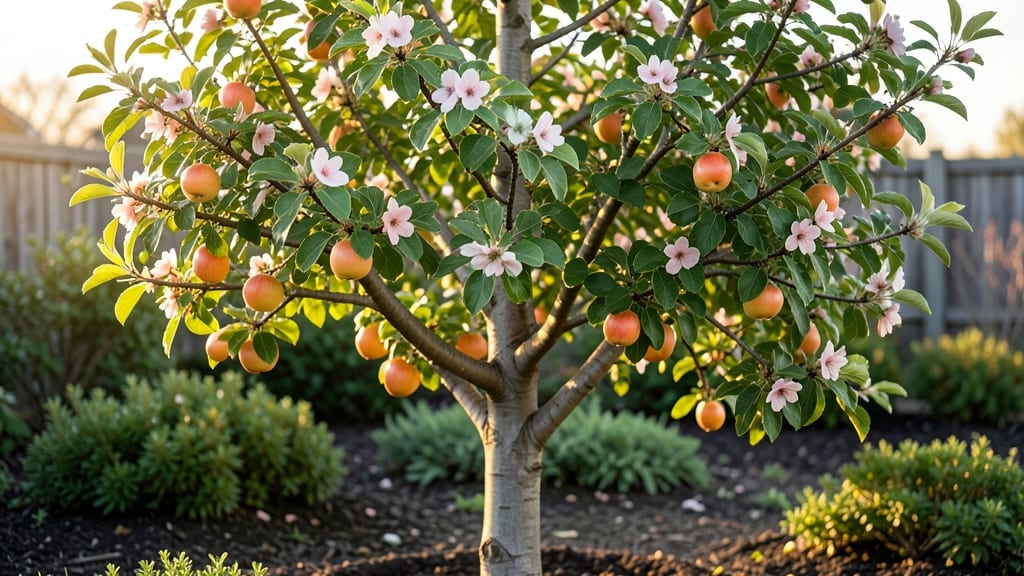
A nectarine tree looks like a smaller, smooth-skinned version of a peach tree, with glossy green leaves, round or heart-shaped fruit without fuzz, and grayish-brown bark that develops fissures with age. Its branches spread in a rounded canopy, similar to other stone fruit trees.
A nectarine tree's most distinctive feature is its completely smooth fruit—no fuzz at all, unlike peaches. 🌿 The leaves are slightly smaller than peach tree leaves, with serrated edges and a vibrant green hue that stays rich throughout the growing season.
Younger trees have smooth bark that gradually develops deep grooves as they mature, giving them a rugged, textured appearance. The fruit itself hangs from the branches in clusters, often ripening slightly earlier than peaches in most climates.
What sets nectarine trees apart visually is their growth habit—many varieties grow more compact than peach trees, making them ideal for smaller gardens. The blossoms appear in early spring with delicate pink or white flowers, similar to peach trees but often with slightly larger individual blooms.
Understanding these visual cues helps gardeners quickly identify whether they're looking at a nectarine or peach tree, especially when the fruit isn't yet visible.
💡 In This Article
- Nectarine Tree Visual Identification: Leaves, Fruit, and Bark Features
- Comparing Nectarine Trees to Peach Trees: Key Visual Differences
Nectarine tree visual identification: leaves, fruit, and bark features
The leaves of a nectarine tree are typically 2-4 inches long with a slightly elongated oval shape, featuring finely serrated edges that create a delicate, almost lace-like appearance. Unlike peach tree leaves, which often have a slightly broader base, nectarine leaves tend to be more tapered at the tip.
Their surface is smooth and slightly waxy, giving them a vibrant green color that remains consistent throughout the growing season—though they may develop a reddish tint when young or under stress.
The most striking difference between nectarine and peach trees lies in their fruit's surface texture.
While peaches have a fuzzy, velvety skin due to tiny hairs called trichomes, nectarines are completely smooth, with a sleek, almost glass-like finish. 🌸 The fruit itself ranges from 2-3 inches in diameter, with colors spanning from pale yellow to deep red, depending on the variety.
When ripe, the skin develops a slight sheen, and the fruit detaches easily from the tree—a trait shared with peaches but often more pronounced in nectarines due to their thinner skin.
Young nectarine trees have smooth, grayish-brown bark that resembles that of a peach tree, but as the tree matures (typically after 5-10 years), the bark develops deep, irregular fissures that create a rugged, almost cracked appearance.
These grooves become more pronounced with age, giving older trees a distinctive, textured look. The branches themselves spread in a rounded canopy, often growing more upright than peach trees, which can have a slightly more sprawling habit.
One often-overlooked feature is the fruit's attachment to the tree. Nectarines are typically freestone varieties, meaning the pit separates easily from the flesh, while some peaches are clingstone, where the pit adheres tightly. This difference becomes noticeable when harvesting or processing the fruit.
Additionally, nectarine trees often produce fruit slightly earlier in the season than peach trees, which can be a helpful clue for gardeners trying to identify their trees before the fruit ripens.
Consider these visual cues when identifying a nectarine tree in your garden:
- Leaves: 2-4 inches, serrated edges, tapered tips, and a waxy texture
- Fruit: Completely smooth skin, 2-3 inches in diameter, and a freestone pit
- Bark: Develops deep fissures with age, starting smooth and grayish-brown
- Canopy: Rounded and often more upright than peach trees
The combination of these features makes nectarine trees instantly recognizable to experienced gardeners. 🌿 For example, the smooth fruit alone can distinguish a nectarine from a peach, even when the trees are still young and their bark hasn't yet developed the characteristic fissures.