
Plants
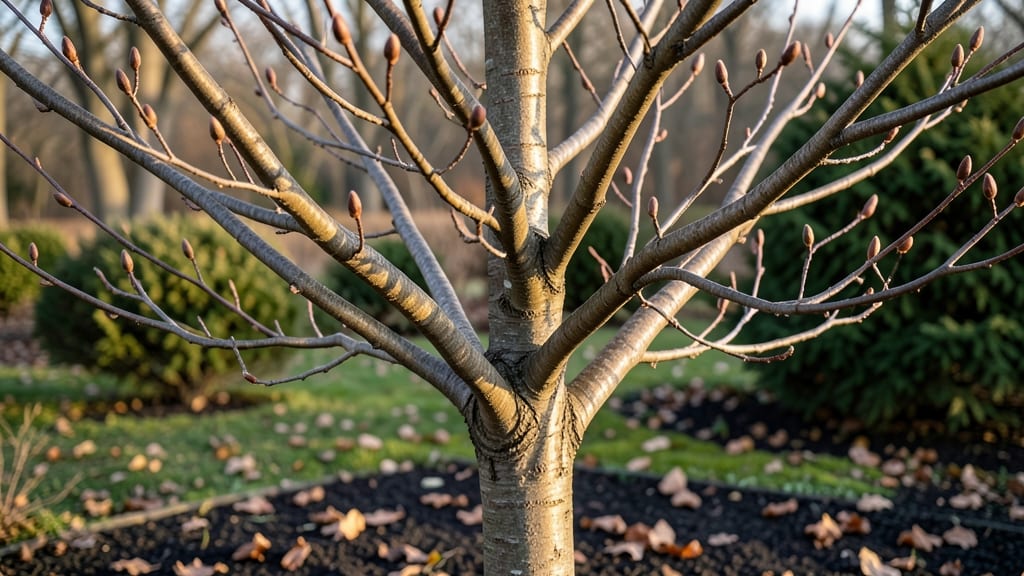
A dogwood tree in winter looks like a graceful skeleton with its smooth, grayish-brown bark peeling in delicate strips, slender branches that zigzag horizontally, and tiny dark buds dotting the stems. This elegant branching pattern stands out against winter skies.
A dogwood tree's winter appearance is all about its textured bark and architectural branches. 🌳 The exfoliating bark—often described as "camouflage-patterned"—reveals layers of gray and brown as it peels away, while the branches grow in that signature zigzag pattern, creating a layered, almost artistic silhouette.
Unlike other winter trees, dogwoods lack leaves but make up for it with their intricate branch structure, which gardeners often admire even in dormancy.
This distinctive look helps identify dogwoods even when they're not in bloom. The horizontal branching and clustered buds set them apart from similar trees like serviceberry or cornus species, which tend to have more upright growth patterns.
If you're trying to spot one in your yard, look for that whimsical, layered shape—it's unmistakable once you know what to look for.
💡 In This Article
- Identifying Dogwood Bark and Branch Characteristics
- Winter Dogwood Tree Care and Pruning Tips
Identifying dogwood bark and branch characteristics
The dogwood's winter bark is one of its most striking features, with a smooth, grayish-brown surface that often develops a distinctive exfoliating pattern. This peeling occurs as the outer layer gradually sloughs off in thin, papery strips—almost like nature's version of camouflage fabric.
The bark's texture ranges from silky smooth on younger trees to more rugged on mature specimens, with color variations from light tan to deep chocolate brown depending on sunlight exposure and age. 🌿
What truly sets dogwood branches apart is their zigzag growth pattern, which creates horizontal layers that give the tree its signature layered silhouette. These branches grow in 45-degree angles at each node, forming what botanists call "corkscrew" or "whiplash" branches.
Unlike the more upright growth of serviceberry trees or the sprawling habit of some cornus species, dogwood branches spread out horizontally, creating that whimsical, almost artistic winter shape.
The buds themselves are another key identifier—small, dark red to purple (about 1/4-inch long) and clustered in groups of 2-5 along the stems.
This unique branching structure serves a practical purpose too. The horizontal growth helps the tree capture more sunlight during its brief spring bloom, while the zigzag pattern provides structural support against winter winds.
The buds' tight arrangement minimizes water loss during dormancy, a clever adaptation for cold climates. 🌳 When comparing to similar trees, dogwood's horizontal branching and exfoliating bark create a visual contrast with serviceberry's more vertical branches or the smooth, non-peeling bark of some cornus varieties.
The bark's exfoliation process is particularly fascinating from a biological standpoint. As the tree matures, the outer bark cells die and separate from living tissue, creating those signature peeling patterns. This natural shedding actually helps protect the tree by preventing the buildup of harmful microorganisms.
The process accelerates in sunny, dry conditions and slows in damp, shaded environments, which explains why some dogwoods in your neighborhood might show more dramatic peeling than others.
One common point of confusion is distinguishing dogwood from its close relative, the serviceberry. While both belong to the Cornaceae family, dogwoods typically have more pronounced horizontal branching and their buds are arranged in tighter clusters.
Serviceberry branches tend to be more upright, and their buds are often more spaced out. The bark of serviceberry also tends to be smoother without the same degree of exfoliation seen in dogwoods. 🔍
For gardeners and nature enthusiasts, these winter characteristics offer valuable identification clues. The combination of exfoliating bark, horizontal branching, and clustered buds creates a visual signature that's unmistakable once you know what to look for.
This winter appearance isn't just ornamental—it's a survival strategy that makes dogwoods uniquely adapted to their environment while providing year-round interest in landscapes.