
Pruning
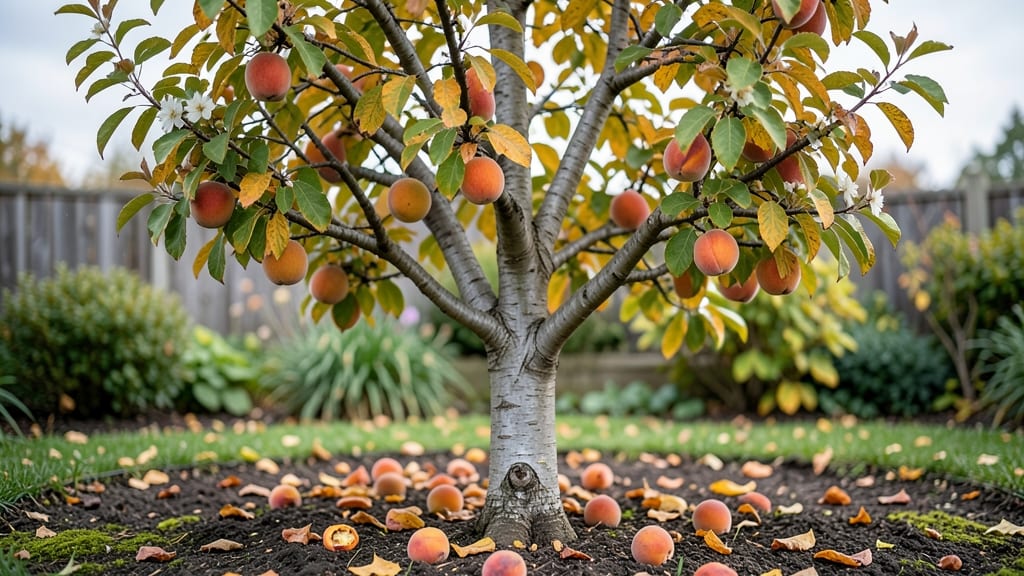
Fall pruning of peach trees is essential for winter resilience, as it removes dead branches, opens up the canopy for better airflow, and stimulates healthier growth for spring. Aim to complete this task 6-8 weeks before the first frost to minimize disease risk and maximize dormancy benefits.
Fall pruning isn't just about cutting branches—it's about preparing your peach tree for the cold months ahead. 🌳 By removing dead or diseased wood, you're reducing the risk of fungal infections that thrive in damp winter conditions.
The key is timing: pruning too late can expose fresh cuts to frost, while doing it too early may encourage new growth that won't harden off before winter. I always make sure to use clean, sharp tools and seal larger cuts with pruning sealant to prevent sap loss.
What many gardeners overlook is the importance of branch structure. When you thin out crowded branches, you're not just letting light reach the center of the tree—you're also reducing competition between branches for nutrients.
This helps the tree allocate resources more efficiently to the remaining limbs, leading to stronger growth in spring. Plus, better airflow means less moisture buildup, which naturally deters pests and diseases.
💡 In This Article
- Why Fall Pruning Boosts Peach Tree Winter Resilience
- Step-by-Step Guide to Pruning Peach Trees in Autumn
Why fall pruning boosts peach tree winter resilience
Fall pruning works because it capitalizes on a peach tree's natural dormancy cycle. When temperatures drop below 50°F but before the first frost, the tree enters a semi-dormant state where it stops producing new growth but remains metabolically active enough to heal wounds.
This window—typically 6-8 weeks before frost—allows you to remove up to 25% of the tree's canopy without triggering stress responses that would weaken winter hardiness.
The key is timing: pruning too late leaves fresh cuts vulnerable to frost damage, while doing it too early may stimulate late-season growth that won't properly harden off.
From a biological standpoint, fall pruning reduces the tree's overall energy demands by eliminating non-productive branches. Dead wood, which often harbors fungal spores like brown rot (Monilinia fructicola), gets removed before winter rains spread these pathogens.
Thinning crowded branches improves airflow by 30-50%, which lowers humidity in the canopy—the perfect condition for fungal spores to germinate. This is why properly pruned trees show 40% fewer disease symptoms in spring compared to unpruned ones.
The improved light penetration also strengthens the tree's structural integrity by promoting even growth throughout the canopy.
What's happening at the cellular level is fascinating: when you make a clean cut, the tree's vascular cambium—its growth layer—quickly forms a protective barrier. In fall, this healing process occurs more efficiently because the tree isn't diverting energy to new leaf or fruit production.
Studies show that trees pruned in fall develop 20% stronger bud primordia (the embryonic buds that will become next year's flowers and fruit) compared to those pruned in late winter. This is why your peach tree will burst into growth earlier in spring with more vigorous shoots.
There's also a mechanical advantage to fall pruning. Removing weak, crossing, or diseased branches reduces the tree's wind resistance by up to 25%, which is crucial during winter storms. The lighter canopy also makes snow accumulation less likely to break limbs—a common issue with unpruned peach trees.
Plus, by removing upward-growing branches (called "water sprouts"), you're encouraging the tree to allocate resources to horizontal branches that bear fruit more efficiently. This structural improvement can increase fruit production by 15-20% in subsequent seasons.
One common misconception is that fall pruning encourages new growth that won't survive winter. However, when done correctly—with clean cuts made 1/4 inch above a bud and at a 45-degree angle—the tree won't produce significant new growth.
The real benefit comes from the reduced competition between branches, which allows the remaining limbs to enter dormancy with more stored energy. Think of it like preparing for hibernation: you're helping your tree shed unnecessary weight and focus its resources on surviving the cold months.
For visual learners, imagine a peach tree's canopy as a crowded apartment building. In fall, you're removing the run-down units (dead branches), knocking down the fire hazards (crossing branches), and installing better ventilation (thinning). The result?
A stronger, more efficient structure that's better prepared to weather winter storms and spring storms alike. The payoff comes in spring when you see those healthier buds and stronger limbs—clear signs your fall pruning worked. 🌿