
Pruning
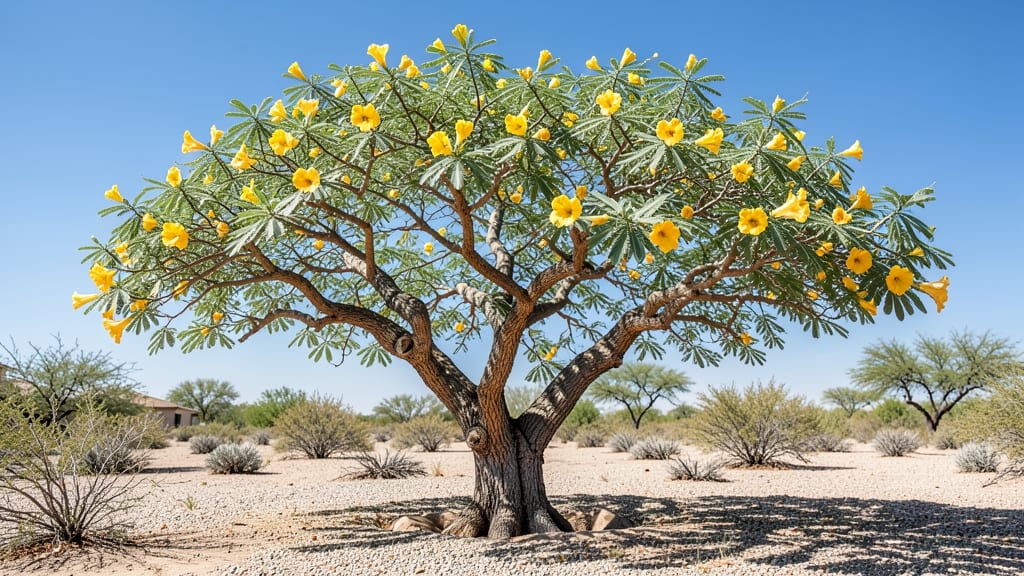
A palo verde tree in your front yard isn’t just fast-growing—it’s a drought-resistant superstar that transforms empty space into instant curb appeal. 🌿 I planted mine last spring, and within months, it became the centerpiece of my yard with its bright green bark and cheerful yellow blooms.
This tree thrives in full sun, needs minimal pruning, and grows 30-40 feet tall—perfect for privacy or shade. Pair it with succulents or lavender for a low-maintenance, desert-friendly look that stays lush year-round. The best part? It stays green even in winter, offering year-long structure and beauty.
You’ll love how it frames your home while requiring almost no upkeep compared to other shade trees. Works in warm climates (Zones 8-11) and pairs well with other drought-tolerant plants. Here’s how to make it your front yard’s standout feature!
Hidden Roots Expose Themselves
Palo verde trees (Parkinsonia spp.) are prized for their drought tolerance and vibrant foliage, but their aggressive root systems often become a front-yard headache—literally. If you’ve noticed your palo verde’s roots surfacing or cracking your driveway, here’s why it happens and what’s driving this underground drama.
Palo verde trees are phreatophytes, meaning they evolved to tap into deep groundwater tables. Their roots can extend 15–25 feet deep and spread 2–3 times wider than the tree’s canopy. This isn’t laziness—it’s adaptation to arid climates. When planted in urban front yards with shallow, compacted soil, these roots have no choice but to seek the surface for oxygen and moisture.Key trigger: Soil compaction from foot traffic, construction, or heavy machinery forces roots upward, where they can still access air and water.
Palo verde trees thrive in well-draining soil, but front yards often have:- Clay-heavy soil that holds water, suffocating roots and pushing them upward.
- Improper grading where water pools near the tree, creating anaerobic (oxygen-poor) zones.
- Lack of organic matter in urban landscapes, reducing root penetration depth.
When roots can’t expand downward, they grow horizontally—and if the soil is hardpan (a dense, impermeable layer), they’ll burst through sidewalks or driveways like geological intruders.
Front-yard renovations—like installing patios, irrigation, or hardscapes—sever deep roots or create barriers. When roots are cut off from their natural path:- They regenerate aggressively near the surface to compensate for lost access to water/nutrients.
- They grow toward the least resistance, often cracking concrete or lifting pavement.
- They form "root plates" (thick, horizontal mats) that heave soil upward, creating trip hazards.
Pro tip: If you’re landscaping near a palo verde, root-prune 12–18 months beforehand to encourage deeper growth before disturbing the soil.
Palo verde roots are highly reactive to moisture. During:- Spring rains or irrigation: Roots absorb water like a sponge, expanding and pushing upward.
- Winter dormancy: Roots contract, but if soil stays soggy, they don’t retreat fully, leaving them vulnerable to surface growth.
This seasonal heaving is why roots might disappear underground in summer only to resurface in monsoon season—like a tree-shaped jack-in-the-box.
Palo verde trees planted too close to:- Sidewalks (within 3–4 feet): Roots seek the edge where soil is looser.
- Driveways (within 5–6 feet): Concrete acts as a root barrier, forcing lateral growth.
- Foundation footings: Roots can lift slabs over time by growing beneath them.
Science note: Palo verde roots contain lignotubers (woody root bases) that produce new shoots if damaged—so even severed roots can regrow within weeks.
While palo verdes are drought-tolerant, excessive irrigation (especially with sprinklers) creates:- Shallow root zones where roots stay near the surface for easy water access.
- Fungal growth in waterlogged soil, weakening roots and causing them to seek drier, upper layers.
Actionable fix: Switch to drip systems or deep, infrequent watering (1–2 inches every 2–3 weeks) to encourage downward growth.
Quick Fixes for Common Palo Verde Tree Issues
Revitalizing your palo verde tree front yard doesn’t have to be a hassle—just a few targeted fixes can restore its health and beauty. Below, we’ve mapped common problems to simple, actionable solutions, plus prevention tips to keep your tree thriving long-term.
---
Cause: Fast growth can lead to tangled branches that block sunlight or create safety hazards. Fix: 1. 🔪 Trim in Late Winter/Early Spring – This is the tree’s dormant season, making it less stressful for recovery. 2. 📏 Focus on Shape, Not Size – Remove branches that cross, rub, or grow inward. Use clean, sharp pruners to avoid tearing bark. 3. 🌿 Thin Out Dense Areas – Lighten the canopy by cutting back 20-30% of the thickest branches to improve airflow. 4. 🚫 Avoid Topping – Never cut the main trunk or large branches back to a stub; this invites disease and weak growth.
💡 Pro Tip: Use a 3-cut method for thicker branches (12"+) to prevent bark stripping: - Step 1: Make an undercut 6-12" from the trunk. - Step 2: Cut from the top 2-3" above the undercut. - Step 3: Finish by removing the stub flush with the trunk.
Prevention: Schedule light pruning every 1-2 years to maintain shape and reduce future cleanup.
---
Cause: Palo verdes are drought-tolerant but may show stress from poor soil, overwatering, or nutrient lack. Fix: 1. 💧 Check Watering Habits – Water deeply 1-2 times per week (more in extreme heat). Avoid shallow, frequent watering. 2. 🌿 Test Soil & Amend – Palo verdes prefer well-draining, slightly alkaline soil (pH 7.0-8.5). Add compost or aged manure if soil is compacted. 3. 🍃 Fertilize Lightly – Use a balanced, slow-release fertilizer (10-10-10) in early spring. Avoid high-nitrogen fertilizers, which promote leafy growth over fruit/flowers. 4. 🪴 Mulch Properly – Apply 2-3 inches of mulch (wood chips or gravel) around the base, keeping it 6 inches away from the trunk to prevent rot.
💡 Pro Tip: If leaves are yellow with brown edges, it may signal chlorosis (iron deficiency). Apply chelated iron or sulfur to acidic soil.
Prevention: Mulch annually and avoid overwatering—palo verdes hate soggy roots!
---
Cause: Palo verdes attract scale insects, aphids, or spider mites, especially in dry conditions. Fix: 1. 🔍 Inspect Leaves & Bark – Look for sticky residue (honeydew), tiny bugs, or webbing. Act fast to prevent spread. 2. 💦 Blast Off Pests – Use a strong hose spray to dislodge aphids or spider mites. 3. 🌿 Apply Horticultural Oil – Spray neem oil or insecticidal soap on both sides of leaves for scale/mites. Reapply every 7-10 days for 2-3 weeks. 4. 🪰 Severe Cases? Use Systemic Insecticide – For heavy infestations, try imidacloprid (systemic)—follow label instructions carefully.
💡 Pro Tip: Encourage beneficial insects like ladybugs by planting marigolds or lavender nearby.
Prevention: - Water deeply to deter pests (they love dry, stressed trees). - Prune regularly to improve airflow and reduce hiding spots.
---
Cause: High winds or storms can snap branches, creating hazards. Fix: 1. 🚨 Assess Safety First – If branches are hanging or cracked, remove them immediately to prevent injury. 2. 🔨 Use the Right Tools – - Small branches (<2"): Hand pruners. - Medium branches (2-4"): Loppers. - Large branches (>4"): Pole saw or hire a pro. 3. 🌿 Make Clean Cuts – Cut just outside the branch collar (the swollen area where the branch meets the trunk). 4. 🪴 Call an Arborist for Big Jobs – If the tree is split or severely damaged, professional help ensures safe removal.
💡 Pro Tip: Stake young trees in windy areas to prevent uprooting during storms.
Prevention: Prune weak branches annually to reduce storm risks.
--- Final Thought: With regular pruning, proper watering, and pest vigilance, your palo verde will stay lush, healthy, and low-maintenance—perfect for a stunning front yard privacy screen! 🌿✨
Frequently asked questions
How close can I plant a palo verde tree to my house or driveway?
Keep it at least 15-20 feet from your house and 8-10 feet from driveways or sidewalks. Its aggressive roots can damage foundations or crack pavement if planted too near hardscapes. For privacy screens, space 3-4 trees 10 feet apart to create a dense barrier.
Will a palo verde tree block too much sunlight for my front yard?
Its open, airy canopy allows 30-50% sunlight to pass through, making it ideal for sunny front yards. Unlike dense trees, it won’t create dark shadows. Plant it 10-15 feet from walkways to balance shade and light access.
How fast will my palo verde grow, and when will it provide privacy?
Expect 2-3 feet per year in ideal conditions. A 10-foot-tall tree (privacy height) typically takes 3-5 years from planting. For faster results, plant 3-4 trees in a row spaced 8-10 feet apart—they’ll fill in quickly while maintaining their natural shape.
Can I grow other plants under a palo verde tree?
Yes! Its shallow roots allow space for ground covers like succulents, lavender, or ornamental grasses. Avoid deep-rooted plants (like roses) within 5 feet of the trunk. Drought-tolerant perennials thrive in its dappled shade.
Does a palo verde tree lose leaves in winter?
No—it stays evergreen year-round! While it sheds some leaves in winter, its bright green bark and branches create striking winter interest. The yellow spring blooms appear before leaves return, adding seasonal color.