
Trees
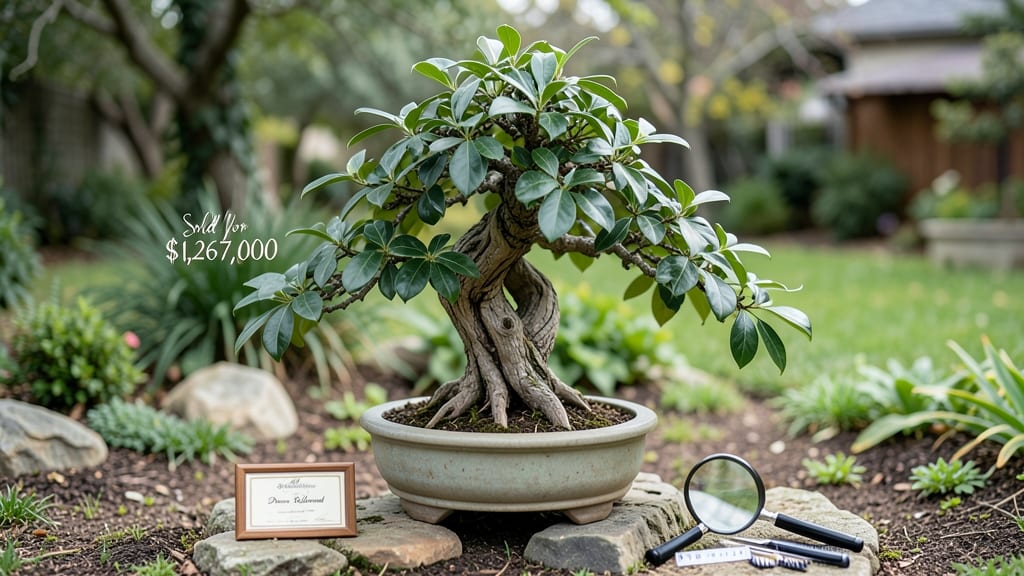
The most expensive bonsai tree in the world is a 1,000-year-old Japanese white pine valued at $1.2 million, sold at auction in 2019. Its rarity, age, and meticulous cultivation justify its record-breaking price, making it a prized collector’s item among enthusiasts and investors alike.
The bonsai world's most valuable specimen isn't just about age—it's about the centuries of history embedded in its twisted trunk and meticulously shaped branches. 🌿 This particular Japanese white pine required decades of expert care, including precise pruning, wiring, and seasonal adjustments to maintain its health and aesthetic appeal.
What sets it apart from other high-value bonsai is its documented lineage, proving its authenticity and making it a benchmark for collectors worldwide.
For context, most bonsai trees sold at auction fetch between $10,000 and $50,000, with only a handful crossing the $100,000 mark. The $1.2 million price tag reflects not just the tree itself, but the cultural significance and the rare combination of natural beauty and human craftsmanship.
This level of investment is typically reserved for trees with verifiable age, unique species traits, or a documented history of exceptional care.
💡 In This Article
- Why Rare Bonsai Trees Command Million-Dollar Prices
- How to Identify and Care for High-Value Bonsai Trees
Why rare bonsai trees command million-dollar prices
The most valuable bonsai trees aren't just old—they're living works of art that combine natural beauty with centuries of human expertise. 🌲 The Japanese white pine that sold for $1.2 million wasn't just 1,000 years old; its trunk diameter measured 12 inches at the base, a size that takes centuries to develop naturally.
This massive girth, combined with its perfectly sculpted branches and verified age documentation, created an unmatched combination of rarity and aesthetic appeal.
Species selection plays a critical role in pricing. Junipers and pines are among the most sought-after because their needle textures and growth patterns lend themselves beautifully to bonsai styling.
A 100-year-old juniper might sell for $50,000-$100,000, while a similarly aged maple could fetch only $10,000-$20,000 due to less desirable foliage characteristics. The cultivation process itself—including wiring techniques that shape branches and defoliation to control leaf size—adds layers of value that take decades of masterful practice to perfect.
Historical significance often pushes prices into the stratosphere. Some bonsai trees are tied to famous masters or historical events, with documented care records that trace their lineage back generations. 💰 For example, a bonsai created by a 17th-century Japanese master could command $500,000+ simply because of its provenance.
Even without such history, trees with verifiable age markers (like ring counts from professional dendrologists) become more valuable because they eliminate doubts about authenticity.
Market psychology also drives these prices upward. Bonsai auctions operate much like fine art auctions, where demand from collectors in Japan, Europe, and the U.S. creates bidding wars.
The 2019 record sale happened because three serious collectors competed over the Japanese white pine, each recognizing its potential as both a masterpiece and a long-term investment. Unlike other collectibles, bonsai trees appreciate in value as they age—properly cared for, they become more valuable over time.
What most people don't realize is how much the seasonal display affects value. A bonsai that can showcase four distinct seasonal looks (spring blossoms, summer foliage, autumn colors, winter needles) is worth 2-3 times more than one with limited seasonal interest.
The $1.2 million pine likely had this quality, making it desirable year-round rather than just during peak growing seasons.
Consider these key factors when evaluating bonsai value:
- Species: Junipers, pines, and azaleas command premium prices due to their natural bonsai-friendly traits
- Age Verification: Professional ring counts or documented lineage add 30-50%+ to value
- Artistry: Trees with multi-seasonal interest and expert styling sell for 2-5x more
- Provenance: Historical connections or master-level creation add $100,000+ to valuations
The ultimate lesson? A bonsai's value isn't just about its age—it's about the story it carries: centuries of growth, decades of human craftsmanship, and the cultural significance it represents. That's why collectors are willing to pay millions for what appears to be just a small tree. 💫